Overview
Giant African land snails are among the most notorious invasive pests in the world, known for their ability to rapidly reproduce, consume a wide range of plant material, and cause extensive agricultural and environmental damage. These large terrestrial snails belong primarily to the species Lissachatina fulica and related species within the family Achatinidae. Native to East Africa, they have been introduced—intentionally or accidentally—to many parts of the world, where they have become highly destructive invasive species.
One of the most concerning aspects of giant African land snails is their adaptability. They can thrive in a variety of climates, particularly in warm, humid environments, and are capable of surviving adverse conditions by entering a dormant state known as estivation. This allows them to persist through dry or unfavorable periods and re-emerge when conditions improve.
These snails are considered a major agricultural pest because they feed on a wide range of crops, ornamental plants, and even tree bark. Their feeding can devastate gardens, farms, and natural ecosystems. In addition to plant damage, they are also known to pose health risks, as they can carry parasites that affect humans and animals.
Identification
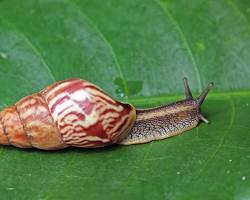
Giant African land snails are easily recognized by their large size, often reaching lengths of 6 to 8 inches or more. Their shells are conical and spiral-shaped, typically brown with lighter banding patterns. The body is soft and grayish-brown, with two pairs of tentacles used for sensing the environment.
Their size alone distinguishes them from most native snail species. In areas where they are not native, any unusually large land snail should be considered suspicious and reported if required by local regulations.
Habitat
These snails prefer warm, humid environments and are commonly found in tropical and subtropical regions. They inhabit gardens, agricultural fields, forests, and urban landscapes where food and moisture are readily available.
They are typically active at night or during periods of high humidity. During dry conditions, they may burrow into soil or hide under debris to conserve moisture.
Behavior and Damage
Giant African land snails are voracious feeders, consuming leaves, fruits, vegetables, and even decaying organic matter. They use a specialized rasping mouthpart called a radula to scrape and shred plant material. This feeding can result in severe defoliation, damaged crops, and reduced plant growth.
They are also known to feed on non-plant materials such as paint, stucco, and plaster, as they seek calcium for shell development. This behavior can cause damage to buildings and infrastructure in heavily infested areas.
Their high reproductive capacity contributes to their pest status. A single snail can lay hundreds of eggs multiple times per year, allowing populations to grow rapidly if not controlled.
Impact
The impact of giant African land snails is significant both economically and environmentally. In agriculture, they can destroy crops and reduce yields. In natural ecosystems, they may outcompete native species and disrupt ecological balance.
They are also associated with health risks, as they can carry parasites such as rat lungworm, which can affect humans if proper precautions are not taken.
Prevention and Control
Preventing the spread of these snails is critical. Avoid transporting plants, soil, or materials from infested areas. In regions where they are established, manual removal, barriers, and targeted treatments may be used to control populations.
Public awareness and early detection are key to preventing widespread infestations.
Taxonomy
- Kingdom: Animalia
- Phylum: Mollusca
- Class: Gastropoda
- Order: Stylommatophora
- Family: Achatinidae