Overview
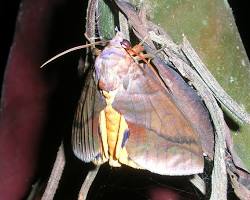
Fruit Sucking Moths are a group of nocturnal moths known for their unusual and highly destructive feeding behavior as adults. Unlike most moth species that feed harmlessly on nectar or do not feed at all during adulthood, these moths possess specially adapted mouthparts capable of piercing the skin of ripe fruit to extract juices. This feeding behavior makes them significant agricultural pests in orchards, vineyards, gardens, and fruit production systems throughout tropical and subtropical regions.
Fruit Sucking Moths are especially problematic because they attack fruit at the peak of ripeness, often just before harvest. Even small puncture wounds caused by feeding can rapidly lead to:
- Fruit rot
- Fungal infections
- Bacterial contamination
- Premature fruit drop
- Reduced market value
Their nocturnal activity makes infestations difficult to detect until visible damage appears. Growers may discover leaking, fermented, or collapsing fruit without ever seeing the moths responsible.
These moths attack a wide variety of crops, including:
- Citrus
- Grapes
- Mangoes
- Peaches
- Plums
- Tomatoes
- Berries
- Bananas
- Papayas
- Figs
Because damaged fruit attracts secondary pests such as flies, beetles, and wasps, infestations can escalate quickly if left unmanaged.
Taxonomy and Classification
- Kingdom: Animalia
- Phylum: Arthropoda
- Class: Insecta
- Order: Lepidoptera
- Family: Erebidae and related moth families
- Common Name: Fruit Sucking Moths
Several species of moths are referred to collectively as Fruit Sucking Moths. Some of the best-known species belong to the genera:
- Eudocima
- Oraesia
- Othreis
These moths are highly specialized feeders with modified proboscises designed specifically for piercing fruit skin.
Fruit Sucking Moths undergo complete metamorphosis consisting of:
- Egg
- Larva (caterpillar)
- Pupa
- Adult moth
Interestingly, the caterpillar stage usually feeds on entirely different host plants than the adult stage, meaning surrounding vegetation can contribute significantly to local moth populations.
Physical Description
Adult Fruit Sucking Moths are medium to large moths with strong, muscular bodies adapted for long-distance nighttime flight.
Key identifying features include:
- Brown, gray, or camouflage-patterned wings
- Robust thorax and abdomen
- Large compound eyes adapted for night activity
- Strong flight capability
- Specialized hardened proboscis
The most distinctive feature is the modified feeding tube (proboscis), which is:
- Sharpened
- Hardened
- Serrated in some species
This specialized mouthpart allows the moth to puncture fruit skin and access internal juices.
Wing coloration often helps the moth blend into:
- Tree bark
- Dead leaves
- Vegetation
This camouflage makes daytime detection difficult.
The larvae are caterpillars that vary by species but are generally:
- Green or brown
- Smooth-bodied
- Leaf-feeding
- Well-camouflaged
Distribution and Habitat
Fruit Sucking Moths are most common in:
- Tropical regions
- Subtropical climates
- Warm temperate zones
They are especially problematic in areas with:
- Extended fruiting seasons
- High humidity
- Dense vegetation
- Mixed agricultural landscapes
Typical habitats include:
- Orchards
- Vineyards
- Fruit gardens
- Forest edges
- Tropical woodlands
- Agricultural fields
During the day, adult moths hide in:
- Dense foliage
- Tree bark crevices
- Ground vegetation
- Leaf litter
At night, they become highly active and travel considerable distances in search of ripening fruit.
Life Cycle
The life cycle of Fruit Sucking Moths varies depending on climate and species but generally follows seasonal fruit production cycles.
Egg Stage
Females deposit eggs on specific host plants used by caterpillars.
Larval host plants are often unrelated to the fruit crops attacked by adults.
Larval Stage
Caterpillars feed primarily on leaves and vegetation.
Larval feeding rarely causes significant agricultural damage compared to the adult stage.
The caterpillars undergo several molts before pupation.
Pupal Stage
Pupation usually occurs in:
- Leaf litter
- Soil
- Protected vegetation
- Plant debris
The pupal stage allows transformation into the adult moth.
Adult Stage
Adults emerge primarily during warm periods when fruit is available.
Nocturnal feeding begins shortly after emergence.
Adults are strong fliers and may travel long distances between feeding and breeding areas.
Behavior and Feeding
Fruit Sucking Moths are nocturnal feeders that locate ripe fruit using scent cues and chemical signals released during ripening.
At night, moths land directly on fruit surfaces and use their hardened proboscis to:
- Pierce the skin
- Penetrate soft tissue
- Extract juices
Feeding damage often appears as:
- Small puncture wounds
- Soft sunken spots
- Leaking juice
- Fermented tissue
- Darkened scars
Once fruit skin is breached, secondary problems rapidly develop:
- Fungal decay
- Bacterial rot
- Fermentation
- Additional insect infestations
Damaged fruit may become attractive to:
- Fruit flies
- Beetles
- Wasps
- Ants
- Filth flies
Damage and Economic Importance
Fruit Sucking Moths are economically important pests in fruit-growing regions.
Major impacts include:
- Fruit spoilage
- Reduced crop quality
- Premature fruit drop
- Lower market value
- Post-harvest losses
- Secondary fungal infections
Even minor feeding injuries can render fruit unmarketable for fresh sale.
Commercial orchards may experience significant losses during peak moth activity periods.
Home gardeners are often frustrated because the damage appears shortly before harvest when fruit is nearly ready to pick.
Signs of Infestation
- Puncture holes in ripening fruit
- Soft or collapsed fruit tissue
- Juice leakage
- Fruit fermentation odor
- Rapid fungal growth
- Fruit drop
- Nocturnal moth activity around orchards
Because feeding occurs at night, growers often observe damage before seeing the insects themselves.
Management and Control (IPM)
Integrated Pest Management (IPM) approaches are commonly used to manage Fruit Sucking Moths.
Exclusion Netting
Protective netting is one of the most effective control methods.
Fine mesh barriers help prevent moths from reaching ripening fruit.
Sanitation
Removing damaged and fallen fruit reduces attractants.
Good orchard sanitation helps interrupt feeding cycles and lowers secondary pest activity.
Harvest Timing
Prompt harvesting reduces the amount of overripe fruit available for feeding.
Light Traps
Light traps are sometimes used to:
- Monitor adult activity
- Reduce local populations
- Track seasonal emergence
Habitat Management
Managing surrounding vegetation may reduce larval host plants and breeding sites.
Chemical Control
Chemical treatments are sometimes used in commercial orchards, though timing is difficult because moths are nocturnal and highly mobile.
Many growers prefer exclusion methods and sanitation instead of broad insecticide applications.
Ecological Importance
Despite their pest status, Fruit Sucking Moths are part of complex ecological systems.
Their caterpillars provide food for:
- Birds
- Predatory insects
- Parasitic wasps
- Reptiles
Adult moths may also contribute to pollination while feeding on nectar from flowers.
Research and Scientific Interest
Fruit Sucking Moths are studied extensively in agricultural entomology due to their unusual feeding adaptations.
Research focuses include:
- Proboscis evolution
- Nocturnal feeding behavior
- Host plant relationships
- Pheromone attraction
- Biological control methods
- Exclusion technologies
Scientists are also investigating environmentally friendly management techniques that reduce crop damage while minimizing impacts on beneficial insects.
Conclusion
Fruit Sucking Moths are specialized nocturnal pests that damage ripening fruit using hardened piercing mouthparts designed to penetrate fruit skin and extract juices. Their feeding creates openings for fungal and bacterial infections, leading to rapid spoilage and reduced crop quality. These moths affect a wide range of fruit crops in tropical and subtropical regions and are especially problematic because damage occurs close to harvest. Effective management relies on orchard sanitation, protective netting, prompt harvesting, and integrated pest management strategies designed to reduce feeding opportunities and population buildup.