Overview
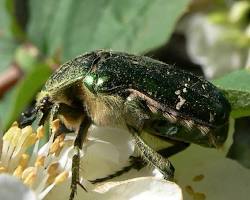
Flower Beetles are a diverse group of scarab beetles belonging primarily to the subfamily Cetoniinae within the family Scarabaeidae. These beetles are widely recognized for their metallic coloration, strong flying ability, and close association with flowers, fruit, and ornamental plants. Many species are considered beneficial pollinators because they feed on nectar and pollen while visiting blossoms. However, some species can become nuisance pests when they feed heavily on flowers, ripe fruit, or tender plant tissue.
Flower Beetles are among the most visually striking beetles found in gardens and natural landscapes. Depending on the species, they may display:
- Metallic green coloration
- Bronze or copper hues
- Iridescent wing covers
- Velvety body textures
- Bold patterns or spots
These beetles are especially active during warm months when flowering plants and ripening fruit are abundant. Their loud buzzing flight and tendency to hover around blossoms make them highly noticeable in orchards, gardens, parks, and meadows.
Although moderate populations are often tolerated or even welcomed because of their pollination role, large infestations may damage:
- Flower petals
- Developing fruit
- Soft fruit tissue
- Ornamental blooms
Their feeding may also attract secondary pests such as:
- Wasps
- Fruit flies
- Ants
- Decay fungi
Taxonomy and Classification
- Kingdom: Animalia
- Phylum: Arthropoda
- Class: Insecta
- Order: Coleoptera
- Family: Scarabaeidae
- Subfamily: Cetoniinae
- Common Name: Flower Beetles
Flower Beetles belong to the scarab beetle family, which also includes:
- June beetles
- Dung beetles
- Scarab beetles
- Figeater beetles
The subfamily Cetoniinae contains hundreds of species distributed across tropical, subtropical, and temperate regions worldwide.
Unlike many scarab beetles, Flower Beetles are strong daytime fliers and are highly attracted to:
- Nectar-producing flowers
- Fermenting fruit
- Tree sap
- Sweet plant odors
They undergo complete metamorphosis consisting of:
- Egg
- Larva (grub)
- Pupa
- Adult beetle
Physical Description
Adult Flower Beetles are medium to large beetles with oval, compact bodies and hardened wing covers.
Important identifying features include:
- Oval body shape
- Metallic or iridescent coloration
- Strong legs
- Hard wing covers (elytra)
- Powerful buzzing flight
- Clubbed antennae
Coloration varies greatly depending on species and may include:
- Bright metallic green
- Bronze
- Copper
- Black with white markings
- Velvety olive coloration
Many Flower Beetles are mistaken for:
- Large bees
- Bumblebees
- June bugs
- Figeater scarabs
One of the most recognizable species in North America is the Bumble Flower Beetle, which resembles a bumblebee because of its fuzzy yellow-and-black appearance.
The larvae are white C-shaped grubs commonly found in soil or compost.
Larval characteristics include:
- Creamy white body
- Brown head capsule
- Curved grub shape
- Three pairs of small legs
Unlike many turf-damaging scarab grubs, most Flower Beetle larvae feed primarily on decaying organic matter rather than living roots.
Distribution and Habitat
Flower Beetles occur throughout much of the world and are especially abundant in warm climates.
Common habitats include:
- Gardens
- Orchards
- Meadows
- Forest edges
- Parks
- Compost areas
- Agricultural landscapes
Adults are commonly found on:
- Flowers
- Ripening fruit
- Tree sap flows
- Decaying fruit
Larvae develop underground in:
- Compost piles
- Rich organic soil
- Mulch
- Rotting wood debris
- Manure-rich soil
Warm temperatures and abundant flowering plants strongly favor population growth.
Life Cycle
The life cycle of Flower Beetles usually begins when females lay eggs in soil rich in organic matter.
Egg Stage
Eggs are deposited in protected moist soil environments containing decomposing plant material.
After hatching, larvae begin feeding immediately.
Larval Stage
The grub stage is primarily beneficial because larvae feed on:
- Decaying roots
- Compost
- Organic debris
- Rotting vegetation
This feeding contributes to decomposition and nutrient recycling.
Larvae may remain in the soil for several months before pupating.
Pupal Stage
Pupation occurs within the soil inside an earthen chamber constructed by the larva.
Adult Stage
Adults emerge during warm weather and become active during daylight hours.
Most species are strong fliers capable of traveling considerable distances in search of food.
Behavior and Feeding
Adult Flower Beetles feed primarily on:
- Pollen
- Nectar
- Soft fruits
- Tree sap
- Petals
Many species act as pollinators while moving between flowers.
However, feeding damage may occur when populations become excessive.
Common feeding injury includes:
- Torn flower petals
- Damaged blossoms
- Fruit scarring
- Hollowed soft fruit
- Surface feeding wounds
Overripe fruits such as figs, peaches, grapes, and plums are especially attractive.
Feeding injuries often create entry points for:
- Rot organisms
- Fruit flies
- Wasps
- Secondary beetles
Damage and Economic Importance
Flower Beetles are usually considered minor to moderate pests.
Damage is often cosmetic but may become economically important in:
- Fruit orchards
- Commercial flower production
- Nurseries
- Home gardens
Potential impacts include:
- Reduced fruit quality
- Damaged ornamental flowers
- Premature fruit decay
- Increased attraction of secondary pests
- Reduced market value of crops
Despite these problems, many Flower Beetles remain ecologically valuable pollinators and decomposers.
Signs of Infestation
- Large metallic beetles on flowers
- Buzzing flight around fruit trees
- Chewed flower petals
- Damaged ripe fruit
- Beetles congregating on fermenting fruit
- White grubs in compost or organic soil
Management and Control (IPM)
Management of Flower Beetles focuses primarily on reducing attractants and protecting vulnerable plants.
Sanitation
Remove:
- Overripe fruit
- Fermenting fruit
- Damaged produce
- Excess organic waste
This reduces feeding sites and breeding attraction.
Hand Removal
In gardens and small orchards, adults may be manually removed from plants during peak activity periods.
Fruit Protection
Protective netting or fruit bags may help shield vulnerable fruit crops.
Biological Control
Natural predators include:
- Birds
- Raccoons
- Skunks
- Predatory insects
Maintaining ecological diversity encourages natural suppression.
Cultural Control
Good orchard and garden sanitation greatly reduces population buildup.
Avoid allowing damaged fruit to remain on plants or soil surfaces.
Chemical Control
Chemical treatments are rarely necessary except during severe infestations in commercial production systems.
Applications must be carefully timed to avoid harming pollinators and beneficial insects.
Ecological Importance
Flower Beetles provide several ecological benefits.
Adults contribute to:
- Pollination
- Nutrient cycling
- Food web support
Larvae improve soil quality by decomposing organic matter and recycling nutrients.
Many species are important prey for birds and mammals.
Research and Scientific Importance
Researchers study Flower Beetles because of their role in:
- Pollination biology
- Decomposition ecology
- Agricultural pest management
- Scarabaeidae evolution
Their interactions with flowering plants also make them important subjects in studies of pollinator diversity and ecosystem health.
Conclusion
Flower Beetles are colorful scarab beetles associated with flowers, nectar, fruit, and organic-rich soils. While many species serve beneficial roles as pollinators and decomposers, large populations may damage flowers and fruit crops through feeding activity. Their metallic appearance, loud buzzing flight, and attraction to blossoms make them highly recognizable insects in gardens and orchards. Effective management focuses on sanitation, fruit protection, monitoring, and maintaining ecological balance while preserving the beneficial functions these beetles provide.