Overview
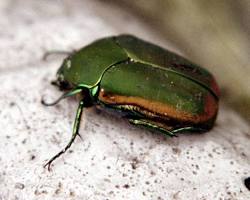
The Figeater Scarab (Cotinis mutabilis), also commonly called the Figeater Beetle or Green Fruit Beetle, is a large metallic scarab beetle native to the southwestern United States and parts of Mexico. Closely related to June beetles, this insect is highly recognizable due to its bright metallic green coloration, loud buzzing flight, and attraction to ripe fruit.
Figeater Scarabs are most active during the warmer summer months when fruit trees begin producing ripe and fermenting fruit. Adult beetles are considered nuisance and agricultural pests because they feed heavily on soft fruits, causing direct crop damage and encouraging secondary infestations by flies, wasps, and decay organisms.
Despite the damage caused by adults, the larval stage actually plays a beneficial ecological role. The larvae develop within compost, manure, and decaying organic matter, helping break down plant debris and recycle nutrients back into the soil.
Figeater Scarabs are especially common in:
- Home gardens
- Fruit orchards
- Compost piles
- Urban landscapes
- Lawns rich in organic material
Although harmless to humans, their loud clumsy flight and tendency to collide with objects often make them highly noticeable and intimidating.
Taxonomy and Classification
- Kingdom: Animalia
- Phylum: Arthropoda
- Class: Insecta
- Order: Coleoptera
- Family: Scarabaeidae
- Genus: Cotinis
- Species: Cotinis mutabilis
- Common Names: Figeater Scarab, Figeater Beetle, Green Fruit Beetle
The Figeater Scarab belongs to the family Scarabaeidae, the scarab beetle family, which includes:
- June beetles
- Rhinoceros beetles
- Dung beetles
- Flower chafers
Figeater Scarabs undergo complete metamorphosis with four developmental stages:
- Egg
- Larva
- Pupa
- Adult beetle
The larval stage is beneficial in soil ecosystems, while adults are responsible for most plant and fruit damage.
Physical Description
Adult Figeater Scarabs are large robust beetles with striking metallic coloration.
Important identifying features include:
- Length of approximately 1 to 1.25 inches
- Metallic green coloration
- Velvety sheen on wing covers
- Coppery or bronze highlights
- Heavy-bodied appearance
- Loud buzzing flight
The underside of the beetle is often:
- Golden green
- Metallic bronze
- Shiny copper-colored
Adults possess strong wings but are known for awkward clumsy flight behavior.
Unlike many beetles that fly smoothly, Figeater Scarabs often:
- Bump into objects
- Crash into windows
- Collide with vegetation
- Produce loud buzzing sounds
The larvae, commonly called “crawly backs,” are large white grubs that live underground.
Larval characteristics include:
- Creamy white body
- Brown head capsule
- Curved C-shaped posture
- Distinctive movement on their backs
Unlike many scarab larvae that crawl on their legs, Figeater larvae often move upside down using stiff body hairs and muscular contractions.
Distribution and Habitat
Figeater Scarabs are primarily distributed throughout:
- Arizona
- California
- Nevada
- New Mexico
- Texas
- Northern Mexico
They thrive in warm climates with abundant organic material and fruit-bearing plants.
Common habitats include:
- Fruit orchards
- Gardens
- Compost piles
- Lawns
- Agricultural fields
- Urban landscapes
The larvae prefer soils rich in:
- Decaying plant material
- Compost
- Manure
- Mulch
- Organic debris
Adult beetles are strongly attracted to:
- Ripening fruit
- Fermenting fruit
- Tree sap
- Sweet plant exudates
Life Cycle
The life cycle of the Figeater Scarab is closely tied to warm seasonal temperatures and organic soil conditions.
Egg Stage
Adult females lay eggs underground in moist organic soil.
Preferred egg-laying sites include:
- Compost piles
- Manure-rich soil
- Mulched gardens
- Lawns with organic debris
Larval Stage
After hatching, larvae feed on decaying organic material within the soil.
Larval feeding helps decompose:
- Dead roots
- Plant debris
- Compost
- Organic waste
This stage may last several months depending on temperature and food availability.
Large larval populations are often discovered while digging in compost or garden beds.
Pupal Stage
Mature larvae create earthen chambers within the soil where pupation occurs.
The pupal stage eventually produces the adult beetle.
Adult Stage
Adults emerge during warm summer months and become highly active around fruiting trees.
Peak activity usually occurs during:
- Late summer
- Hot afternoons
- Fruit ripening periods
Adults feed heavily before mating and laying eggs.
Behavior and Feeding
Adult Figeater Scarabs primarily feed on:
- Figs
- Peaches
- Grapes
- Plums
- Nectarines
- Cactus fruit
- Overripe fruit
They are especially attracted to:
- Soft fruit
- Damaged fruit
- Fermenting fruit
- Fruit with cracked skin
Adult feeding causes:
- Fruit punctures
- Surface scarring
- Rotting
- Juice leakage
- Secondary pest attraction
The beetles frequently gather in large groups within fruit trees.
Their loud flight and feeding activity often make infestations highly visible.
Larvae, in contrast, are beneficial decomposers and rarely damage living plants directly.
Damage and Economic Importance
Figeater Scarabs are considered agricultural and garden pests primarily because of adult feeding activity.
Common damage includes:
- Fruit destruction
- Fruit rot
- Reduced fruit quality
- Secondary insect infestations
- Economic crop losses
Damaged fruit often attracts:
- Fruit flies
- Wasps
- Ants
- Fungal pathogens
Commercial orchards and home gardens may experience noticeable losses during heavy infestations.
However, larvae provide beneficial ecological services by recycling nutrients and improving soil organic matter decomposition.
Signs of Infestation
- Large metallic green beetles on fruit trees
- Loud buzzing flight activity
- Damaged or rotting fruit
- Clusters of beetles feeding together
- White grubs in compost or soil
- Fermenting fruit odors
Adult beetles are especially noticeable during hot summer afternoons.
Management and Control (IPM)
Management of Figeater Scarabs focuses mainly on reducing adult feeding damage.
Fruit Sanitation
Prompt removal of overripe or fallen fruit is one of the most effective management methods.
Fermenting fruit strongly attracts adults.
Timely Harvesting
Harvest fruit as soon as it ripens to reduce attraction.
Overripe fruit left on trees encourages heavy feeding activity.
Protective Netting
Fruit tree netting can physically exclude adult beetles from valuable crops.
Netting is especially useful for:
- Small orchards
- Backyard gardens
- High-value fruit trees
Compost Management
Because larvae develop in decomposing organic matter, managing compost properly may reduce breeding sites.
Important practices include:
- Turning compost regularly
- Avoiding excessive moisture
- Reducing exposed manure
Manual Removal
Adults can sometimes be hand-collected from trees during periods of peak activity.
This method is most practical in smaller gardens.
Biological Control
Natural predators may feed on larvae or adults, including:
- Birds
- Skunks
- Raccoons
- Predatory insects
Soil organisms also help regulate larval populations naturally.
Ecological Importance
Although adults may damage fruit crops, the larval stage contributes positively to soil ecosystems.
Larvae help:
- Break down compost
- Recycle nutrients
- Improve soil structure
- Accelerate decomposition
Figeater Scarabs also serve as food sources for many wildlife species.
Research and Scientific Importance
Researchers study Figeater Scarabs because of their role in decomposition ecology and agricultural pest management.
Research focuses include:
- Fruit pest management
- Soil decomposition processes
- Organic waste recycling
- Integrated pest management
- Climate impacts on scarab populations
Scientists also study their unique larval movement behavior and adaptation to organic-rich soils.
Conclusion
The Figeater Scarab (Cotinis mutabilis) is a large metallic green scarab beetle commonly found in the southwestern United States and northern Mexico. Adult beetles are attracted to ripe and fermenting fruit, where their feeding causes fruit damage, rot, and secondary pest infestations. In contrast, the larval stage plays a beneficial role in decomposition and nutrient recycling within soils and compost systems. Effective management focuses on sanitation, timely harvesting, compost management, and exclusion methods to protect fruit crops while minimizing unnecessary pesticide use.