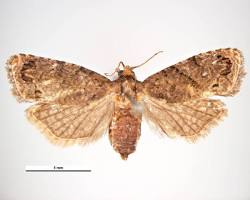
The False Codling Moth (Thaumatotibia leucotreta) is one of the most destructive agricultural moth pests affecting fruit and vegetable crops in tropical and subtropical regions. Native to sub-Saharan Africa, this insect has gained international concern due to its invasive potential, wide host range, and ability to spread through infested produce shipments. The larvae develop hidden inside fruit, making infestations difficult to detect and manage.
False Codling Moths are considered serious quarantine pests in many countries because they threaten commercial agriculture, export industries, and food production systems. The larvae bore directly into fruit and feed internally, destroying edible tissues and allowing fungal and bacterial decay organisms to invade. Even minor infestations can render produce unsuitable for sale or export.
This pest attacks a wide variety of economically important crops including:
- Citrus fruits
- Peaches
- Nectarines
- Peppers
- Avocados
- Cotton
- Macadamia nuts
- Pomegranates
- Tomatoes
Because the larvae remain concealed inside host fruit for much of their development, infestations are often discovered only after fruit begins rotting or dropping prematurely.
Taxonomy and Classification
- Kingdom: Animalia
- Phylum: Arthropoda
- Class: Insecta
- Order: Lepidoptera
- Family: Tortricidae
- Genus: Thaumatotibia
- Species: Thaumatotibia leucotreta
- Common Name: False Codling Moth
The False Codling Moth belongs to the family Tortricidae, a group of moths commonly known as tortrix moths or leafroller moths.
Many tortricid species are important agricultural pests because their larvae feed internally within fruits, stems, or leaves.
The False Codling Moth undergoes complete metamorphosis with four developmental stages:
- Egg
- Larva
- Pupa
- Adult moth
The larval stage is responsible for nearly all crop damage.
Physical Description
Adult False Codling Moths are relatively small moths with cryptic coloration that helps them blend into bark and foliage.
Adult characteristics include:
- Gray-brown patterned wings
- Wingspan of approximately 0.6 to 0.8 inches
- Mottled markings for camouflage
- Slender body shape
- Nocturnal activity
The forewings often display irregular dark patches and subtle metallic scales.
The larvae are the damaging stage and possess:
- Pinkish-white or cream coloration
- Brown head capsule
- Smooth segmented body
- Strong chewing mouthparts
Larvae are usually found hidden inside fruit tissues where they remain protected during feeding.
Identification Signs
False Codling Moth infestations often become noticeable through damage symptoms rather than visible insects.
- Small entry holes in fruit
- Frass (insect waste) near entry points
- Premature fruit drop
- Internal fruit tunneling
- Rotting fruit
- Discolored or collapsed fruit tissue
Because larvae feed internally, fruit may appear healthy externally during early infestation stages.
As feeding progresses, decay organisms frequently invade the damaged tissues.
Distribution and Habitat
The False Codling Moth is native to sub-Saharan Africa but is considered a high-risk invasive species in many agricultural regions worldwide.
It thrives in:
- Warm climates
- Tropical regions
- Subtropical orchards
- Agricultural fields
- Fruit-growing regions
- Commercial plantations
Preferred habitats include:
- Citrus orchards
- Stone fruit orchards
- Pepper fields
- Mixed fruit farms
- Backyard gardens
The moth is particularly dangerous because infested produce can transport larvae long distances through international trade.
As a result, many countries maintain strict quarantine regulations against imported produce from infested regions.
Life Cycle
The life cycle of the False Codling Moth is strongly influenced by temperature and host availability.
Warm climates may allow multiple overlapping generations annually.
Egg Stage
Adult females lay eggs individually on fruit surfaces, leaves, or stems.
Eggs are:
- Small
- Flattened
- Nearly transparent
Egg development is relatively rapid in warm conditions.
Larval Stage
After hatching, larvae quickly bore into the fruit.
Internal feeding protects them from:
- Predators
- Environmental stress
- Many insecticide applications
Larvae tunnel through fruit tissue while feeding extensively.
Damaged fruit often becomes:
- Softened
- Discolored
- Rotten
- Prematurely detached
Pupal Stage
Mature larvae exit the fruit and pupate in:
- Soil
- Plant debris
- Leaf litter
- Packaging materials
The pupal stage allows transformation into the adult moth.
Adult Stage
Adults emerge and become active primarily during evening and nighttime hours.
Adult moths mate shortly after emergence and females begin searching for suitable host fruit.
Behavior and Feeding
False Codling Moth larvae are internal fruit feeders.
They consume:
- Fruit pulp
- Seeds
- Developing tissues
- Internal fruit structures
The larvae often move throughout the fruit while feeding, creating extensive internal damage.
Because feeding occurs inside the fruit, infestations are difficult to detect during routine visual inspections.
Adult moths are nocturnal and generally hide during daytime hours.
Damage and Economic Importance
The False Codling Moth is considered a high-priority agricultural pest because of its severe economic impact.
Damage includes:
- Internal fruit destruction
- Fruit rot
- Premature fruit drop
- Reduced crop quality
- Export rejection
- Quarantine restrictions
Larval feeding creates entry points for:
- Fungal pathogens
- Bacterial infections
- Secondary decay organisms
Even low infestation levels can lead to major financial losses due to strict international trade standards.
Commercial growers may face:
- Crop rejection
- Increased inspection costs
- Mandatory treatment requirements
- Trade restrictions
Signs of Infestation
- Frass around fruit entry holes
- Premature fruit drop
- Soft or collapsing fruit
- Internal larval tunnels
- Fruit discoloration
- Rotting tissues
- Visible larvae inside produce
Infested fruit may initially appear normal externally while extensive internal damage develops.
Management and Control (IPM)
Management of False Codling Moths relies heavily on integrated pest management (IPM) programs.
Pheromone Monitoring
Pheromone traps are widely used to monitor adult moth activity and population levels.
Monitoring helps growers:
- Detect infestations early
- Determine treatment timing
- Track population trends
Sanitation
Remove and destroy infested fruit immediately.
Sanitation reduces larval survival and prevents additional generations.
Fallen fruit should never be left beneath trees.
Biological Control
Natural enemies may help suppress populations, including:
- Parasitic wasps
- Predatory insects
- Entomopathogenic fungi
Biological control is often integrated with other management methods.
Cultural Control
Good orchard management practices include:
- Regular pruning
- Improved airflow
- Fruit thinning
- Crop sanitation
- Timely harvesting
Chemical Control
In commercial agriculture, insecticides may be used strategically based on monitoring data.
Applications are generally timed to target newly hatched larvae before they enter fruit.
Quarantine Measures
Strict quarantine protocols are critical for preventing spread into new agricultural regions.
Inspections and export treatments are commonly required for international produce shipments.
Ecological Importance
Although considered a serious agricultural pest, False Codling Moths are part of broader ecological food webs.
They serve as prey for:
- Birds
- Predatory insects
- Parasitic wasps
- Small vertebrates
However, their economic impact in agricultural systems greatly outweighs any ecological benefit in commercial settings.
Research and Scientific Importance
Researchers study False Codling Moths extensively because of their invasive potential and economic significance.
Current research areas include:
- Pheromone disruption systems
- Biological control programs
- Quarantine management
- Genetic population studies
- Sustainable pest control
- Host plant resistance
Scientists continue developing environmentally safer management strategies to reduce dependence on broad-spectrum insecticides.
Conclusion
The False Codling Moth (Thaumatotibia leucotreta) is a destructive fruit-boring moth pest capable of infesting numerous commercial crops including citrus, stone fruits, peppers, and avocados. Its concealed larval feeding inside fruit makes infestations difficult to detect and contributes to its importance as a quarantine pest worldwide. Damage caused by larval tunneling results in fruit rot, premature fruit drop, and severe economic losses. Effective management relies on integrated pest management strategies including pheromone monitoring, sanitation, biological control, and strict quarantine practices.