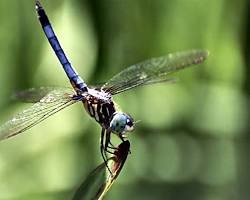
The Blue Dasher (Pachydiplax longipennis) is one of the most common and recognizable dragonflies found near freshwater habitats throughout North America. This agile flying predator is known for its bright blue coloration, fast flight patterns, and habit of perching prominently near ponds and wetlands. Blue dashers are beneficial insects because they help reduce populations of mosquitoes and other small flying pests.
The species is sometimes referred to as the “black-tailed skimmer” because of the dark tip found on the abdomen of mature males. These dragonflies are commonly seen darting rapidly above water surfaces, chasing prey insects, or resting on reeds, sticks, and shoreline vegetation.
Blue dashers thrive in:
- Ponds
- Lakes
- Wetlands
- Marshes
- Slow-moving streams
- Garden ponds
- Retention basins
Because dragonflies spend much of their life as aquatic predators, healthy freshwater environments are essential for their survival.
Quick Facts
- Order: Odonata
- Family: Libellulidae
- Scientific Name: Pachydiplax longipennis
- Habitat: Freshwater wetlands and ponds
- Diet: Mosquitoes, gnats, flies, and aquatic insects
- Status: Beneficial predator
Identification
Adult Blue Dashers are medium-sized dragonflies with wingspans of approximately 2 inches.
Males are especially recognizable because of their:
- Powdery blue abdomen
- Dark black tail tip
- Greenish eyes
- Clear wings with dark patches near the base
Females and immature individuals differ in appearance and are usually:
- Brown or yellowish
- Striped along the abdomen
- Less vividly colored than adult males
Like other dragonflies, Blue Dashers possess:
- Large compound eyes
- Two pairs of transparent wings
- Strong flight muscles
- Spiny legs adapted for catching prey
Their flight is:
- Fast
- Erratic
- Highly maneuverable
This allows them to capture insects while airborne.
Distribution and Habitat
The Blue Dasher occurs widely throughout North America and is especially common in warm and temperate climates.
It is frequently observed near:
- Still water
- Shallow ponds
- Marshes
- Flooded ditches
- Slow-moving creeks
- Backyard water gardens
Dragonflies require aquatic habitats because their immature stage develops underwater.
Blue dashers prefer areas with:
- Aquatic vegetation
- Sunny shorelines
- Open flight areas
- Abundant insect prey
Adults often perch on:
- Grass stems
- Reeds
- Fence posts
- Twigs near water
From these perches, they launch rapid attacks on flying insects.
Life Cycle
Like other dragonflies, Blue Dashers undergo incomplete metamorphosis.
Their life cycle includes:
- Egg
- Aquatic nymph
- Adult
Females deposit eggs directly into water or onto aquatic vegetation.
After hatching, the immature stage—called a nymph or naiad—develops underwater.
Aquatic nymphs are fierce predators that feed on:
- Mosquito larvae
- Small aquatic insects
- Tadpoles
- Water invertebrates
Nymphs may live underwater for:
- Several months
- Up to a year depending on climate
When mature, the nymph climbs out of the water onto vegetation and molts into a winged adult dragonfly.
The adult stage focuses on:
- Hunting
- Mating
- Territory defense
- Reproduction
Behavior
Blue Dashers are active daytime predators.
Common behaviors include:
- Hovering above water
- Perching in sunny locations
- Patrolling territories
- Capturing insects mid-flight
Males are territorial and may aggressively chase:
- Other dragonflies
- Flying insects
- Competing males
Blue dashers are highly beneficial because they consume large numbers of nuisance insects, including:
- Mosquitoes
- Gnats
- Small flies
- Biting midges
- Tiny flying pests
Their excellent eyesight allows them to detect moving prey with remarkable precision.
Pest Status
The Blue Dasher is considered a highly beneficial insect.
It does not:
- Damage plants
- Infest homes
- Bite humans
- Destroy crops
Instead, it contributes to natural pest control by reducing populations of:
- Mosquitoes
- Small flies
- Other nuisance insects
Because both aquatic nymphs and flying adults are predators, dragonflies help suppress pests during multiple stages of their life cycle.
Benefits to Ecosystems
Blue Dashers provide several ecological benefits, including:
- Natural mosquito control
- Food for birds and fish
- Indicators of wetland health
- Support for aquatic biodiversity
Healthy dragonfly populations often indicate:
- Clean water
- Balanced wetland ecosystems
- Low pollution levels
Prevention
No prevention measures are required because Blue Dashers are beneficial insects.
Many homeowners actively encourage dragonflies by:
- Installing backyard ponds
- Maintaining aquatic vegetation
- Reducing pesticide use
- Supporting pollinator habitats
Control
Control is not recommended.
Blue Dashers contribute to natural pest management and are valuable predators in both natural and residential environments.
If dragonflies are present near ponds or wetlands, they are usually considered signs of a healthy ecosystem.
Interesting Facts
- Dragonflies existed long before dinosaurs.
- Blue Dashers can catch prey while flying.
- The aquatic nymph stage may last much longer than the adult stage.
- Adult dragonflies have nearly 360-degree vision.
- Blue Dashers are among the most commonly observed dragonflies in North America.
- The species is often seen resting horizontally on vegetation near water.