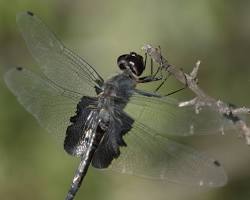
The Black Saddlebags Dragonfly (Tramea lacerata) is a large and highly recognizable dragonfly species known for the dark black patches on its hind wings that resemble saddlebags draped over the insect’s body. This impressive aerial predator is commonly seen gliding over ponds, marshes, lakes, fields, and wetlands during warm months. Black saddlebags dragonflies are highly beneficial insects because they prey on mosquitoes, gnats, flies, and other nuisance insects both during their aquatic nymph stage and as flying adults.
Unlike many insects that rely heavily on rapid wingbeats, black saddlebags dragonflies are expert gliders capable of covering long distances while searching for prey or breeding habitat. Their excellent vision, strong flight ability, and aggressive hunting behavior make them one of the most effective natural predators of flying insects in freshwater ecosystems.
These dragonflies are harmless to humans and are often welcomed around gardens, ponds, and outdoor spaces because of their ability to reduce populations of pest insects such as mosquitoes. Their graceful flight and bold wing markings also make them popular among nature observers and insect enthusiasts.
Quick Facts
- Scientific Name: Tramea lacerata
- Family: Libellulidae
- Common Habitat: Ponds, wetlands, marshes, lakes
- Size: Wingspan of approximately 3 to 3.5 inches
- Diet: Mosquitoes, flies, gnats, and small flying insects
- Status: Beneficial predator
Identification
The Black Saddlebags Dragonfly is easily identified by the large dark patches located near the base of its hind wings.
Key identifying characteristics include:
- Large black wing patches resembling saddlebags
- Dark brown or black slender abdomen
- Long transparent wings
- Large compound eyes
- Fast gliding flight pattern
- Long narrow body shape
Adults typically have:
- A wingspan between 3 and 3.5 inches
- Thin elongated abdomens
- Dark thorax coloration
- Strong agile flight
The black patches on the hind wings are visible both when the dragonfly is resting and in flight, making the species relatively easy to identify compared to other dragonflies.
Their flight behavior is also distinctive. Black saddlebags frequently soar and glide for long periods with very little wing movement.
Distribution and Habitat
Black saddlebags dragonflies occur widely across North America and are especially abundant in warm regions during spring and summer.
They commonly inhabit:
- Ponds
- Marshes
- Wetlands
- Slow-moving streams
- Lakeshores
- Flooded fields
- Retention basins
Adults are frequently observed:
- Flying above water surfaces
- Perching on reeds and grasses
- Patrolling shorelines
- Hunting above lawns and gardens
The aquatic nymphs require freshwater habitats where they develop beneath the water surface.
Because adults are strong fliers, they may travel significant distances away from breeding sites and are often seen migrating seasonally.
Life Cycle
Like other dragonflies, the Black Saddlebags Dragonfly undergoes incomplete metamorphosis.
The life stages include:
- Egg
- Aquatic nymph
- Adult
Females deposit eggs directly into water or onto aquatic vegetation.
After hatching, the nymphs live underwater where they become highly active aquatic predators.
Nymphs feed on:
- Mosquito larvae
- Aquatic insects
- Small crustaceans
- Tadpoles
- Other invertebrates
The nymph stage may last several months depending on environmental conditions.
Once mature, the nymph climbs onto vegetation or nearby surfaces where the adult dragonfly emerges from the final molt.
Newly emerged adults gradually harden their wings before taking flight.
Behavior
Black saddlebags dragonflies are active daytime predators.
Adults capture prey in midair using their spiny legs to trap insects while flying.
Common prey includes:
- Mosquitoes
- Gnats
- Small flies
- Midges
- Flying ants
- Tiny moths
These dragonflies are extremely agile and can:
- Hover
- Glide
- Change direction rapidly
- Fly backwards briefly
- Patrol large territories
Males are territorial and may aggressively chase away competing dragonflies near breeding habitats.
Unlike many pest insects, dragonflies do not bite or sting humans.
Pest Status
The Black Saddlebags Dragonfly is considered highly beneficial.
Benefits include:
- Natural mosquito control
- Reduction of nuisance flies
- Support of freshwater ecosystem balance
- Indicator of healthy aquatic habitats
Because both adults and nymphs are predators, dragonflies help suppress pest insects at multiple life stages.
They are especially valuable around:
- Backyard ponds
- Wetland landscapes
- Gardens
- Parks
- Agricultural water sources
They do not damage plants, structures, food, or property.
Prevention
No prevention is necessary because Black Saddlebags Dragonflies are beneficial insects.
Many homeowners and gardeners actively encourage dragonflies by:
- Installing backyard ponds
- Maintaining native wetland vegetation
- Avoiding unnecessary pesticide use
- Providing aquatic habitat
Reducing broad-spectrum insecticides helps protect dragonfly populations and other beneficial predators.
Control
Control is not recommended.
Dragonflies provide important ecological benefits and are harmless to humans and pets.
In rare situations where dragonflies gather near artificial ponds or water features, no action is generally needed because they naturally disperse as prey availability changes.
Interesting Facts
- The dark hind-wing patches resemble saddlebags, giving the species its common name.
- Black saddlebags are capable of long-distance migration.
- Dragonflies are among the fastest flying insects in North America.
- Nymphs live underwater before emerging as adults.
- Both adults and nymphs are aggressive insect predators.
- Dragonflies have excellent vision due to their massive compound eyes.