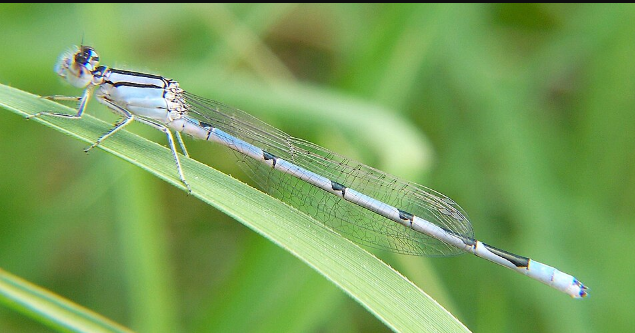
American Bluet Damselfly (Enallagma spp.) is a group of small, slender damselflies in the family Coenagrionidae, commonly referred to as narrow-winged damselflies. These insects are widespread across North America and are frequently found near freshwater habitats such as ponds, lakes, streams, and wetlands. Known for their delicate bodies and striking blue-and-black coloration, American bluets are among the most commonly observed damselflies in both natural and urban environments.
American bluet damselflies are considered beneficial insects due to their role as predators of smaller insects, including mosquitoes and other nuisance species. They contribute to maintaining ecological balance in aquatic and terrestrial ecosystems.
Taxonomy and Classification
- Common Name: American Bluet Damselfly
- Scientific Name: Enallagma spp.
- Order: Odonata
- Family: Coenagrionidae
- Type: Damselfly (aquatic insect predator)
The genus Enallagma includes numerous closely related species, often collectively referred to as bluets. These species can be difficult to distinguish without close examination, but they share similar ecological roles and physical traits.
Identification and Physical Description
American bluet damselflies are small, slender insects, typically measuring 1 to 1.5 inches in length. Their bodies are elongated and delicate, with narrow wings held together above the body when at rest.
Key identifying features include:
- Bright blue coloration with black markings
- Slender abdomen segmented with alternating color patterns
- Large compound eyes positioned on the sides of the head
- Transparent wings with fine venation
Males are often more vividly colored than females, while females may display more muted blue or even greenish tones depending on the species.
Life Cycle
American bluet damselflies undergo incomplete metamorphosis, developing through egg, nymph (larval), and adult stages.
Females lay eggs in or near water, often inserting them into aquatic vegetation. After hatching, the nymphs live in the water, where they are active predators.
The nymph stage may last several months to over a year, depending on environmental conditions. During this time, nymphs feed on small aquatic organisms.
When ready to mature, the nymph climbs out of the water and undergoes a final molt, emerging as a winged adult. Adults live for several weeks, during which they feed, mate, and reproduce.
Habitat and Distribution
American bluet damselflies are widely distributed across North America and are commonly found in:
- Ponds and lakes
- Streams and rivers
- Wetlands and marshes
- Garden water features
They prefer habitats with abundant aquatic vegetation, which provides shelter and breeding sites.
Behavior and Ecology
Adult damselflies are active during the day and are often seen flying low over water or resting on vegetation. They are agile fliers, although less robust than their close relatives, the dragonflies.
Both nymphs and adults are predatory. Adults feed on small flying insects, including mosquitoes, flies, and other pests. Nymphs capture aquatic prey using a specialized extendable mouthpart.
American bluets often form mating pairs, where the male and female connect in a distinctive “heart-shaped” position during reproduction.
As part of the ecosystem, they serve as both predators and prey, supporting food webs in aquatic and terrestrial environments.
Diet
American bluet damselflies feed on a variety of small insects.
- Adults: Mosquitoes, flies, gnats, and other small flying insects
- Nymphs: Aquatic larvae, small crustaceans, and other invertebrates
This predatory behavior makes them valuable in controlling insect populations.
Benefits and Importance
American bluet damselflies provide several ecological benefits:
- Control of mosquito populations
- Support of aquatic ecosystem health
- Contribution to biodiversity
- Indicator of clean water and healthy habitats
Their presence often indicates a well-balanced and relatively unpolluted aquatic environment.
Human Interaction and Risks
American bluet damselflies are completely harmless to humans. They do not bite or sting and are not considered pests.
They are often appreciated for their beauty and their role in controlling nuisance insects.
Management and Conservation
Rather than controlling these insects, efforts are typically focused on conservation and habitat protection.
- Protect water quality: Reduce pollution in aquatic habitats.
- Maintain vegetation: Preserve aquatic and shoreline plants.
- Avoid pesticides: Limit chemical use that may harm beneficial insects.
These practices support healthy populations of damselflies and other beneficial species.
Prevention
No prevention is necessary, as American bluet damselflies are beneficial and not harmful.
Encouraging their presence can help naturally reduce populations of pest insects.
Related Articles
Conclusion
The American Bluet Damselfly is a graceful and beneficial insect that plays a vital role in aquatic ecosystems. Its predatory habits help control populations of smaller insects, including pests such as mosquitoes.
By supporting biodiversity and indicating healthy water conditions, these damselflies are an important part of natural environments. Their presence should be encouraged and appreciated as part of sustainable and balanced ecosystems.