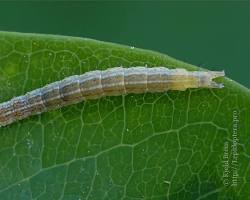
Ypsolopha Leafrollers
Ypsolopha Leafrollers are small caterpillars belonging to the family Ypsolophidae that are known for their habit of rolling, folding, or webbing leaves together to create protective feeding shelters. These insects attack a variety of ornamental shrubs, deciduous trees, and fruit-bearing plants, where they feed on foliage while remaining concealed inside their silk-lined shelters.
Although they rarely kill healthy plants, Ypsolopha Leafrollers can cause significant aesthetic damage and reduce plant vigor when populations become large. Their feeding removes valuable leaf tissue, reducing photosynthesis and slowing plant growth. In nurseries and ornamental landscapes, even moderate infestations can lower the visual quality and market value of affected plants.
The larvae are especially notable for their agility and defensive behavior. When disturbed, they often wriggle violently, drop from the plant on silk threads, or retreat deeper into their rolled leaves. This behavior helps them avoid predators and makes them more difficult to control than many exposed caterpillar species.
Taxonomy and Classification
- Kingdom: Animalia
- Phylum: Arthropoda
- Class: Insecta
- Order: Lepidoptera
- Family: Ypsolophidae
- Genus: Ypsolopha
Ypsolopha Leafrollers undergo complete metamorphosis, progressing through egg, larval, pupal, and adult moth stages.
Identification
The larval stage is responsible for all significant plant damage.
- Length: Approximately 15–20 mm when mature.
- Color: Bright green, pale green, or yellow-green.
- Shape: Slender and tapered at both ends.
- Markings: Often possess faint longitudinal stripes.
- Movement: Extremely active when disturbed.
Adults are narrow-bodied moths that are often overlooked.
- Gray, brown, or tan coloration.
- Slender wings held tightly against the body.
- Nocturnal behavior.
- Excellent camouflage on bark and foliage.
The rolled leaves themselves are often the easiest way to detect an infestation.
Distribution and Habitat
Ypsolopha Leafrollers occur throughout temperate regions wherever suitable host plants are available.
Common habitats include:
- Ornamental landscapes
- Residential gardens
- Parks
- Nurseries
- Woodlands
- Hedgerows
- Fruit orchards
Many species are associated with specific host plants, while others utilize a wider range of shrubs and trees.
Host Plants
Known host plants include:
- Honeysuckle
- Oak
- Beech
- Hackberry
- Euonymus
- Fruit trees
- Various ornamental shrubs
Young foliage is generally preferred because it is softer and more nutritious.
Life Cycle
Ypsolopha Leafrollers undergo complete metamorphosis.
- Egg Stage: Females lay eggs on foliage or developing shoots.
- Larval Stage: Newly hatched caterpillars begin feeding and quickly construct protective leaf shelters using silk.
- Pupal Stage: Pupation occurs within the rolled leaf or nearby plant debris.
- Adult Stage: Adult moths emerge, mate, and lay eggs for the next generation.
Depending on species and climate, one or multiple generations may occur annually.
Behavior
Leaf rolling is the defining behavior of these insects.
- Leaves are folded or rolled with silk.
- Caterpillars feed from within concealed shelters.
- Larvae avoid predators and environmental stress.
- Silk shelters expand as feeding progresses.
- Disturbed larvae often drop on silk threads.
This protective strategy allows larvae to feed for extended periods while remaining hidden from many natural enemies.
Damage and Economic Importance
Damage results from direct feeding on leaf tissues.
Leaf Rolling
The most obvious symptom is the appearance of rolled or folded leaves.
- Distorted foliage.
- Curled leaf margins.
- Visible silk webbing.
- Sheltered feeding sites.
Skeletonization
Young larvae often feed on internal leaf tissues while leaving portions of the leaf surface intact.
- Windowpane damage.
- Brown translucent patches.
- Reduced photosynthetic area.
Canopy Thinning
Heavy infestations may result in:
- Partial defoliation.
- Reduced vigor.
- Slower growth.
- Poor ornamental appearance.
Nursery and Landscape Losses
Even minor feeding damage can reduce the value of ornamental plants.
- Reduced marketability.
- Poor visual quality.
- Customer rejection of nursery stock.
Signs of Infestation
Common indicators include:
- Rolled or folded leaves.
- Fine silk webbing.
- Chewed foliage.
- Frass inside leaf shelters.
- Small green caterpillars.
- Brown feeding scars.
Opening rolled leaves often reveals the caterpillar hidden inside.
Behavior and Conflict
The pest status of Ypsolopha Leafrollers is tied to their concealed feeding habits.
- Hidden Feeding: Larvae remain protected within leaf shelters.
- Rapid Movement: Caterpillars quickly escape disturbance.
- Extended Feeding: Protected environments allow continuous feeding.
- Aesthetic Damage: Rolled leaves reduce ornamental quality.
While infestations rarely threaten mature trees, repeated feeding can stress young or high-value plants.
Management and Prevention
Integrated Pest Management provides the most effective control.
Monitoring
- Inspect new growth regularly.
- Look for rolled leaves.
- Monitor host plants during spring and summer.
- Detect infestations before populations expand.
Mechanical Control
- Remove rolled leaves.
- Destroy infested foliage.
- Prune heavily affected shoots.
This method is highly effective for small infestations.
Biological Control
Natural enemies often help suppress populations.
- Parasitic wasps
- Predatory bugs
- Birds
- Spiders
- Ground beetles
Microbial Control
Bacillus thuringiensis (Bt) can provide excellent control when applied against young larvae before extensive leaf rolling develops.
Cultural Practices
- Maintain plant vigor.
- Encourage beneficial insects.
- Remove plant debris.
- Avoid unnecessary pesticide applications that harm natural enemies.
Conservation and Research
Research continues to focus on biological control, host plant preferences, population monitoring, and sustainable management methods. Scientists are particularly interested in understanding the behavioral adaptations that make leafrollers successful at avoiding predators and environmental stress.
Ypsolopha Leafrollers are common ornamental and landscape pests that create distinctive rolled leaves while feeding on foliage. Although damage is usually aesthetic, heavy infestations can reduce plant vigor, distort growth, and lower the quality of valuable nursery and landscape plants.