Yponomeutid Hedge Pests
Yponomeutid Hedge Pests are web-forming caterpillars belonging to the ermine moth family (Yponomeutidae) that attack ornamental hedges, privacy screens, and landscape shrubs. Species such as the Spindle Ermine Moth (Yponomeuta cagnagella) are particularly notorious for their ability to cover entire sections of hedges with dense silk webbing while rapidly consuming foliage.
These insects are among the most visually dramatic hedge pests found in residential and commercial landscapes. Large infestations can transform a healthy green hedge into a web-covered skeleton within a few weeks. While mature hedges often survive a single infestation, repeated attacks may reduce growth, weaken plants, and diminish their effectiveness as privacy screens and ornamental features.
Because the larvae live and feed within extensive communal silk shelters, infestations often grow unnoticed until significant defoliation has already occurred.
Taxonomy and Classification
- Kingdom: Animalia
- Phylum: Arthropoda
- Class: Insecta
- Order: Lepidoptera
- Family: Yponomeutidae
- Genus: Yponomeuta
Members of this family undergo complete metamorphosis and are known for their communal feeding behavior and extensive silk production.
Identification
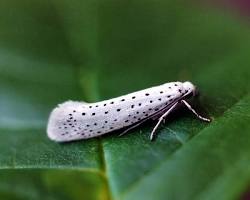
Adult ermine moths are small but distinctive.
- Wingspan: Approximately 20–25 mm.
- Color: Silky white or cream-colored wings.
- Markings: Numerous tiny black dots.
- Body: Slender and delicate.
- Activity: Primarily active during evening and nighttime hours.
The caterpillars are responsible for all feeding damage.
- Length: Up to 20 mm.
- Color: Pale yellow to greenish-gray.
- Markings: Distinct rows of black spots.
- Behavior: Found in large communal groups within silk shelters.
The extensive silk webbing surrounding branches and leaves is the most recognizable sign of infestation.
Distribution and Habitat
Yponomeutid Hedge Pests occur throughout temperate regions where ornamental hedges and shrubs are common.
Typical habitats include:
- Residential landscapes
- Commercial properties
- Public parks
- School grounds
- Botanical gardens
- Urban green spaces
- Roadside plantings
Infestations are especially common where large hedge plantings provide concentrated food resources.
Host Plants
These pests attack a variety of ornamental hedge species.
- Euonymus
- Spindle shrubs
- Privet
- Hawthorn
- Cherry laurel
- Crabapple
- Various ornamental shrubs
Different species may specialize on particular host plants.
Life Cycle
Most Yponomeutid Hedge Pests complete one generation annually.
- Egg Stage: Females lay eggs on stems and branches during summer.
- Overwintering Stage: Young larvae remain protected beneath egg coverings throughout winter.
- Larval Stage: Feeding begins in spring as new foliage emerges.
- Pupal Stage: Pupation occurs within silk shelters.
- Adult Stage: Adult moths emerge during summer and reproduce.
The larval stage causes all significant hedge damage.
Behavior
These caterpillars exhibit highly social feeding behavior.
- Feed in large colonies.
- Create communal silk shelters.
- Expand webbing as foliage is consumed.
- Remain protected within silk nests.
- Move collectively through hedge canopies.
The silk nests act as protective barriers against predators and environmental conditions.
Damage and Economic Importance
The primary impact results from extensive foliage consumption.
Defoliation
Caterpillars rapidly remove foliage from hedge plants.
- Skeletonized leaves.
- Leaf loss.
- Reduced photosynthesis.
- Canopy thinning.
Reduced Hedge Density
Severe infestations may reduce hedge effectiveness.
- Loss of privacy screening.
- Reduced visual barriers.
- Thin canopy structure.
- Delayed growth recovery.
Aesthetic Damage
The most common complaint involves appearance.
- Silk-covered branches.
- Ghost-like hedge appearance.
- Visible caterpillar colonies.
- Defoliated sections.
Plant Stress
Repeated infestations can weaken plants over time.
- Reduced vigor.
- Slower growth.
- Increased drought susceptibility.
- Higher disease vulnerability.
Signs of Infestation
Common indicators include:
- Large silk webs covering branches.
- Clusters of spotted caterpillars.
- Skeletonized foliage.
- Defoliated hedge sections.
- Accumulations of frass.
- Silken pupal cocoons.
Infestations often begin as small webbed areas before spreading rapidly throughout the hedge.
Behavior and Conflict
The pest status of Yponomeutid Hedge Pests stems from their ability to create large, protected feeding colonies.
- Communal Feeding: Large groups consume foliage quickly.
- Protective Webbing: Shields caterpillars from natural enemies.
- Rapid Expansion: Colonies spread throughout hedge plantings.
- Visual Impact: Extensive webbing creates highly noticeable damage.
The combination of silk production and heavy feeding makes these pests among the most dramatic hedge defoliators encountered in ornamental landscapes.
Management and Prevention
Integrated Pest Management (IPM) is the most effective approach.
Monitoring
- Inspect hedges during early spring.
- Look for egg masses and small silk nests.
- Monitor susceptible host plants.
- Identify infestations before expansion.
Mechanical Control
- Prune infested branches.
- Remove silk nests.
- Dispose of heavily infested material.
Early removal can prevent large-scale infestations.
Biological Control
Natural enemies help suppress populations.
- Ichneumonid wasps
- Predatory beetles
- Lacewings
- Birds
- Spiders
Microbial Control
Bacillus thuringiensis (Bt) can provide excellent control when applied against young caterpillars before webbing becomes extensive.
Cultural Practices
- Maintain plant health.
- Promote biodiversity.
- Encourage beneficial insects.
- Avoid unnecessary broad-spectrum insecticides.
Conservation and Research
Research focuses on biological control, outbreak prediction, host plant resistance, and sustainable landscape management strategies. Scientists continue to study natural enemy populations and environmental factors that influence outbreak development.
Yponomeutid Hedge Pests remain important ornamental pests because of their ability to rapidly defoliate hedges while covering them with extensive silk webbing. Early detection and integrated management are essential for preserving healthy, attractive landscape plantings.