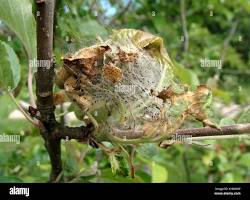
Yponomeuta Fruit Tree Moths
Yponomeuta Fruit Tree Moths are a group of ermine moths that primarily attack fruit trees such as apple, cherry, plum, and related orchard crops. Species including Yponomeuta malinellus (Apple Ermine Moth) and Yponomeuta padella (Orchard Ermine Moth) are well known for producing large silk webs that can cover entire branches during severe infestations. Beneath these protective webs, hundreds of caterpillars feed collectively on leaves and young shoots.
These insects are important orchard pests because their feeding directly affects tree health and fruit production. Heavy infestations can strip leaves from branches, reduce photosynthesis, weaken trees, and lower fruit quality. In commercial orchards, outbreaks may result in reduced yields and significant economic losses.
Although mature trees often survive infestations, repeated defoliation can reduce vigor, delay growth, and increase susceptibility to environmental stress and disease.
Taxonomy and Classification
- Kingdom: Animalia
- Phylum: Arthropoda
- Class: Insecta
- Order: Lepidoptera
- Family: Yponomeutidae
- Genus: Yponomeuta
Fruit tree ermine moths undergo complete metamorphosis and spend much of their damaging stage as communal caterpillars protected within silk nests.
Identification
Adult moths are small but distinctive.
- Wingspan: Approximately 18–22 mm.
- Color: Bright white forewings.
- Markings: Multiple rows of small black spots.
- Body: Slender and delicate.
- Activity: Primarily active during summer.
The caterpillars are easier to recognize during outbreaks.
- Length: Up to 20 mm.
- Color: Pale yellow, gray-green, or cream.
- Markings: Numerous black spots along the body.
- Behavior: Feed in large groups inside silk webs.
The most obvious sign of infestation is the extensive white silk webbing that covers branches and foliage.
Distribution and Habitat
Yponomeuta Fruit Tree Moths are found throughout temperate fruit-growing regions.
Common habitats include:
- Commercial orchards
- Backyard fruit trees
- Home gardens
- Parks
- Hedgerows
- Rural landscapes
They are particularly common where apple, cherry, plum, hawthorn, and related host plants are abundant.
Host Plants
Preferred hosts include:
- Apple trees
- Cherry trees
- Plum trees
- Crabapple trees
- Hawthorn
- Various ornamental fruiting trees
Different Yponomeuta species often specialize on particular host plants.
Life Cycle
Yponomeuta Fruit Tree Moths complete one generation per year in most regions.
- Egg Stage: Females lay eggs on twigs and branches during summer.
- Overwintering Stage: Young larvae remain dormant beneath protective coverings through winter.
- Larval Stage: Feeding resumes in spring as temperatures increase.
- Pupal Stage: Pupation occurs within dense silk nests.
- Adult Stage: Adult moths emerge during summer and begin reproduction.
The larval stage is responsible for virtually all plant damage.
Behavior
These caterpillars are highly social insects.
- Feed in large colonies.
- Construct communal silk shelters.
- Expand webs as food resources are consumed.
- Move collectively through the canopy.
- Remain protected from predators and weather.
The silk structures allow large populations to develop while reducing exposure to natural enemies.
Damage and Economic Importance
Fruit tree moth caterpillars damage trees primarily through defoliation.
Leaf Consumption
Caterpillars consume large quantities of foliage.
- Skeletonized leaves.
- Partial leaf loss.
- Complete defoliation.
- Reduced photosynthesis.
Reduced Fruit Development
Loss of leaf area reduces the tree’s ability to produce energy.
Consequences may include:
- Smaller fruit.
- Reduced sugar content.
- Poor fruit coloration.
- Premature fruit drop.
Branch Stress
Heavily infested branches often experience:
- Growth reduction.
- Delayed recovery.
- Increased disease susceptibility.
- Reduced flowering the following season.
Aesthetic Damage
Large silk webs can dramatically alter the appearance of fruit trees.
- Unsightly branches.
- Visible silk tents.
- Accumulation of frass.
- Reduced landscape value.
Signs of Infestation
Common indicators include:
- White silk webbing.
- Clusters of caterpillars.
- Skeletonized leaves.
- Defoliated branches.
- Black frass deposits.
- Visible cocoons within webs.
Outbreaks often begin on isolated branches before spreading throughout the canopy.
Behavior and Conflict
The pest status of Yponomeuta Fruit Tree Moths is linked to their ability to feed collectively.
- Communal Feeding: Large colonies consume foliage rapidly.
- Protective Webbing: Shields larvae from predators.
- Rapid Population Growth: Outbreaks can develop quickly.
- Fruit Production Loss: Defoliation reduces orchard productivity.
Commercial orchards are particularly vulnerable because even moderate reductions in fruit quality can affect profitability.
Management and Prevention
Integrated Pest Management provides the most effective long-term strategy.
Monitoring
- Inspect fruit trees during spring.
- Watch for early silk formation.
- Monitor developing foliage.
- Identify small colonies before expansion.
Mechanical Control
- Prune infested branches.
- Destroy silk nests.
- Remove heavily infested material.
Early intervention greatly reduces population growth.
Biological Control
Numerous natural enemies attack Yponomeuta caterpillars.
- Parasitic wasps
- Predatory beetles
- Birds
- Spiders
- Beneficial insects
Conserving these organisms can help prevent major outbreaks.
Microbial Control
Bacillus thuringiensis (Bt) is highly effective against young caterpillars when applied before heavy webbing develops.
Water Disruption
Strong water sprays may break open webs and expose caterpillars to predators and environmental stress.
Conservation and Research
Research focuses on outbreak prediction, biological control programs, host plant resistance, and sustainable orchard management. Scientists continue to investigate methods for improving natural enemy effectiveness while minimizing pesticide use in commercial fruit production.
Yponomeuta Fruit Tree Moths remain important orchard pests because of their communal feeding behavior, extensive silk webbing, and ability to reduce fruit production. Early monitoring, biological control, and targeted intervention remain essential for maintaining healthy and productive fruit trees.