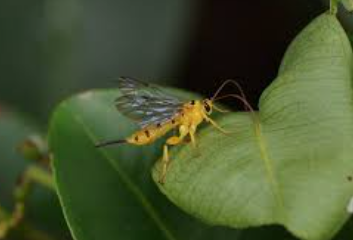
Xanthopimpla parasitic wasps are a genus of ichneumonid wasps known for their role as biological control agents in agricultural and natural ecosystems. These brightly colored wasps, typically yellow with black markings, are parasitoids—meaning their larvae develop inside or on a host insect, eventually leading to the host’s death. They primarily target the pupal stages of moths and butterflies, many of which are considered agricultural pests.
These wasps are widely distributed in tropical and subtropical regions, although some species extend into temperate climates. Their ecological importance lies in their ability to regulate pest populations naturally, reducing the need for chemical insecticides.
The “Pupal-Terminator”: Xanthopimpla Parasitic Wasps
The Xanthopimpla genus consists of highly efficient beneficial parasitoids within the family Ichneumonidae. For Pestipedia.com users, these insects represent a critical biological control for managing lepidopterous (moth and butterfly) pests. In the United States, they act as natural population regulators, specifically targeting the pupal stage of stem borers and leafrollers. By terminating the pest during its transition to adulthood, they effectively break the reproductive cycle before the next generation can emerge.
Technical Identification: Diagnostic Markers
- Phenotype: Adults exhibit a vibrant, lemon-yellow pigmentation with distinct, symmetrical black spots on the dorsal abdominal segments.
- Anatomy (Female): Features a highly sclerotized, needle-like ovipositor. Unlike stinging wasps, this organ is a precision tool used to penetrate the tough, protective pupal cases or silk cocoons of moth larvae.
- Behavioral Pattern: They are diurnal patrollers, most active during peak U.S. sunlight hours. They utilize sensitive vibrations and chemical cues (kairomones) to locate hosts hidden deep within plant stems or rolled leaves without needing visual contact.
Parasitism Impact: Transition Phase Termination
The primary impact of Xanthopimpla is the total destruction of the host’s Pupal Stage, rendering it a “dead-end” host.
- Host Specificity: They are primary solitary endoparasitoids. Key targets in the United States include the European Corn Borer (Ostrinia nubilalis), Greater Wax Moth, and various Leafrollers affecting orchard crops.
- Developmental Mechanism: After the female injects an egg into the host pupa, the wasp larva consumes the host’s internal tissues. This results in 100% mortality of the host before it can reach the adult (moth) stage.
- Efficiency Metric: In low-input U.S. agricultural systems, Xanthopimpla can account for a 20% to 45% reduction in second-generation pest populations.
Management & Conservation Strategies
To maximize the impact of Xanthopimpla in your landscape or field, focus on habitat architecture and selective chemistry.
| Strategy | Technical Specification | Operational Benefit |
|---|---|---|
| Habitat Refuges | Planting Apiaceae (Dill, Fennel, Cilantro) | Provides necessary carbohydrate fuel (nectar) for adult wasps. |
| Chemical Selection | Prioritizing Diamides (e.g., Chlorantraniliprole) | Effectively targets pests while remaining non-toxic to beneficial wasps. |
| Tillage Restriction | Maintaining reduced-till field margins | Preserves overwintering sites for the wasp’s alternative hosts. |
- Monitoring: Look for yellow wasps patrolling your crops in the mid-summer. If adults are observed at a density of 1 per 10 linear feet of row, biological pressure is often high enough to justify withholding chemical sprays.
- Toxicity Warning: Avoid using Organophosphates or Carbamates during peak flight periods, as these broad-spectrum insecticides are highly lethal to Xanthopimpla and other beneficial Hymenoptera.
Taxonomy and Classification
Order Hymenoptera, family Ichneumonidae. This family includes thousands of parasitoid species that target a wide range of insect hosts.
Identification
Adult Xanthopimpla wasps are medium-sized insects, typically 1–2 centimeters long, with bright yellow bodies marked by black spots or bands. They have slender bodies, long antennae, and a prominent ovipositor used for laying eggs.
They are often seen hovering around vegetation or probing surfaces where host insects may be present.
Life Cycle
Females locate host pupae, often concealed within plant material or soil. Using their ovipositor, they lay eggs inside or on the host.
Larvae develop by feeding on the host, eventually killing it. After completing development, they pupate and emerge as adults.
Multiple generations may occur annually depending on environmental conditions.
Damage and Economic Importance
Xanthopimpla wasps do not damage plants. Instead, they provide significant ecological benefits by controlling populations of pest insects such as moth larvae.
In agricultural systems, their presence can reduce reliance on chemical pesticides and contribute to sustainable pest management.
Management and Control (IPM)
- Encourage habitat diversity: Supports parasitoid populations
- Plant flowering species: Provides nectar for adults
- Avoid broad-spectrum insecticides: Protect beneficial insects
- Integrate biological control: Enhance pest suppression
- Maintain ecosystem balance: Supports natural enemies
Conclusion
Xanthopimpla parasitic wasps are valuable biological control agents that play a crucial role in managing pest populations. Encouraging their presence is an important aspect of integrated pest management.