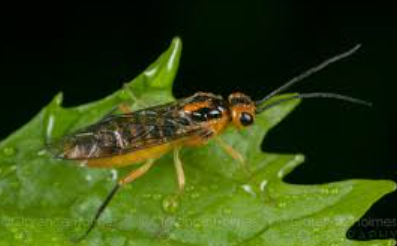
Willow shoot sawflies are specialized plant-feeding insects that attack willow trees and shrubs by damaging developing shoots and stems. Species such as Janus abbreviatus are particularly important because their larvae tunnel inside young willow shoots, causing wilting, dieback, and abnormal branching. Although they are not among the most widely recognized tree pests, they can significantly impact ornamental willows, nursery stock, and young trees when infestations become severe.
Unlike many leaf-feeding insects, willow shoot sawflies target the plant’s growing points. This feeding habit can permanently alter tree structure, reduce growth rates, and diminish the ornamental value of landscape specimens. Their concealed larval stage also makes infestations difficult to detect until visible damage has already occurred.
Taxonomy and Classification
- Kingdom: Animalia
- Phylum: Arthropoda
- Class: Insecta
- Order: Hymenoptera
- Suborder: Symphyta
- Family: Cephidae
- Genus: Janus
- Species: Janus abbreviatus
Sawflies belong to the same order as bees, ants, and wasps, but they lack the narrow waist that characterizes most true wasps. Their larvae often resemble caterpillars, though they are not closely related to moths or butterflies.
Physical Description
Adult Sawflies
Adult willow shoot sawflies are slender, wasp-like insects.
- Length: Approximately 8–10 millimeters.
- Color: Shiny black to dark brown.
- Body Shape: Narrow and elongated.
- Antennae: Long and thread-like.
- Wings: Transparent with visible veins.
Adults are harmless to humans and do not possess stingers.
Larvae
The larval stage is responsible for virtually all plant damage.
- Creamy white coloration.
- Legless appearance.
- Brown head capsule.
- Often curled into an S-shape when exposed.
- Develop entirely inside shoots and stems.
Because larvae remain hidden within plant tissue, they are rarely observed until damaged stems are cut open.
Distribution and Habitat
Willow shoot sawflies are found throughout much of North America wherever willow species occur.
They are particularly common in:
- Riparian habitats.
- Wetland ecosystems.
- Landscape plantings.
- Ornamental gardens.
- Tree nurseries.
- Windbreak plantings.
- Stream restoration projects.
Young, rapidly growing willows are especially attractive to egg-laying females.
Host Plants
Willow shoot sawflies primarily attack members of the willow family.
Common hosts include:
- Weeping willow.
- Black willow.
- Pussy willow.
- Crack willow.
- Shrub willows.
- Various ornamental willow cultivars.
- Some poplar species.
Fast-growing shoots are preferred because they provide ideal conditions for larval development.
Life Cycle
Adult Emergence
Adults typically emerge during spring when new growth begins to develop.
After mating, females search for suitable shoots for egg deposition.
Egg Laying
Using a specialized egg-laying structure called an ovipositor, females insert eggs into young shoots.
During this process, they often create a series of punctures that partially girdle the stem.
Larval Feeding
Once eggs hatch, larvae begin feeding internally.
- Tunnel downward through the shoot.
- Consume pith and internal tissues.
- Create hollow chambers within stems.
- Remain protected from predators and pesticides.
This internal feeding continues for several weeks.
Pupation
After completing development, larvae pupate within stems or nearby plant material.
Adults emerge the following season to begin a new generation.
Most species produce one generation per year.
Signs of Infestation
Willow shoot sawfly infestations are usually identified through symptoms rather than direct observation of the insects.
Flagging Shoots
The earliest sign is often sudden wilting of young shoots.
- Drooping branch tips.
- Wilted new growth.
- Blackened shoot ends.
- Dead terminal buds.
Girdling Marks
Close inspection often reveals:
- Tiny puncture wounds.
- Ring-like feeding scars.
- Spiral rows of oviposition marks.
- Stem constrictions.
Internal Tunnels
Cutting open damaged stems frequently reveals:
- Hollow centers.
- Brown frass.
- Feeding galleries.
- Developing larvae.
Damage and Economic Importance
Shoot Dieback
Girdling and tunneling interrupt the movement of water and nutrients.
This causes:
- Tip death.
- Wilted shoots.
- Loss of new growth.
- Reduced canopy development.
Structural Deformities
When terminal shoots die, dormant buds below the damaged area begin growing.
This can create:
- Excessive branching.
- Bushy growth.
- Poor tree form.
- Asymmetrical canopies.
These effects are particularly undesirable in ornamental landscape trees.
Reduced Growth
Repeated infestations can slow overall development.
- Shorter annual growth.
- Reduced vigor.
- Smaller canopies.
- Delayed establishment.
Nursery Losses
Commercial growers may experience economic impacts due to:
- Deformed nursery stock.
- Lower market value.
- Additional pruning costs.
- Reduced tree quality.
Behavior and Ecology
Internal Feeders
Unlike many sawflies that feed openly on foliage, willow shoot sawfly larvae remain hidden within stems.
This behavior:
- Protects them from predators.
- Reduces exposure to weather.
- Makes chemical control difficult.
Preference for New Growth
Females specifically target young shoots because:
- Tissues are softer.
- Nutrient levels are high.
- Larvae can tunnel more easily.
- Growth points provide ideal feeding sites.
Management and Control
Pruning
Pruning is the most effective control method.
- Remove wilted shoots immediately.
- Cut well below visible damage.
- Inspect for internal tunnels.
- Continue pruning until healthy tissue is reached.
Destroy Infested Material
Removed shoots should never be left nearby.
- Bag infested material.
- Dispose of properly.
- Chip or burn where permitted.
- Prevent larval survival.
Monitoring
Regular inspections help identify infestations before extensive damage develops.
- Check new growth in spring.
- Look for drooping tips.
- Inspect stems for punctures.
- Prune promptly when symptoms appear.
Biological Control
Natural enemies help suppress populations.
- Parasitic wasps.
- Predatory insects.
- Woodpeckers.
- Insect-eating birds.
Maintaining diverse habitats encourages these beneficial organisms.
Chemical Control
Chemical management is often limited because larvae remain protected inside stems.
Preventative applications targeting adults may occasionally be used in nurseries, but pruning remains the most reliable control strategy.
Prevention
- Inspect new growth regularly.
- Maintain healthy trees.
- Prune damaged shoots promptly.
- Encourage natural enemies.
- Avoid unnecessary plant stress.
- Monitor nursery stock before planting.
Interesting Facts
- Willow shoot sawflies are more closely related to bees than caterpillars.
- The female’s ovipositor creates both egg-laying wounds and stem damage.
- Larvae can tunnel several inches inside shoots.
- Damage often resembles disease or drought stress.
- Most infestations are first noticed because of sudden shoot wilting.
Conclusion
Willow shoot sawflies are specialized stem-boring insects that can significantly affect the growth and appearance of willow trees. Their larvae develop inside young shoots, causing wilting, dieback, structural deformities, and reduced vigor. Because the damaging stage remains hidden within plant tissues, early detection and prompt pruning are essential for effective management. Through regular monitoring, sanitation, and integrated pest management practices, homeowners, landscapers, and nursery operators can successfully minimize damage and maintain healthy willow plantings.