Overview
Vitinea Root Borers are subterranean insect pests that attack the root crowns and root systems of vines, shrubs, and other perennial plants. Although the term may encompass several root-boring species, these pests are most commonly associated with clearwing moths and other insects whose larvae develop underground while feeding on woody roots and crown tissues.
Unlike foliar pests that produce obvious feeding damage, root borers operate out of sight beneath the soil surface. Their hidden feeding habits often allow infestations to remain undetected for months or even years. By the time symptoms appear above ground, substantial root damage may already have occurred.
Root borers are among the most destructive pests affecting vineyards, ornamental landscapes, fruit plantings, and perennial crops because they attack the structural foundation of the plant. Heavy infestations can weaken plants, reduce productivity, and eventually cause complete plant death.
Taxonomy and Classification
Vitinea root borers are considered a functional group of root-feeding insects rather than a single taxonomic species. Most species belong to insect groups known for their wood-boring and root-feeding larvae.
- Kingdom: Animalia
- Phylum: Arthropoda
- Class: Insecta
- Order: Lepidoptera or Coleoptera
- Common Groups: Clearwing Moths, Root Borers, Root Weevils
Many species resemble wasps as adults, providing protection from predators through mimicry.
Identification
Adult Stage
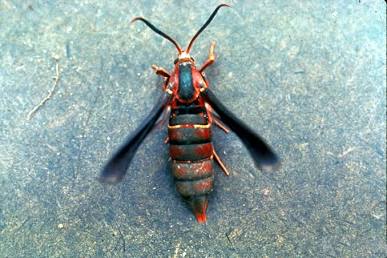
Adult Vitinea root borers are often mistaken for wasps due to their slender bodies and transparent wings.
- Size: 20–40 millimeters long.
- Color: Black, brown, or metallic with yellow or orange bands.
- Wings: Clear or partially transparent.
- Behavior: Active during warm daylight hours.
Larval Stage
The larval stage causes virtually all damage.
- Color: Creamy white.
- Head: Brown to reddish-brown.
- Shape: Cylindrical and legless.
- Length: Up to 38 millimeters when mature.
Signs of Infestation
Because larvae remain hidden underground, infestations are usually identified through indirect symptoms.
- Wilting foliage despite adequate moisture.
- Yellowing leaves.
- Reduced growth.
- Premature leaf drop.
- Dieback of shoots and branches.
- Sawdust-like frass around the base of plants.
- Gummy sap deposits near the root crown.
- Sudden plant collapse during hot weather.
Distribution and Habitat
Vitinea root borers occur throughout many vineyard, orchard, and ornamental growing regions of North America. They are most frequently associated with perennial plants that possess woody root systems.
Common habitats include:
- Vineyards
- Berry farms
- Fruit orchards
- Home gardens
- Landscaped properties
- Nurseries
- Natural woodland edges
Warm climates and stressed plants often favor infestation development.
Host Plants
Root borers attack a variety of plants depending on species.
Common hosts include:
- Grapevines
- Virginia creeper
- Berry-producing vines
- Fruit trees
- Ornamental shrubs
- Woody landscape plants
Plants weakened by drought, disease, or physical injury are often more vulnerable.
Life Cycle
Egg Stage
Adult females lay eggs near the soil surface, around root crowns, or in cracks within bark near the base of host plants.
Larval Stage
After hatching, larvae burrow into root tissues and begin feeding.
This stage may last several months and is responsible for virtually all plant damage.
Larvae tunnel extensively through roots and crown tissues, disrupting water and nutrient movement.
Pupal Stage
Pupation typically occurs within root tunnels or nearby soil chambers.
Prior to emergence, pupae often move closer to the soil surface.
Adult Stage
Adults emerge during spring or summer and begin mating shortly afterward.
Most species produce one generation annually, although warmer climates may support additional generations.
Damage and Economic Importance
Root Destruction
Larval feeding removes critical root tissues responsible for nutrient and water absorption.
As damage increases, plants become increasingly unable to support normal growth.
Crown Girdling
Tunnels frequently develop around the root crown, effectively girdling the plant.
This restricts movement of water and nutrients between roots and foliage.
Reduced Productivity
Infested plants often produce:
- Smaller fruit
- Reduced yields
- Poor flowering
- Weaker growth
- Reduced vigor
Secondary Diseases
Borer tunnels create entry points for fungal pathogens and bacterial infections.
Root rots and crown diseases frequently follow severe infestations.
Plant Death
Heavy infestations can eventually destroy enough root tissue to kill the entire plant.
Collapse often occurs during periods of drought or extreme heat when water demand is highest.
Signs of Severe Infestation
- Sudden wilting during summer.
- Dead branches.
- Reduced fruit production.
- Poor spring growth.
- Root crown decay.
- Visible frass near the base of plants.
- Pupal cases protruding from soil.
Natural Enemies
Several beneficial organisms help suppress root borer populations.
- Parasitic wasps
- Predatory beetles
- Birds
- Beneficial nematodes
- Entomopathogenic fungi
Healthy ecosystems often reduce outbreak potential.
Management and Control (IPM)
Regular Inspection
Monitor root crowns and lower stems for frass, sap deposits, and signs of decline.
Maintain Plant Health
Healthy plants are better able to tolerate and recover from damage.
- Provide adequate irrigation.
- Maintain soil fertility.
- Avoid mechanical injuries.
Biological Controls
Beneficial nematodes can be applied to soil to attack larvae within their tunnels.
These biological agents are especially useful in organic production systems.
Sanitation
Remove and destroy severely infested plants to prevent spread.
Eliminate dead roots and plant debris that may harbor developing larvae.
Pheromone Monitoring
Pheromone traps can help detect adult activity and identify peak emergence periods.
Manual Removal
In small plantings, larvae may sometimes be removed by carefully exposing root crowns and extracting them from tunnels.
Prevention
- Use pest-free planting stock.
- Inspect new plants before planting.
- Maintain healthy soils.
- Rotate susceptible crops where possible.
- Monitor regularly for early symptoms.
- Encourage beneficial organisms.
Conclusion
Vitinea Root Borers are destructive underground pests capable of causing extensive root and crown damage to vines, shrubs, and perennial crops. Their concealed feeding habits make them difficult to detect until plants begin showing serious decline. Early monitoring, strong plant health practices, biological controls, and integrated pest management strategies provide the most effective defense against these hidden but highly damaging insects.