Overview
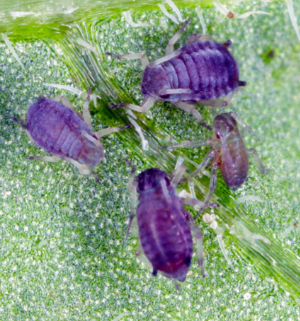
Violet Aphids are small sap-feeding insects that primarily infest plants in the genus Viola, including wild violets, pansies, and cultivated ornamental violets. Although often overlooked because of their tiny size, these aphids can become serious pests when populations grow rapidly. Their feeding weakens plants, distorts new growth, reduces flowering, and creates conditions that encourage secondary problems such as sooty mold.
Like other aphids, violet aphids possess specialized piercing-sucking mouthparts that allow them to extract nutrient-rich sap from leaves, stems, flower buds, and tender new growth. Because they reproduce extremely quickly, even a few individuals can develop into large colonies within a matter of weeks.
Violet aphids are particularly troublesome in greenhouses, nurseries, shaded garden beds, and ornamental landscapes where host plants are grown in dense plantings. While rarely fatal to established plants, repeated infestations can significantly reduce plant vigor and ornamental value.
Taxonomy and Classification
Violet aphids belong to the order Hemiptera and the family Aphididae, one of the largest groups of plant-feeding insects.
- Kingdom: Animalia
- Phylum: Arthropoda
- Class: Insecta
- Order: Hemiptera
- Family: Aphididae
Several aphid species may infest violets, but Micromyzus violae is among the species most frequently associated with violet plants. Like most aphids, they exhibit rapid reproduction and can produce both wingless and winged forms depending on environmental conditions.
Identification
Adult violet aphids are small, soft-bodied insects typically measuring between 1 and 3 millimeters in length. Their coloration varies depending on species, age, and environmental conditions.
Common colors include:
- Green
- Pale yellow
- Brown
- Reddish-brown
- Pinkish or purplish tones
They are usually found clustered on:
- Leaf undersides
- Flower buds
- Tender stems
- Growing tips
- Crowns of violet plants
Winged adults may appear when colonies become crowded or host plants decline. These winged forms allow infestations to spread rapidly to nearby plants.
One of the earliest signs of infestation is the appearance of shiny honeydew deposits on leaves below feeding sites.
Distribution and Habitat
Violet aphids are found throughout regions where violets, pansies, and related ornamental plants are cultivated.
They are most common in:
- Home gardens
- Flower beds
- Greenhouses
- Plant nurseries
- Botanical gardens
- Shaded woodland gardens
Warm temperatures, moderate humidity, and dense plant growth create ideal conditions for population growth. Greenhouse environments are particularly favorable because aphids can reproduce year-round without interruption from winter weather.
Life Cycle
Like most aphids, violet aphids have an extremely efficient reproductive system that allows populations to increase rapidly.
Parthenogenetic Reproduction
During the growing season, females commonly reproduce through parthenogenesis, giving birth to live young without mating. This allows colonies to expand exponentially.
Nymph Stage
Newly born aphids resemble miniature adults. These immature stages, called nymphs, begin feeding almost immediately and pass through several molts before reaching maturity.
Adult Stage
Adults become reproductive within days under favorable conditions. Multiple overlapping generations occur throughout the season.
Winged Forms
When populations become overcrowded or food quality declines, winged adults develop and disperse to new host plants.
In colder regions, some populations produce overwintering eggs that survive winter and hatch the following spring.
Feeding Behavior and Plant Damage
Violet aphids feed by inserting needle-like mouthparts into plant tissues and extracting sap from the phloem.
This feeding causes several types of damage.
Leaf Distortion
As aphids feed on developing tissue, leaves may become:
- Curled
- Twisted
- Cupped
- Wrinkled
Stunted Growth
Heavy infestations can suppress normal plant development, resulting in reduced leaf size and shortened stems.
Flower Damage
Feeding on buds and flower stalks can reduce flowering and produce malformed blooms.
Yellowing and Wilting
Continuous sap removal weakens plants and may cause chlorosis, loss of vigor, and premature leaf drop.
Honeydew and Sooty Mold
One of the most noticeable signs of aphid activity is the production of honeydew, a sticky sugary waste product.
Honeydew creates several secondary problems:
- Sticky leaves and flowers
- Attraction of ants
- Growth of black sooty mold fungi
- Reduced photosynthesis
- Lower ornamental value
While sooty mold does not directly infect plant tissues, it can block sunlight and interfere with plant health when growth becomes extensive.
Relationship with Ants
Ants frequently protect violet aphids because they feed on honeydew.
Workers actively defend aphid colonies against natural enemies, including:
- Lady beetles
- Lacewings
- Hoverfly larvae
- Parasitic wasps
This protection can significantly increase aphid survival and make infestations more difficult to manage.
Economic and Ornamental Importance
Violet aphids are primarily considered ornamental pests rather than major agricultural pests.
However, they can cause significant problems for:
- Nursery production
- Greenhouse operations
- Pansy growers
- African violet collectors
- Landscape professionals
- Home gardeners
Heavy infestations reduce plant quality, delay flowering, and diminish market value.
Management and Control (IPM)
Regular Monitoring
Inspect plants weekly, paying close attention to growing points, flower buds, and leaf undersides.
Water Sprays
A strong stream of water can remove large numbers of aphids from outdoor plantings.
Biological Control
Encouraging beneficial insects provides effective long-term control.
Important natural enemies include:
- Lady beetles
- Green lacewings
- Hoverflies
- Parasitic wasps
- Minute pirate bugs
Insecticidal Soaps
Insecticidal soaps work well against exposed aphids and are commonly used in greenhouses and home gardens.
Complete coverage of infested plant parts is essential for success.
Horticultural Oils
Neem oil and horticultural oils help suppress populations while reducing honeydew and sooty mold buildup.
Ant Management
Controlling ants often improves biological control because natural predators can once again access aphid colonies.
Systemic Treatments
For severe ornamental infestations, systemic insecticides may provide extended control. These products should always be used according to label instructions.
Prevention
- Inspect new plants before introduction
- Avoid excessive nitrogen fertilization
- Improve air circulation around plants
- Remove heavily infested plant material
- Manage ant populations
- Monitor regularly during warm weather
Conclusion
Violet Aphids are common sap-feeding pests of violets, pansies, and related ornamental plants. Although small, their rapid reproduction can quickly lead to distorted growth, reduced flowering, honeydew accumulation, and sooty mold development. Early detection, biological control, proper sanitation, and targeted treatments are the foundation of effective management. With consistent monitoring and integrated pest management practices, most infestations can be controlled before significant plant damage occurs.