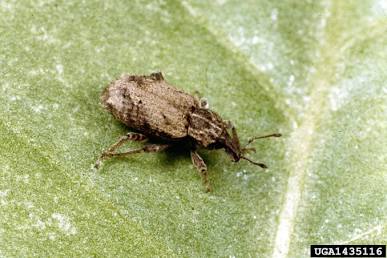
Overview
Vegetable Weevils (Listroderes costirostris, sometimes historically referred to alongside Listroderes difficilis) are destructive agricultural pests that attack a wide range of vegetable crops, ornamentals, and field-grown plants. Native to South America, these weevils have spread throughout many temperate and subtropical regions of the world and are now established in parts of the United States, Australia, New Zealand, and other agricultural regions.
Unlike many other weevil species that specialize on a narrow range of host plants, vegetable weevils are highly adaptable generalists capable of feeding on dozens of plant species. Lettuce, cabbage, carrots, potatoes, tomatoes, beets, celery, turnips, spinach, and numerous ornamental plants are all susceptible to attack.
Vegetable weevils are particularly troublesome because they are primarily active during cooler months when many other insect pests are less abundant. Their ability to reproduce rapidly, combined with their broad host range, makes them important pests in both commercial agriculture and home gardens.
Taxonomy and Classification
Vegetable weevils belong to the following classification:
- Kingdom: Animalia
- Phylum: Arthropoda
- Class: Insecta
- Order: Coleoptera
- Family: Curculionidae
- Genus: Listroderes
- Species: Listroderes costirostris
As members of the weevil family, vegetable weevils possess the characteristic elongated snout used for feeding and egg-laying. One unusual aspect of many populations is their ability to reproduce through parthenogenesis, meaning females can produce offspring without mating.
This reproductive strategy allows populations to establish rapidly from very few individuals.
Identification
Adult vegetable weevils are small to medium-sized beetles measuring approximately 6 to 8 millimeters long.
Key identification features include:
- Grayish-brown to dark brown coloration
- Short, broad snout typical of weevils
- Mottled appearance caused by scales and hairs
- Distinct pale V-shaped marking on the wing covers
- Flightless adults
- Robust, oval body shape
Adults often appear dusty or camouflaged, blending easily with soil and plant debris.
When disturbed, they commonly drop to the ground and remain motionless, making detection difficult.
Larvae
The larvae are legless, creamy-white to pale green grubs with brown head capsules. Mature larvae may reach 12 to 15 millimeters in length.
Unlike adults, larvae typically remain hidden near the soil surface where they feed on roots, crowns, and lower stems.
Distribution and Habitat
Vegetable weevils thrive in mild climates and are especially common in southern regions where winters remain relatively warm.
They are frequently found in:
- Vegetable gardens
- Commercial vegetable farms
- Greenhouses
- Nurseries
- Landscape plantings
- Weedy field margins
Because adults cannot fly, local spread occurs primarily through crawling. However, movement of infested plants, soil, equipment, and produce can introduce the pest into new areas.
Weeds often serve as important reservoirs that allow populations to survive between crop cycles.
Life Cycle
The life cycle consists of four stages:
- Egg
- Larva
- Pupa
- Adult
Egg Stage
Females deposit eggs in soil, beneath plant debris, or near the base of host plants. A single female may lay hundreds of eggs during her lifetime.
Larval Stage
After hatching, larvae begin feeding on roots, crowns, and lower stems. This stage causes significant hidden damage and may continue for several weeks.
Larval feeding often weakens plants before above-ground symptoms become visible.
Pupal Stage
Pupation occurs in the soil within small chambers constructed by the larvae.
Adult Stage
Adults emerge from the soil and begin feeding on foliage. Most feeding activity occurs at night, while adults hide under debris, mulch, or soil cracks during the day.
Several overlapping generations may occur annually in favorable climates.
Host Plants
Vegetable weevils attack an exceptionally wide variety of crops.
Common hosts include:
- Lettuce
- Cabbage
- Cauliflower
- Broccoli
- Spinach
- Beets
- Carrots
- Celery
- Tomatoes
- Potatoes
- Turnips
- Peppers
- Onions
- Various ornamentals
Many common weeds also serve as alternate hosts, allowing populations to persist year-round.
Damage and Economic Importance
Both adults and larvae contribute to crop injury.
Adult Feeding Damage
Adults chew irregular holes and notches in leaves, producing a ragged appearance.
Common symptoms include:
- Shredded leaf margins
- Irregular feeding holes
- Defoliation of seedlings
- Reduced photosynthetic capacity
- Stunted plant growth
Young plants and transplants are particularly vulnerable.
Larval Damage
Larvae feed on crowns, roots, and lower stems. This hidden feeding can result in:
- Wilting
- Plant collapse
- Reduced root development
- Crown injury
- Secondary disease infections
Root crops may develop scars, pits, and deformities that reduce market quality.
Economic Impact
Commercial infestations can lead to significant crop losses, increased pesticide costs, and reduced yields. Home gardeners may experience complete destruction of young vegetable beds during severe outbreaks.
Signs of Infestation
Common indicators include:
- Irregular holes in leaves
- Chewed leaf margins
- Missing seedlings
- Nighttime feeding activity
- Wilting despite adequate moisture
- Adult weevils hiding beneath debris
- Crown damage near soil level
Inspecting gardens at night with a flashlight often reveals adults actively feeding.
Management and Control (IPM)
Sanitation
Removing weeds, plant debris, boards, and other hiding places greatly reduces weevil populations.
Good sanitation is one of the most effective preventative measures.
Night Monitoring
Because adults feed after dark, nighttime inspections allow early detection before severe damage develops.
Hand Removal
In small gardens, adults can be collected by hand and dropped into soapy water.
Regular removal can significantly reduce populations.
Crop Rotation
Rotating susceptible crops helps disrupt breeding cycles and reduces long-term population buildup.
Row Covers
Floating row covers protect seedlings and young crops from adult feeding damage.
Diatomaceous Earth
Food-grade diatomaceous earth applied around vulnerable plants may help reduce crawling adults by damaging their protective outer coating.
Biological Controls
Ground beetles, birds, predatory insects, and parasitic organisms may naturally suppress weevil populations.
Maintaining biodiversity encourages these beneficial species.
Targeted Insecticides
When populations exceed economic thresholds, insecticides may be necessary. Applications are generally most effective when timed to coincide with active adult feeding periods.
Prevention
Preventative strategies include:
- Removing weeds around gardens
- Inspecting transplants before planting
- Using crop rotation
- Maintaining field sanitation
- Monitoring regularly during cool seasons
- Protecting seedlings with row covers
Early intervention remains the most effective way to prevent major infestations.
Conclusion
Vegetable Weevils are adaptable, destructive pests capable of damaging a wide variety of vegetables and ornamental plants. Their broad host range, nocturnal habits, and ability to reproduce rapidly make them challenging pests in both home gardens and commercial agriculture. Fortunately, careful monitoring, sanitation, crop rotation, and integrated pest management strategies can significantly reduce their impact and help protect valuable crops throughout the growing season.