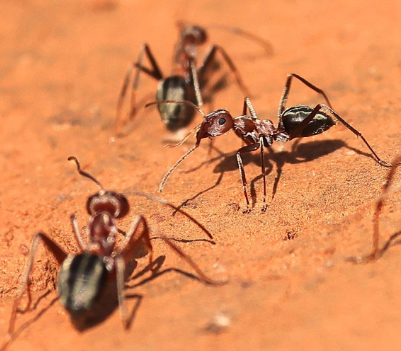
Overview
Valesid Ants are best understood as a descriptive group of ants associated with open valleys, dry washes, lowland landscapes, and human-modified environments where ants forage between soil, vegetation, structures, and honeydew-producing insects. The name may be used informally for ants found in vale-like habitats rather than for one universally recognized pest species. In practical pest management, valesid ants represent generalist, adaptable ants that can become nuisances in landscapes, gardens, buildings, and agricultural settings.
Most valesid ants are not dangerous to humans, but their behavior can create problems when they nest near structures, trail into kitchens, protect aphids and scale insects, or interfere with outdoor living spaces. Their relationship with honeydew-producing pests is especially important. By protecting aphids, mealybugs, whiteflies, and scale insects from predators, ants can indirectly increase plant damage and make pest outbreaks more difficult to control.
In some situations, valesid ants may also nest in wall voids, irrigation boxes, electrical housings, fence lines, mulch beds, or tree canopies. This flexibility makes them persistent and sometimes difficult to manage without a full integrated pest management approach.
Taxonomy and Classification
Valesid ants belong to the family Formicidae, the ant family, within the order Hymenoptera.
- Kingdom: Animalia
- Phylum: Arthropoda
- Class: Insecta
- Order: Hymenoptera
- Family: Formicidae
The term valesid ants should be treated as an ecological or descriptive pest-management label rather than a strict scientific classification. Depending on location, ants described this way may include several small to medium-sized species that nest in soil, under rocks, inside debris, or within sheltered structural voids.
Identification
Because valesid ants may include more than one species, appearance can vary. However, most are small to medium-sized ants adapted for active foraging.
Common identification traits include:
- Slender to moderately robust body
- Black, brown, reddish-brown, yellowish, or two-toned coloration
- Clearly segmented body with narrow waist
- Elbowed antennae
- Visible foraging trails
- Colonies nesting in soil, debris, or protected voids
Workers may be seen trailing along foundations, fence rails, tree trunks, irrigation lines, roof edges, or landscape borders. Some species move rapidly when disturbed, while others form organized trails between nests and food sources.
Distribution and Habitat
Valesid ants may occur in many regions where open ground, dry valleys, irrigated landscapes, and human structures provide suitable nesting sites.
Common habitats include:
- Open valleys and washes
- Dry grasslands
- Desert edges
- Gardens and orchards
- Mulch beds
- Rock borders
- Tree bases
- Electrical boxes
- Wall voids and attic spaces
- Irrigation valve boxes
They are especially successful where moisture, shelter, and reliable food sources occur close together.
Life Cycle
Like all ants, valesid ants develop through complete metamorphosis.
Egg Stage
Queens lay tiny eggs inside protected nest chambers. Workers care for the eggs and move them as needed to maintain proper temperature and humidity.
Larval Stage
Larvae are soft, legless, and dependent on worker ants for food. Workers feed them liquid food, chewed insects, or other colony resources.
Pupal Stage
After larval growth is complete, pupation occurs. In some species, pupae are enclosed in cocoons, while others remain exposed.
Adult Stage
Adults emerge as workers, males, or reproductive females. Workers forage, defend the colony, care for brood, and maintain the nest.
Colonies may persist for several years, especially in mild climates with stable food and water sources.
Behavior and Feeding Habits
Valesid ants are usually generalist feeders. Their diet may include sugars, proteins, fats, dead insects, seeds, nectar, and honeydew.
Honeydew Farming
The most important ecological behavior is their association with honeydew-producing pests.
They may protect:
- Aphids
- Scale insects
- Mealybugs
- Whiteflies
- Treehoppers
In exchange for honeydew, ants defend these insects from predators and parasitoids. This can worsen infestations on ornamentals, fruit trees, vegetables, and vines.
Foraging Trails
Workers establish trails between nests and food sources. These trails may run along foundations, branches, wires, pipes, rooflines, or irrigation systems.
Structural Nesting
Some valesid-type ants may nest in structural voids or equipment housings. This can lead to recurring indoor activity and, in rare cases, interference with electrical components.
Damage and Economic Importance
Nuisance Activity
Valesid ants may invade kitchens, bathrooms, pantries, patios, and outdoor dining areas while searching for sugar, grease, moisture, or protein.
Indirect Plant Damage
By protecting sap-feeding pests, ants can indirectly contribute to:
- Leaf yellowing
- Honeydew accumulation
- Black sooty mold
- Reduced plant vigor
- Fruit contamination
- Reduced biological control
Landscape and Garden Problems
Nesting in soil may disturb seedbeds, container plants, lawns, or mulch areas. Trails around patios and walkways can become a nuisance for homeowners.
Structural Concerns
When ants nest in walls, attics, irrigation boxes, or electrical housings, they may create debris buildup, repeated indoor invasions, or maintenance problems.
Signs of Infestation
Common signs include:
- Visible ant trails along foundations or plants
- Ants tending aphids, scales, or mealybugs
- Sticky honeydew on leaves or surfaces
- Black sooty mold growth
- Soil mounds or disturbed soil near nests
- Ants entering around windows, vents, or utility lines
- Activity inside electrical or irrigation boxes
Management and Control (IPM)
Identify the Food Source
Effective control begins by determining what the ants are feeding on. If they are attracted to honeydew-producing insects, controlling those pests is essential.
Control Honeydew-Producing Pests
- Reduce aphid and scale populations
- Use horticultural oils or insecticidal soaps when appropriate
- Encourage lady beetles, lacewings, and parasitoid wasps
- Prune heavily infested plant parts
Use Ant Baits
Baits are often more effective than sprays because workers carry the active ingredient back to the colony.
- Use sugar-based baits for sugar-feeding ants
- Use protein or grease baits when ants prefer those foods
- Place baits along trails but away from children and pets
- Avoid spraying near baits because repellents can disrupt feeding
Exclusion
- Seal cracks around foundations
- Repair window and door gaps
- Caulk utility openings
- Install door sweeps
- Screen vents and weep holes when appropriate
Landscape Modification
- Trim branches away from roofs and walls
- Reduce mulch depth near foundations
- Remove debris, boards, and rock piles
- Fix irrigation leaks
- Move firewood away from structures
Avoid Indoor Foggers
Indoor foggers rarely reach the colony and may scatter ants into new nesting areas. Targeted baiting and exclusion are usually more effective.
Prevention
- Keep food sealed indoors
- Clean spills quickly
- Manage aphids and scale insects early
- Reduce moisture around structures
- Inspect irrigation boxes and utility areas
- Maintain a vegetation-free gap near foundations
Conclusion
Valesid Ants are adaptable ants associated with open landscapes, gardens, valleys, and human structures. While they are often ecologically useful scavengers and predators, they can become pests when they invade buildings, nest in equipment, or protect honeydew-producing insects on plants. Effective management depends on identifying food sources, reducing honeydew pests, using targeted baits, sealing entry points, and modifying nearby habitat. In most cases, integrated pest management provides better long-term control than broad spraying.