Overview
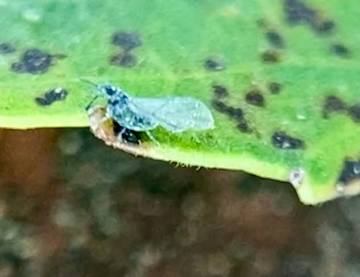
Vagabond Aphids are a group of highly adaptable aphids known for their ability to move among multiple host plants rather than remaining restricted to a single species. While the term is sometimes used broadly for migratory aphids, it can also refer specifically to the Poplar Vagabond Aphid (Mordwilkoja vagabunda), a gall-forming aphid associated with poplar and cottonwood trees.
These insects are notable for their rapid reproduction, dispersal ability, and capacity to exploit changing environmental conditions. Some species alternate between woody hosts and herbaceous plants during their life cycle, allowing them to survive seasonal changes and spread across large geographic areas. Their feeding can weaken plants, deform foliage, produce large quantities of honeydew, and contribute to the spread of plant diseases.
For gardeners, arborists, and agricultural producers, vagabond aphids present a unique challenge because populations can develop quickly and move unpredictably between host plants.
Taxonomy and Classification
Vagabond aphids belong to the aphid family Aphididae, one of the largest groups of plant-feeding insects.
- Kingdom: Animalia
- Phylum: Arthropoda
- Class: Insecta
- Order: Hemiptera
- Family: Aphididae
- Species Example: Mordwilkoja vagabunda
Aphids undergo incomplete metamorphosis, developing through egg, nymph, and adult stages without a pupal stage. Their ability to reproduce through parthenogenesis allows populations to expand rapidly under favorable conditions.
Identification
Adult Aphids
Adult vagabond aphids are small, soft-bodied insects measuring approximately 1 to 3 millimeters in length.
Depending on species and host plant, they may appear:
- Pale green
- Yellow-green
- Gray
- Brown
- Reddish
- Covered in white waxy secretions
Like other aphids, they possess a pear-shaped body and distinctive cornicles, which are tube-like structures projecting from the rear of the abdomen.
Winged Forms
When populations become crowded or host quality declines, winged adults develop. These migrants can travel considerable distances to establish colonies on new host plants.
Gall Formation
The Poplar Vagabond Aphid produces one of the most distinctive signs of infestation: large, irregular galls that form on leaves and shoots.
These galls may appear:
- Brain-like
- Coral-shaped
- Twisted and folded
- Green, reddish, or dark brown
- Woody and blackened with age
When opened, fresh galls often contain hundreds of aphids living inside a protected chamber.
Distribution and Habitat
Vagabond aphids occur throughout temperate regions where suitable host plants are available.
The Poplar Vagabond Aphid is commonly associated with:
- Cottonwood trees
- Poplar species
- Aspens
- Various aquatic and herbaceous secondary hosts
Many migratory aphids occupy multiple habitats during the year, including forests, agricultural fields, wetlands, ornamental landscapes, and urban environments.
Life Cycle
Spring Colonization
Overwintering eggs hatch in spring, producing the first generation of females known as stem mothers. These individuals begin feeding on young buds and developing leaves.
In gall-forming species, feeding stimulates abnormal plant growth that creates protective chambers around the colony.
Summer Migration
As populations expand, winged aphids develop and disperse to secondary hosts. This migration allows colonies to exploit new food sources while avoiding overcrowding.
The movement between host plants is what gives these insects their “vagabond” reputation.
Autumn Return
In species such as the Poplar Vagabond Aphid, winged forms return to their primary host during autumn. Mating occurs, and overwintering eggs are deposited on bark or twigs.
Rapid Reproduction
Most generations during the growing season consist entirely of females reproducing without mating. A single aphid can produce dozens of offspring, leading to explosive population growth.
Damage and Economic Importance
Sap Removal
Like all aphids, vagabond aphids feed by inserting needle-like mouthparts into plant tissue and extracting sap.
Heavy feeding may cause:
- Reduced plant vigor
- Leaf curling
- Premature leaf drop
- Yellowing foliage
- Stunted growth
Gall Formation
Gall-forming species create large deformities that alter normal growth patterns.
Consequences include:
- Loss of terminal buds
- Branch distortion
- Witches’-broom growth
- Reduced photosynthesis
- Aesthetic damage
Honeydew Production
Colonies produce large quantities of sticky honeydew that coats leaves, branches, vehicles, and nearby structures.
Honeydew encourages the growth of black sooty mold fungi, reducing photosynthesis and diminishing ornamental value.
Virus Transmission
Many migratory aphids serve as vectors of plant viruses. As they move between hosts, they can transmit pathogens capable of reducing crop yields and damaging ornamental plants.
Signs of Infestation
Common indicators include:
- Clusters of aphids on leaves or stems
- Sticky honeydew deposits
- Black sooty mold growth
- Leaf curling or distortion
- Large galls on poplar or cottonwood trees
- Reduced vigor and branch deformities
- Increased ant activity attracted to honeydew
Management and Control (IPM)
Monitoring
Regular inspections help detect colonies before populations become established.
Pay particular attention to:
- New growth
- Leaf undersides
- Developing galls
- Young trees and shrubs
Pruning
For gall-forming species, pruning infested twigs during winter can remove overwintering eggs and reduce spring populations.
Dispose of pruned material away from host plants.
Biological Control
Natural enemies provide excellent suppression of aphid populations.
Important predators include:
- Lady beetles
- Lacewings
- Hoverfly larvae
- Parasitic wasps
- Predatory bugs
Avoid unnecessary broad-spectrum insecticide use that may harm beneficial insects.
Water Sprays
Strong streams of water can physically remove aphids from ornamental plants and small trees.
Repeated applications often reduce populations significantly.
Horticultural Oils and Soaps
Insecticidal soaps and horticultural oils provide effective control of exposed aphids while minimizing impact on beneficial organisms.
Systemic Insecticides
For severe infestations on large trees, systemic insecticides may be used according to label directions. These treatments are most effective when applied before major colony development.
Prevention
- Maintain healthy trees and shrubs
- Reduce plant stress through proper watering
- Inspect susceptible hosts annually
- Encourage beneficial insects
- Prune overwintering gall sites when present
- Avoid excessive nitrogen fertilization that promotes soft growth
Conclusion
Vagabond Aphids are highly adaptable sap-feeding insects capable of moving between multiple host plants and reproducing rapidly. Whether occurring as migratory aphids in crops or as the distinctive Poplar Vagabond Aphid that forms large galls on cottonwoods and poplars, these insects can reduce plant vigor, spread disease, and create significant aesthetic damage. Early monitoring, conservation of natural enemies, proper pruning practices, and integrated pest management techniques remain the most effective methods for maintaining healthy landscapes and preventing large infestations.