Overview
Ulmus Twig Borers are a group of wood-boring insects that attack elm trees (Ulmus species) by tunneling into twigs, small branches, and young shoots. These pests include several species of longhorn beetles, twig girdlers, and metallic wood-boring beetles whose larvae develop inside woody tissues. Although often overlooked during the early stages of infestation, their feeding can disrupt water and nutrient movement, cause branch dieback, and weaken the overall structure of elm trees.
Unlike defoliating pests that feed openly on leaves, twig borers spend most of their lives concealed within the wood. This hidden lifestyle makes infestations difficult to detect until visible symptoms such as wilting branch tips, dead twigs, and fallen branches appear. Severe infestations can significantly reduce the ornamental value of landscape trees and increase susceptibility to disease, drought stress, and secondary insect attacks.
Elm twig borers are particularly problematic on stressed, injured, or weakened trees. Drought, construction damage, soil compaction, and disease can all increase a tree’s vulnerability to attack.
Taxonomy and Classification
Ulmus Twig Borers are not a single species but rather a collection of wood-boring insects associated with elm trees.
- Kingdom: Animalia
- Phylum: Arthropoda
- Class: Insecta
- Order: Coleoptera
- Families: Cerambycidae, Buprestidae, Curculionidae, and others
Common species include the Elm Twig Girdler (Oberea tripunctata) and several related longhorn beetles that specialize in feeding on elm branches and shoots.
Identification
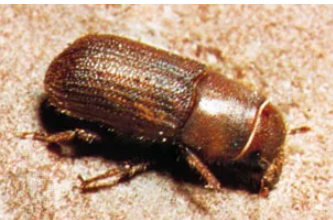
Adult Beetles
Adult twig borers vary by species but generally share several characteristics:
- Elongated bodies ranging from 8 to 20 millimeters in length.
- Brown, gray, yellowish, or black coloration.
- Long antennae, especially in longhorn beetle species.
- Strong chewing mouthparts.
- Excellent camouflage against bark and twigs.
Many adults are active during spring and summer when they seek suitable locations for egg laying.
Larvae
The larval stage causes most of the damage.
- Cream-colored or white body.
- Legless or nearly legless appearance.
- Brown or yellow head capsule.
- Soft-bodied and cylindrical.
- Found inside twigs and branches.
Larvae remain hidden within the wood for months while feeding and developing.
Signs of Infestation
Because larvae remain concealed, symptoms often provide the first indication of infestation.
- Wilted branch tips.
- Dead or dying twigs.
- Small round exit holes.
- Sawdust-like frass around entry points.
- Girdled branches.
- Premature branch breakage.
- Clusters of fallen twigs beneath trees.
Distribution and Habitat
Elm twig borers are found throughout much of North America wherever elm trees grow. They are especially common in:
- Urban landscapes.
- Residential neighborhoods.
- Parks.
- Golf courses.
- Woodlands.
- Riparian forests.
- Street tree plantings.
Most species prefer stressed or recently damaged trees, although healthy trees may occasionally be attacked during population outbreaks.
Life Cycle
Ulmus Twig Borers undergo complete metamorphosis consisting of four stages:
- Egg
- Larva
- Pupa
- Adult
Egg Stage
Female beetles deposit eggs in bark crevices, small wounds, or notches chewed into young twigs.
Larval Stage
After hatching, larvae tunnel into the twig and begin feeding on internal tissues.
As they grow, they excavate galleries through the pith and woody portions of the branch. This feeding weakens the twig and disrupts nutrient transport.
Pupal Stage
Pupation occurs inside the tunnel, where the insect remains protected from predators and environmental conditions.
Adult Stage
Adults emerge through round exit holes and begin searching for mates and suitable egg-laying sites.
Many species complete one generation annually, although development time varies depending on climate and species.
Damage and Economic Importance
The primary impact of Ulmus Twig Borers results from internal feeding and girdling activities.
Twig Dieback
Feeding galleries interfere with water and nutrient movement, causing branch tips to wilt and die.
This symptom is often referred to as flagging.
Branch Girdling
Some species intentionally chew rings around twigs and branches.
This girdling cuts off nutrient flow and causes the branch beyond the wound to die.
Canopy Thinning
Repeated attacks can reduce canopy density and create a sparse, unhealthy appearance.
Structural Weakness
Internal tunnels weaken branches, making them more susceptible to breakage during wind, storms, or heavy snow.
Disease Entry Points
Borer tunnels and damaged bark create openings that allow fungi and pathogens to enter the tree.
This can accelerate decline in already stressed trees.
Behavior
Elm twig borers spend most of their lives hidden within woody tissues.
Adults are generally active during warmer months and often feed on foliage before laying eggs.
Larvae remain protected within branches where they are difficult to detect and largely inaccessible to predators.
Some species exhibit girdling behavior, intentionally weakening branches to create favorable conditions for larval development.
Natural Enemies
Several organisms help suppress twig borer populations naturally.
- Woodpeckers.
- Nuthatches.
- Parasitic wasps.
- Predatory beetles.
- Entomopathogenic fungi.
- Beneficial nematodes.
Maintaining biodiversity within landscapes often improves natural control of twig borers.
Management and Control (IPM)
Integrated Pest Management (IPM) provides the most effective strategy for managing Ulmus Twig Borers.
Regular Monitoring
Inspect elm trees routinely for:
- Flagged branch tips.
- Frass deposits.
- Exit holes.
- Girdled twigs.
- Dead branches.
Early detection greatly improves management success.
Pruning
Prune and destroy infested branches before adults emerge.
This removes developing larvae and prevents population growth.
Sanitation
Collect and dispose of fallen twigs and branches.
Many larvae continue development inside detached wood.
Maintain Tree Health
Healthy elm trees are better able to resist attacks and recover from damage.
- Provide adequate irrigation during drought.
- Apply mulch around root zones.
- Avoid trunk injuries.
- Reduce soil compaction.
- Maintain proper nutrition.
Biological Control
Encouraging natural predators can help reduce infestations.
Avoid unnecessary insecticide applications that may harm beneficial insects.
Preventative Treatments
In high-value landscape trees, preventative insecticide treatments may be applied before adult beetles begin laying eggs.
Systemic products can provide protection by targeting larvae shortly after they begin feeding.
Research and Future Management
Researchers continue studying improved methods for managing wood-boring insects in urban forests.
Current areas of interest include:
- Improved monitoring techniques.
- Pheromone-based detection systems.
- Biological control agents.
- Host resistance mechanisms.
- Reduced-risk insecticides.
- Climate-related impacts on borer populations.
Understanding how environmental stress influences susceptibility may help prevent future outbreaks.
Conclusion
Ulmus Twig Borers are concealed but potentially damaging pests that attack elm twigs and branches from within. Their tunneling activity causes dieback, structural weakness, and reduced tree vigor while creating opportunities for disease and secondary pest infestations.
Because infestations often remain hidden until visible damage appears, routine monitoring and early intervention are critical. Through proper pruning, sanitation, tree care, and integrated pest management practices, homeowners and arborists can minimize the impact of these destructive wood-boring insects and help maintain healthy, attractive elm trees.