Overview
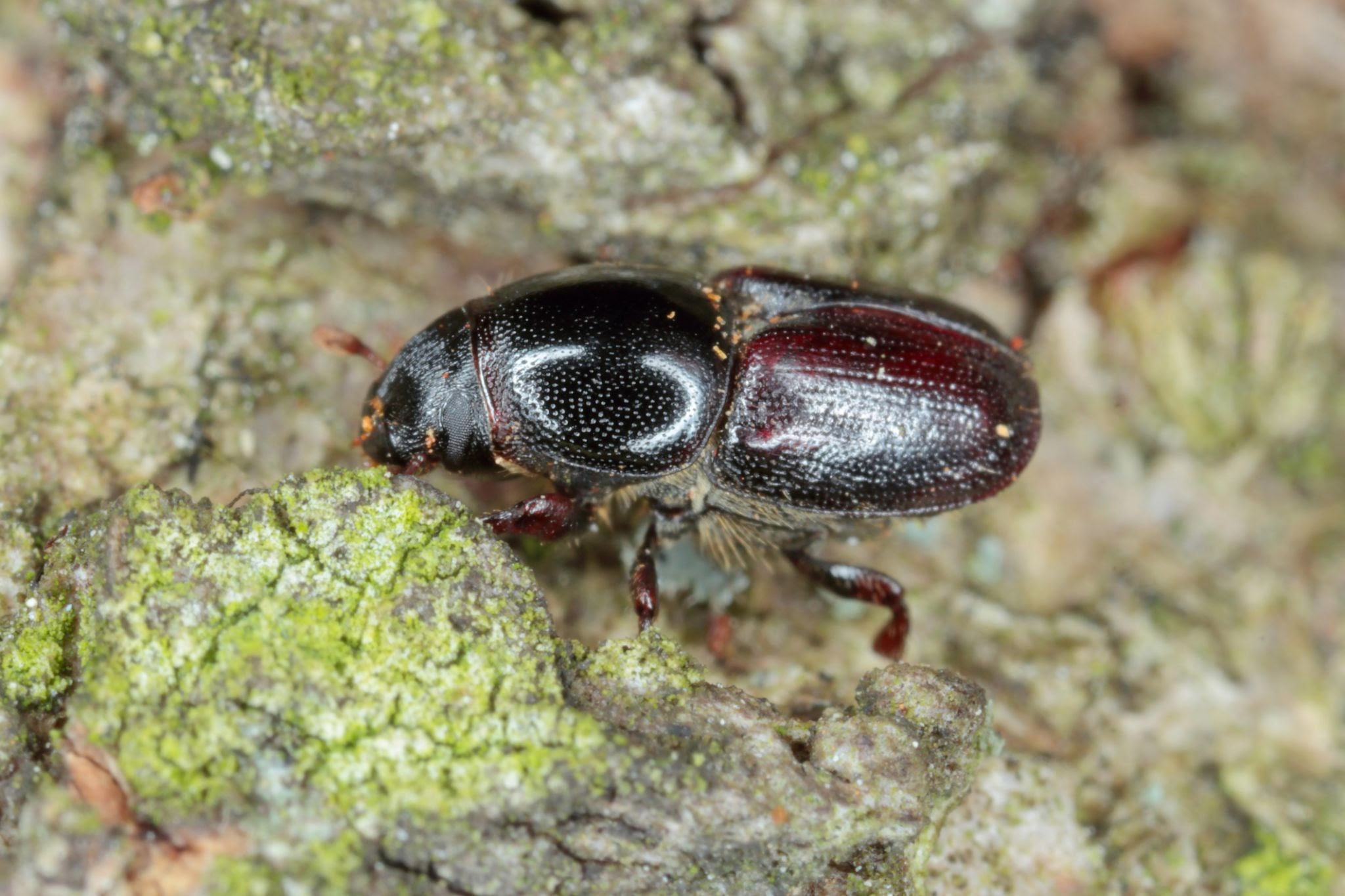
Ulmus Bark Beetles are small wood-boring insects that attack elm trees and are best known as the primary vectors of Dutch Elm Disease (DED), one of the most destructive tree diseases in North American history. The two most important species are the Smaller European Elm Bark Beetle (Scolytus multistriatus) and the Native Elm Bark Beetle (Hylurgopinus rufipes).
While the beetles themselves cause damage by tunneling beneath the bark of elm trees, their greatest impact comes from transporting fungal pathogens belonging to the genus Ophiostoma. These fungi invade the tree’s vascular system, disrupting water movement and ultimately causing decline and death.
Since Dutch Elm Disease was introduced to North America during the twentieth century, millions of American elm trees have been lost. Once a dominant shade tree lining streets, parks, and neighborhoods, the American elm suffered catastrophic declines due to the combined effects of bark beetles and disease transmission.
Today, Ulmus Bark Beetles remain significant pests in urban forests, residential landscapes, parks, and natural woodland environments wherever susceptible elm species occur.
Taxonomy and Classification
- Kingdom: Animalia
- Phylum: Arthropoda
- Class: Insecta
- Order: Coleoptera
- Family: Curculionidae
- Subfamily: Scolytinae
Ulmus Bark Beetles belong to the bark beetle group within the weevil family. These insects spend most of their lives beneath tree bark where adults and larvae create intricate gallery systems.
The two primary species associated with Dutch Elm Disease transmission are:
- Smaller European Elm Bark Beetle (Scolytus multistriatus)
- Native Elm Bark Beetle (Hylurgopinus rufipes)
Both species are capable of carrying and transmitting disease-causing fungal spores between elm trees.
Physical Description
Adult Ulmus Bark Beetles are very small insects, typically measuring between 2 and 6 millimeters in length.
Smaller European Elm Bark Beetle
- Length: 2–3 millimeters.
- Color: Reddish-brown to dark brown.
- Body Shape: Cylindrical and compact.
- Distinctive Feature: Concave rear abdomen with a prominent spine.
Native Elm Bark Beetle
- Slightly larger than the European species.
- Dark brown to black coloration.
- More heavily textured body surface.
- Lacks the prominent abdominal spine.
Larvae
- White, legless grubs.
- C-shaped body.
- Develop beneath bark.
- Feed within gallery systems.
Because adults spend much of their lives hidden beneath bark, infestations often go unnoticed until symptoms appear in the tree canopy.
Distribution and Habitat
Ulmus Bark Beetles occur throughout much of North America wherever elm trees are present.
Common habitats include:
- Urban forests
- Residential landscapes
- City streets
- Parks
- Woodlots
- Riparian forests
- Shelterbelts
- Dead or declining elm trees
They are particularly attracted to weakened, dying, or recently dead elms where reproduction occurs beneath loose bark.
Life Cycle
Ulmus Bark Beetles undergo complete metamorphosis consisting of four stages:
- Egg
- Larva
- Pupa
- Adult
Adult females bore through bark and create tunnels known as mother galleries. Eggs are deposited along the gallery walls.
After hatching, larvae tunnel outward from the main gallery, feeding on the phloem layer beneath the bark.
As larvae mature, they pupate within individual chambers before emerging as adults.
Several generations may occur annually depending on climate and local environmental conditions.
Gallery Patterns
The galleries created by Ulmus Bark Beetles are useful diagnostic features.
European Elm Bark Beetle
This species typically creates a single vertical mother gallery with numerous larval tunnels extending horizontally.
The resulting pattern resembles a comb or centipede.
Native Elm Bark Beetle
Native species often construct horizontal or Y-shaped mother galleries that cross the wood grain.
These gallery systems can often be observed by peeling back bark from infested trees.
Dutch Elm Disease Transmission
The most significant threat posed by Ulmus Bark Beetles is their ability to spread Dutch Elm Disease.
Adult beetles emerging from infected trees become contaminated with fungal spores.
When they fly to healthy elms and feed on young twig crotches, they inadvertently introduce the fungus into the tree’s vascular system.
Once inside the xylem, the fungus spreads rapidly.
The tree responds by producing defensive structures called tyloses that attempt to block fungal movement.
Unfortunately, these blockages also prevent water transport, leading to wilting and decline.
Symptoms of Infestation and Disease
Early detection is critical for successful management.
Flagging
One of the first symptoms is known as flagging, where a single branch suddenly wilts and turns yellow or brown while the remainder of the canopy appears healthy.
Leaf Symptoms
- Yellowing foliage.
- Curling leaves.
- Premature leaf drop.
- Wilting branches.
Vascular Staining
When infected branches are cut, dark brown streaks or rings may be visible beneath the bark.
This staining is a classic sign of Dutch Elm Disease.
Bark Symptoms
- Small entry holes.
- Bark cracking.
- Loose bark sections.
- Visible galleries.
Economic and Environmental Impact
The impact of Ulmus Bark Beetles extends far beyond individual trees.
Losses include:
- Death of mature elm trees.
- Reduced urban canopy cover.
- Increased removal costs.
- Property value reduction.
- Loss of wildlife habitat.
- Municipal tree replacement expenses.
Millions of American elms have been lost throughout North America since the introduction of Dutch Elm Disease.
Management and Prevention
Successful management focuses on sanitation, monitoring, and disease prevention.
Sanitation
Removing infested or diseased trees is the most important management strategy.
- Remove dead elms promptly.
- Destroy infested wood.
- Debark logs when possible.
- Avoid storing elm firewood.
Failure to remove breeding material can allow thousands of beetles to emerge and spread disease.
Preventative Fungicide Treatments
High-value elm trees may be protected using trunk-injected fungicides.
These treatments help prevent establishment of Dutch Elm Disease when applied properly.
Pruning
- Remove infected branches early.
- Prune several feet below visible symptoms.
- Conduct pruning during dormant seasons.
Avoid pruning during spring and early summer when beetle activity is highest.
Monitoring
- Pheromone traps.
- Visual canopy inspections.
- Monitoring for flagging branches.
- Regular tree health assessments.
Research and Future Management
Researchers continue developing improved strategies for managing both bark beetles and Dutch Elm Disease.
Current areas of focus include:
- Disease-resistant elm cultivars.
- Advanced fungicide technologies.
- Pheromone-based monitoring.
- Biological control agents.
- Improved sanitation programs.
- Urban forest restoration.
Modern disease-resistant elm varieties offer hope for restoring elm populations in many communities.
Conclusion
Ulmus Bark Beetles are among the most significant tree pests in North America because of their role in spreading Dutch Elm Disease. Although the beetles themselves cause relatively minor tunneling damage, their ability to transport deadly fungal pathogens has resulted in the loss of millions of elm trees.
Early detection, sanitation, preventative treatments, and the use of resistant elm varieties remain the most effective tools for protecting valuable trees. Continued research and urban forestry programs are helping communities preserve and restore one of North America’s most iconic shade trees.