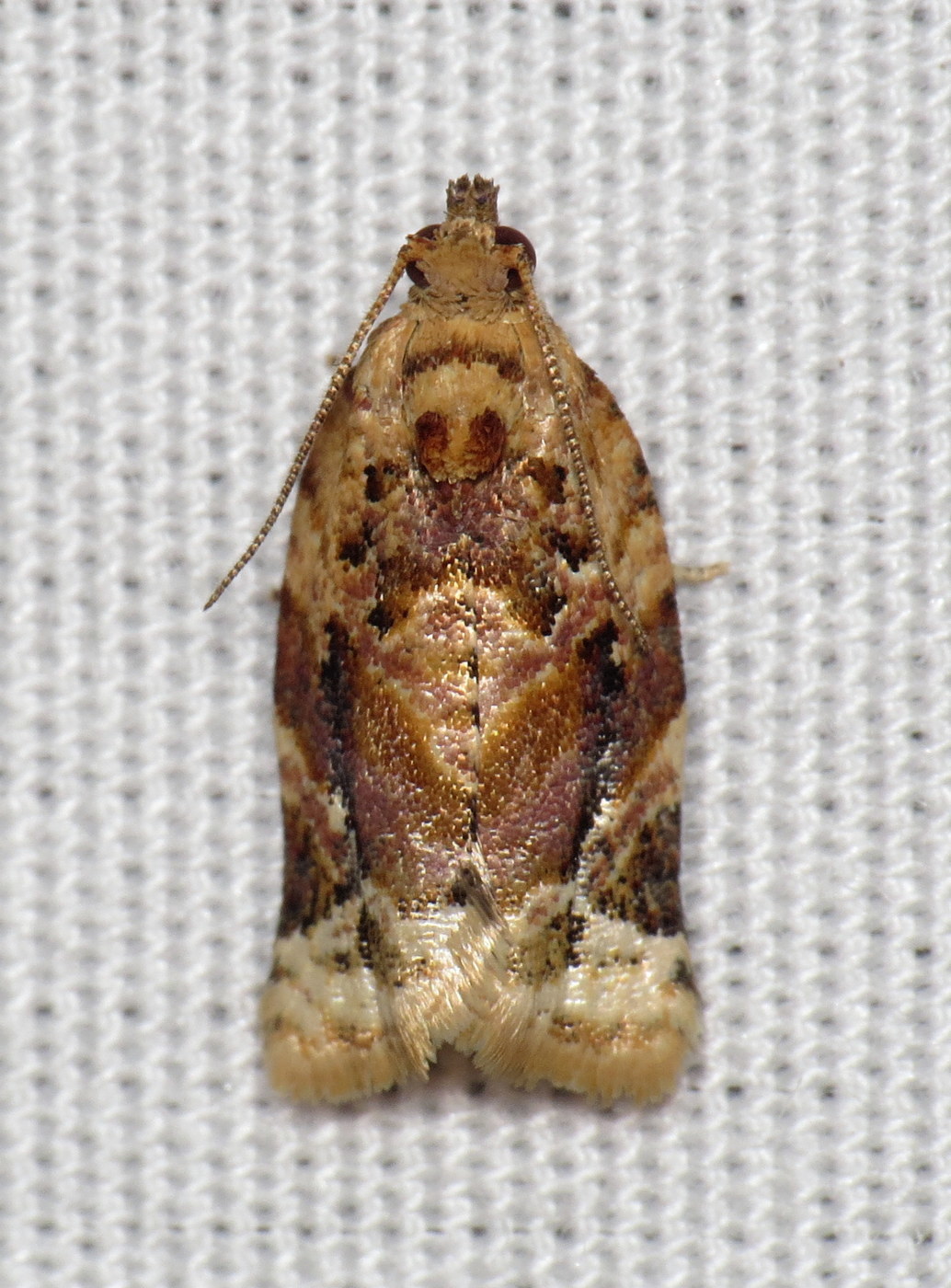
Redbanded Leafrollers
Redbanded Leafrollers (Argyrotaenia velutinana) are common orchard pests that affect a wide range of fruit trees, ornamental plants, shrubs, and berry crops throughout North America. These moth larvae are named for the distinctive reddish-brown band found across the wings of adult moths. Although adults are harmless, the caterpillar stage causes significant economic damage by feeding on foliage, buds, blossoms, and developing fruit. Redbanded leafrollers are especially problematic in commercial apple orchards, blueberry fields, and mixed fruit plantings because even minor fruit scarring can reduce market value.
Taxonomy and Classification
Redbanded leafrollers belong to the order Lepidoptera, which includes moths and butterflies. They are members of the family Tortricidae, commonly known as tortricid or leafroller moths.
- Order: Lepidoptera
- Family: Tortricidae
- Genus: Argyrotaenia
- Species: Argyrotaenia velutinana
This species is native to North America and is considered one of the most important leafroller pests in eastern fruit production systems.
Physical Description
Adult redbanded leafrollers have a wingspan ranging from 12 to 18 mm.
- Adult (Key ID): Small, tan to light-brown moth with a distinctive reddish-brown or brick-red band running diagonally across each forewing.
- Larva (Key ID): Slender yellowish-green caterpillar measuring up to 18 mm long with a characteristic yellow-green head capsule.
- Egg Mass: Flat, scale-like masses laid on leaves, bark, or stems.
- Pupa: Brown pupa enclosed within rolled leaves or silken shelters.
- Conflict: Agricultural, Orchard, Ornamental.
When disturbed, larvae often wriggle violently and drop from foliage suspended by silk threads.
Distribution and Habitat
Redbanded leafrollers occur throughout much of eastern and central North America and have expanded into many commercial fruit-growing regions.
Common habitats include:
- Apple orchards
- Blueberry and berry plantings
- Pear and stone fruit orchards
- Mixed deciduous forests
- Nurseries and ornamental landscapes
- Hedgerows and weedy field margins
The species thrives in diverse habitats because of its broad host range, which includes more than 90 plant species.
Life Cycle
Redbanded leafrollers undergo complete metamorphosis consisting of egg, larval, pupal, and adult stages.
Egg Stage
Females deposit flattened egg masses on leaves, fruit, or bark surfaces. Eggs hatch within one to three weeks depending on temperature.
Larval Stage
Young larvae begin feeding on leaf surfaces before rolling or tying leaves together with silk to create protective shelters. Larvae may also feed directly on developing fruit.
Pupal Stage
Pupation occurs inside rolled leaves or other protected sites within the canopy.
Adult Stage
Adults emerge, mate, and lay eggs shortly after emergence. Depending on location and climate, two to four generations may occur annually.
Overwintering typically occurs in the larval stage beneath bark scales, in leaf litter, or within protected plant debris.
Behavior and Feeding
Redbanded leafrollers are highly adaptable feeders capable of utilizing numerous host plants.
- Leaf Rolling: Larvae tie leaves together or curl leaf edges with silk to create protective shelters.
- Surface Feeding: Caterpillars scrape or chew leaf tissue and fruit surfaces.
- Fruit Feeding: Larvae commonly feed beneath leaves that are tied against developing fruit.
- Escape Behavior: Disturbed larvae rapidly descend from plants using silk threads.
Damage and Symptoms
Redbanded leafrollers primarily damage plants through larval feeding.
Leaf Damage
Leaves may become rolled, folded, skeletonized, or tied together with silk. Damaged foliage often appears ragged or distorted.
Fruit Scarring
Larvae feeding on fruit surfaces create shallow, corky scars. Although fruit often remains edible, cosmetic damage significantly reduces commercial value.
Bud Injury
Early-season feeding can destroy developing buds and blossoms, reducing fruit set.
Secondary Infections
Feeding wounds can provide entry points for fungal pathogens and storage rots.
Reduced Vigor
Heavy infestations may reduce photosynthesis and overall plant productivity.
Signs of Infestation
- Rolled or folded leaves secured with silk
- Presence of green caterpillars inside leaf shelters
- Shallow feeding scars on fruit
- Silken webbing within tree canopies
- Damaged buds or blossoms
- Adult moth captures in pheromone traps
Management and Control (IPM)
Integrated pest management provides the most sustainable control strategy.
Monitoring
- Use pheromone traps to monitor adult moth activity.
- Inspect foliage regularly for rolled leaves and larvae.
- Track generations using degree-day models.
Cultural Control
- Remove heavily infested shoots and leaves.
- Maintain orchard sanitation by removing plant debris.
- Prune trees to improve air circulation and spray coverage.
Biological Control
Numerous beneficial insects naturally suppress redbanded leafroller populations, including:
- Parasitic wasps
- Lacewings
- Predatory bugs
- Spiders
- Birds
Conserving these natural enemies reduces the need for chemical intervention.
Biological Insecticides
Bacillus thuringiensis (Bt) products are highly effective against young larvae while preserving beneficial insects.
Chemical Control
Targeted insecticide applications may be necessary when populations exceed economic thresholds. Treatments are most effective against newly hatched larvae before leaf shelters become established.
Economic Importance
Redbanded leafrollers are important pests of commercial fruit production. Cosmetic fruit damage frequently results in downgraded produce, reduced marketability, and financial losses. In apples and berries, even low infestation levels can significantly impact profitability.
Research and Conservation
Research continues to focus on improved pheromone-based monitoring systems, mating disruption technologies, and conservation biological control strategies. Modern IPM programs emphasize reducing broad-spectrum insecticide use while preserving beneficial organisms.