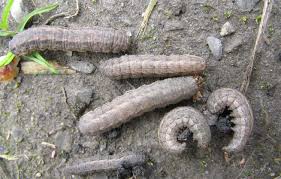
Quinoa cutworms are the larval stage of moths that feed on quinoa crops, particularly at early growth stages. These pests are known for cutting seedlings at soil level, which can result in significant stand loss.
They are nocturnal feeders and often remain hidden in soil during the day, making them difficult to detect.
The Night-Slicers: Quinoa Cutworms
The Quinoa Cutworm (primarily the Black Cutworm, Agrotis ipsilon, and the Variegated Cutworm) is a devastating early-season pest for quinoa growers in the United States. These larvae are the “ninjas” of the vegetable garden; they hide in the soil during the day and emerge at night to “fell” young quinoa plants like tiny lumberjacks. Because quinoa seedlings are delicate and slow to establish in the cool spring soils of the Mountain West and High Plains, a single cutworm can destroy several feet of a row in one night.
Identification: The “C-Shaped” Coil
Cutworms are the larvae of drab, heavy-bodied “Miller” moths. Since they are nocturnal and subterranean, finding them requires a bit of “dirt-digging” around the base of damaged plants. The identification markers are specific:
- The “C” Posture: When disturbed or uncovered from the soil, the cutworm will immediately curl into a tight, rigid “C” shape. This is their universal defensive reflex.
- Appearance: They are thick-bodied, greasy-looking caterpillars. The Black Cutworm is dark grey to nearly black with a grainy skin texture, while the Variegated Cutworm has a row of small yellow dots down its back.
- Size: Mature larvae can reach 1.5 to 2 inches (38–50mm) in length.
- The Moth: The adults are “dart moths” with dark forewings featuring a distinct black “dagger” or “kidney” shaped mark.
The “Guillotine” Damage
The name “cutworm” is literal. Their feeding habit is uniquely destructive compared to other caterpillars that merely chew holes in leaves:
- Stem Severing: Young larvae feed on the leaves, but as they grow, they move to the soil surface. They wrap their bodies around the stem of a quinoa seedling and chew through it completely at or just below the soil line.
- The “Downed” Seedling: You will find your quinoa plants lying flat on the ground, often with the severed top still green and seemingly healthy, as if it were cut with a pair of scissors.
- Over-Feeding: Cutworms often “cut” far more than they can eat, moving from one plant to the next in a single night, which is why they are considered a high-priority “noxious” pest.
U.S. Agricultural and Garden Management
In the United States, managing cutworms in quinoa is a matter of physical barriers and soil timing. Because quinoa is often a “no-till” or “low-input” crop, these strategies are essential:
- The “Collar” Method: For home gardeners, the most effective defense is a physical barrier. Placing a cardboard or plastic ring (like a bottomless yogurt cup) around the base of each seedling, pushed 1 inch into the dirt, prevents the worm from reaching the stem.
- Tilling for Exposure: In larger fields, tilling the soil 2 weeks before planting can expose the larvae to birds and the drying effects of the sun, significantly reducing the population before the seeds germinate.
- Bran Bait (Organic): A traditional U.S. organic remedy involves mixing wheat bran with Spinosad or Bacillus thuringiensis (Bt) and a little molasses. Spreading this “bait” on the soil surface at dusk lures the cutworms to eat the toxin before they reach the plants.
- The “Toothpick” Trick: Placing a toothpick or small twig vertically against the stem of a seedling can sometimes prevent the cutworm from wrapping its body around the plant to cut it.
Identification
Smooth, gray or brown caterpillars that curl when disturbed.
Life Cycle
Eggs hatch into larvae that feed at night before pupating in soil.
Damage
Severed seedlings and reduced crop establishment.
Control
Use collars, remove debris, and apply biological controls.