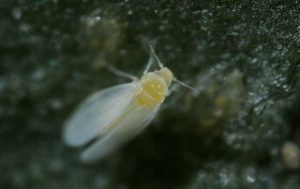
Q-biotype aphids also know as Green Peach Aphids are a classification of aphids known for their adaptability and resistance to environmental pressures. These aphids are capable of rapid reproduction and can infest a wide range of crops.
The “Super-Resistant” Strain: Q-Biotype Aphids
In the United States, the Q-Biotype Aphid (primarily a highly resistant strain of the Green Peach Aphid, Myzus persicae) is a “noxious” genetic variant that has become a nightmare for commercial greenhouses and organic farmers. While it looks identical to a standard aphid, the Q-Biotype possesses a specific set of enzymes that allow it to neutralize nearly all common neonicotinoid and pyrethroid insecticides. In the Southwest and California, these “super-aphids” are notorious for surviving chemical treatments that would normally wipe out 100% of a colony.
Identification: The “Invincible” Generalist
Identifying a Q-Biotype aphid is impossible through sight alone. The “ID” usually happens after a failed treatment. However, the general Myzus persicae markers are:
- Appearance: They are small (1.5mm to 2mm) and pear-shaped. Their color ranges from translucent light green to a pale, pinkish-peach.
- Antennal Tubercles: Under a hand lens, look at the base of the antennae. The “tubercles” (the bumps the antennae sit on) point inward toward each other, a key feature of the Green Peach Aphid family.
- Cornicles: They have two long, slightly swollen “tailpipes” (cornicles) at the rear, which are usually the same color as the body but may have dark tips.
- Behavior: They are extreme generalists, feeding on over 400 plant species, from Tucson’s desert ornamentals to high-value greenhouse peppers and tomatoes.
The “Chemical Immunity” Problem
The Q-Biotype is “noxious” not because of how it eats, but because of its metabolic resistance. This has several implications for U.S. agriculture:
- Treatment Failure: Homeowners often assume they “didn’t spray well enough,” but with Q-Biotypes, the insect can actually sit in a puddle of insecticide and remain unharmed because its body breaks the toxin down instantly.
- Viral Efficiency: Because they survive longer, they are more effective vectors for over 100 plant viruses, including Potato Leafroll Virus and Cucumber Mosaic Virus.
- Rapid Colonization: Without chemical “checks,” a single female (who can produce 80 offspring without mating) can turn a single plant into a colony of thousands in less than two weeks.
U.S. Management: The “Non-Chemical” Strike
In the United States, managing Q-Biotype aphids requires moving away from traditional poisons and toward mechanical and biological disruption:
- The “Soap and Oil” Rotations: Since Q-Biotypes have chemical resistance, not physical resistance, Insecticidal Soaps and Neem Oils are highly effective. These work by suffocating the insect or dissolving its outer shell, a process the aphid cannot “evolve” out of.
- Biological “Air Support”: In U.S. greenhouses, the release of Aphidius colemani (tiny parasitic wasps) is the gold standard. The wasp lays an egg inside the aphid, turning it into a hard, brown “mummy.” If you see brown, crusty aphids on your plants, the wasps are winning.
- High-Pressure Water: A sharp blast of water from a garden hose every three days is often more effective than any store-bought spray. It crushes the aphids and washes away the honeydew that attracts ants.
- Reflective Silver Mulch: Many U.S. vegetable growers use silver-colored plastic mulch. The reflected UV light confuses the winged aphids as they fly, preventing them from “landing” on the crop in the first place.
Identification
Small, soft-bodied insects in dense colonies.
Damage
Sap loss and virus transmission.
Control
Biological controls and targeted treatments.