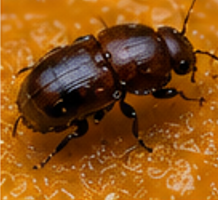
Nitidulid sap beetles, commonly referred to as sap beetles or picnic beetles, are a group of insects that thrive on fermenting plant materials, overripe fruits, and sap flows from damaged trees. While they play a natural role in decomposition, they become pests when they infest crops, stored produce, or food-processing environments.
These beetles are particularly problematic in orchards and vineyards, where they are attracted to damaged or ripening fruit. Once present, they can accelerate spoilage and introduce microorganisms that lead to fermentation and decay.
The Fermentation Fans: Nitidulid Sap Beetles
The Nitidulid Sap Beetle (Family Nitidulidae) is a diverse group of beetles found across the United States, including common species like the Picnic Beetle (Glischrochilus quadrisignatus) and the Driedfruit Beetle. They are strongly attracted to the scent of fermentation, ripening fruit, and fresh tree sap. While they are often viewed as a backyard nuisance during summer cookouts, they are serious agricultural pests capable of spreading rot-inducing fungi to high-value crops.
Identification: The “Short-Winged” Scavenger
Most Sap Beetles are small (2–6mm), oval-shaped, and dark-colored. Identifying them accurately is key to distinguishing them from common pantry or wood-boring beetles:
- Exposed Abdomen: A hallmark of many Nitidulids is that their wing covers (elytra) are slightly “short,” leaving the last segment or two of their abdomen exposed.
- Clubbed Antennae: They possess very distinct, 3-segmented “knob-like” clubs at the end of their antennae.
- The Picnic Beetle Pattern: The most recognizable species in the U.S. is shiny black with four prominent yellow or orange spots on its back, often seen diving into beer cans or overripe watermelons.
Agricultural Damage and Disease Vectors
In the U.S., Sap Beetles do not typically attack healthy, hard fruit. Instead, they seek out mechanical injuries (bird pecks, hail damage, or earworm holes) to enter. Once inside, they cause two types of damage:
- Direct Feeding: Both adults and larvae (small, white, worm-like grubs) tunnel into the fruit, contaminating it with frass and making it unfit for sale.
- Fungal Transport: They are primary vectors for Sour Rot and Oak Wilt. As they move from fermenting debris to fresh wounds on trees or fruit, they carry yeast and fungal spores on their bodies, accelerating the decay of the host.
- Corn Ear Invasion: They frequently enter the tips of sweet corn ears, following behind the damage caused by Corn Earworms.
U.S. Management: The “Decay” Defense
Management of Sap Beetles in the United States relies heavily on sanitation and timing rather than heavy pesticide use. Because they are attracted to the smell of rot, removing the “lure” is the first step:
- Prompt Harvest: Picking fruit as soon as it ripens and removing “mummies” (dried, rotted fruit) from the ground significantly reduces local populations.
- Bait Trapping: Gardeners often use “culls” or a mixture of molasses, water, and yeast in a bucket to lure beetles away from the main crop. These traps must be emptied regularly to prevent them from becoming breeding grounds.
- Injury Prevention: Controlling primary pests like birds or earworms reduces the entry points that Sap Beetles require to infest a crop.
Identification
Sap beetles are small, oval-shaped insects typically measuring 2–5 mm in length. They are usually dark brown or black, sometimes with yellow or orange markings. Their short wing covers expose part of their abdomen, which helps distinguish them from other beetles.
Life Cycle
Females lay eggs in fermenting plant material. Larvae feed on decaying matter before pupating in soil or nearby debris. The lifecycle can be completed in a few weeks under warm conditions.
Damage and Impact
They damage crops by feeding on fruits and spreading decay organisms. Infested fruit often becomes unmarketable, leading to economic losses.
Prevention and Control
Sanitation is critical—removing overripe fruit and plant debris reduces breeding sites. Traps and exclusion methods can also help limit infestations.