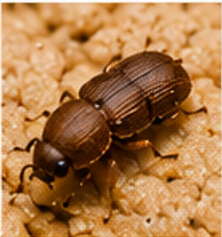
Nicotine beetles (Lasioderma serricorne), also known as cigarette beetles, are among the most destructive pests of stored products worldwide. While they are most commonly associated with tobacco products, these beetles also infest a wide variety of dried goods including spices, grains, herbs, pet food, and even pharmaceuticals. Their ability to survive in low-moisture environments makes them particularly difficult to control once established.
These pests are especially problematic in warehouses, grocery stores, and homes where dry goods are stored for extended periods. Because they can bore through packaging, including paper, cardboard, and even thin plastics, infestations can spread rapidly if not addressed early.
The Toxic Connoisseur: Nicotine Beetles
The Nicotine Beetle, more commonly known in the United States as the Cigarette Beetle (Lasioderma serricorne), is a world-class pest of stored products. While it is famous for its ability to thrive on dried tobacco—an environment toxic to most life forms due to high nicotine content—it is a pervasive “pantry pest” across the U.S., infesting everything from spices and flour to dried floral arrangements and even prescription medications.
The “Humpbacked” Identification
Adult Cigarette Beetles are tiny (about 2–3mm), oval-shaped, and reddish-brown. From a U.S. pest control perspective, they are frequently confused with the Drugstore Beetle. However, the Cigarette Beetle has two distinct features:
- The Head Tuck: When viewed from the side, the beetle’s head is bent downward at a sharp angle, giving it a pronounced “humpbacked” appearance. This makes the head nearly invisible from above.
- Serrated Antennae: Unlike the clubbed antennae of many other beetles, the Cigarette Beetle has “saw-toothed” (serrated) antennae, which is a key diagnostic feature under magnification.
- Smooth Elytra: Their wing covers are smooth and covered in fine, silky hairs, lacking the deep rows of pits (striae) found on the Drugstore Beetle.
Infestation: More Than Just Tobacco
In the American household, the “Nicotine Beetle” is rarely found in cigarettes anymore due to modern packaging; instead, it is a primary culprit in the kitchen and living room:
- Spices: They have a particular affinity for paprika, chili powder, and dried ginger.
- Dried Botanicals: They are the most common pest found in “everlasting” flower arrangements and potpourri.
- Books and Upholstery: In extreme cases, they have been known to feed on the paste in book bindings and the straw stuffing in antique furniture.
U.S. Household Management
Because these beetles are strong fliers and highly active in the late afternoon and evening, a single sighting in the kitchen often indicates a hidden “source” infestation nearby. Management strategies include:
- The Search for the Source: Emptying the pantry and checking every open container. Look for “shot holes”—tiny circular exit holes in cardboard or plastic packaging.
- Temperature Treatment: Infested items that cannot be discarded (like heirloom books) can be placed in a freezer at 0°F for at least four days to kill all life stages.
- Pheromone Traps: Commercial traps containing the sex pheromone “serricornin” are highly effective for monitoring and capturing adult males, helping to pinpoint which cabinet the beetles are breeding in.
Identification
Adult nicotine beetles are small (about 2–3 mm), oval-shaped, and reddish-brown. They have a smooth, humpbacked appearance and are capable of flight. Larvae are tiny, white, and C-shaped, typically found inside infested products.
Life Cycle
The lifecycle begins when females lay eggs directly on food sources. After hatching, larvae feed extensively before pupating within the material. Under warm conditions, the entire lifecycle can be completed in as little as 6–8 weeks, allowing multiple generations per year.
Damage
Damage includes contamination of stored products, reduced quality, and structural damage to packaging. Infested goods often show fine powder and exit holes.
Control
Control includes proper storage in airtight containers, freezing infested items, and maintaining clean storage environments. In commercial settings, fumigation may be required.