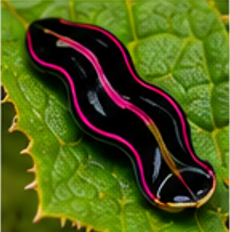
New Guinea flatworms (Platydemus manokwari) are one of the most invasive flatworm species globally. Known for their voracious appetite for snails and earthworms, they pose a major threat to biodiversity and agriculture.
They are particularly concerning in tropical and subtropical environments, where they can spread rapidly.
The Tropical Terror: New Guinea Flatworms
The New Guinea Flatworm (Platydemus manokwari) is one of the “100 World’s Worst Invasive Alien Species.” While originally from New Guinea, it has successfully invaded several U.S. territories and states, including Florida, Texas, and Puerto Rico. Unlike many other flatworms, this species is a highly mobile, climbing predator that threatens not just earthworms, but also native tree snails and biodiversity at large.
A Specialized Snail Hunter
What makes P. manokwari particularly dangerous in the United States is its ability to climb trees to hunt. In Florida, it poses a direct threat to rare native snails. Its predatory behavior is aggressive and systematic:
- Tracking by Scent: These flatworms use chemical sensors to follow the mucus trails of snails and slugs, tracking them across the forest floor and up into the canopy.
- Gregarious Feeding: While a single flatworm can kill a small snail, they often hunt in “packs.” Multiple flatworms will overwhelm a larger snail, attaching themselves to the soft body and consuming it alive.
- Extreme Tolerance: They can survive in a wide range of habitats, from tropical gardens to agricultural fields, as long as the environment remains moist.
Identification: The “Double-Striped” Ribbon
The New Guinea Flatworm is easily distinguished from the Hammerhead Flatworm because it lacks the wide, shovel-shaped head. It is a flat, tapered worm, usually 40–65mm long. Key identification features include:
- Coloration: The back is a dark brown to blackish color with a prominent, pale cream-colored longitudinal stripe running down the center.
- The Underside: The belly (ventral side) is a pale grey or tan, contrasting sharply with the dark topside.
- Tapered Ends: Both the head and tail are pointed, though the head end is more sensitive and houses two tiny, primitive eyespots that are difficult to see without magnification.
U.S. Biosecurity and Health Risks
Beyond the ecological damage, the New Guinea Flatworm is a significant public health concern in the U.S. because it is a known paratenic host of the Rat Lungworm (Angiostrongylus cantonensis). This parasite can cause eosinophilic meningitis in humans if the flatworm (or the slime it leaves on produce) is accidentally ingested.
Management and Eradication
In residential areas of the Southern U.S., management is largely about containment and “search and destroy” missions. If you find one:
- Do Not Touch: Always wear gloves. The mucus can contain toxins and parasites.
- Hot Water Treatment: Placing the flatworm in water heated to at least 110°F (43°C) for several minutes is an effective way to kill them and any potential parasites.
- Report It: Because they are an invasive species of concern, sightings in new counties should be reported to local agricultural extension offices or state wildlife agencies.
Identification
Long, flat, dark brown worms with a lighter dorsal stripe.
Damage
They reduce populations of beneficial soil organisms.
Control
Quarantine measures and manual removal are most effective.