Overview
Hylobius pine weevils are wood-associated beetles belonging to the family Curculionidae and are considered significant pests in forestry and reforestation efforts. These weevils primarily target coniferous trees, including pine, spruce, and fir, where they feed on bark and roots during both larval and adult stages.
One of the most well-known species is the large pine weevil (Hylobius abietis), which has caused extensive damage in European forestry. Similar species in North America exhibit comparable behavior and ecological roles.
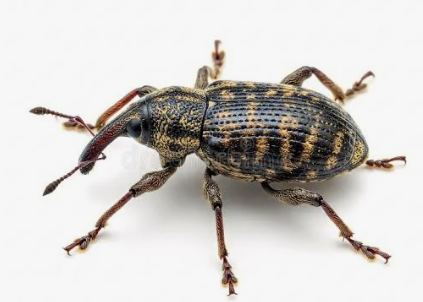
These insects are particularly problematic in recently planted or regenerating forests, where young trees are highly vulnerable. Their feeding can girdle stems and kill seedlings, leading to significant economic losses.
Identification
Adult pine weevils are relatively large, often measuring up to 1/2 inch in length. They have elongated snouts and robust bodies with brown or black coloration, often marked with lighter patches.
Larvae are white, legless grubs found within roots or woody material.
Habitat
Hylobius weevils are found in coniferous forests, particularly in areas with recently cut or disturbed timber. They are strongly associated with stumps and decaying wood.
Behavior and Life Cycle
Females lay eggs in soil near tree roots or in decaying wood. Larvae feed on roots or woody material, developing over several months to years.
Adults emerge and feed on the bark of young trees, often causing the most visible damage.
Their life cycle is closely tied to forestry practices, particularly logging and replanting.
Damage and Impact
Adult feeding can girdle young trees, cutting off nutrient flow and causing death. Larval feeding damages roots and reduces stability.
Infestations are particularly damaging in reforestation areas, where young seedlings are vulnerable.
Prevention and Control
Managing logging debris and timing replanting efforts can reduce weevil populations. Monitoring and protective measures for young trees are essential.
Encouraging natural predators and maintaining forest health can help mitigate impacts.
Taxonomy
- Kingdom: Animalia
- Phylum: Arthropoda
- Class: Insecta
- Order: Coleoptera
- Family: Curculionidae
- Genus: Hylobius