Overview
Hister beetles belong to the family Histeridae, a group of small, compact beetles known for their role as predators and scavengers in a wide range of environments. Often referred to as “clown beetles,” they are commonly found in decaying organic matter, animal dung, carrion, and stored products where they feed on other insects and larvae.
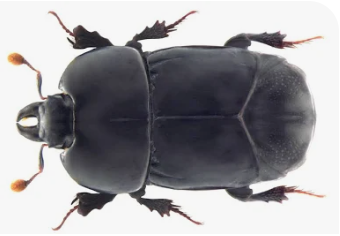
These beetles are highly beneficial in many ecosystems because they help control populations of pest species, including fly larvae and other decomposer insects. Their presence in environments such as livestock facilities or compost piles can contribute to natural pest suppression.
Hister beetles are known for their defensive behavior, including retracting their legs and playing dead when disturbed. This adaptation helps them avoid predation and survive in competitive environments.
Identification
Hister beetles are small, typically 1–10 mm in length, with shiny black or metallic bodies. They have a compact, oval shape and shortened wing covers that expose the rear segments of the abdomen.
Their legs are strong and adapted for digging, allowing them to burrow into substrates such as soil or organic matter.
Habitat
These beetles are found in a variety of environments, including soil, compost, manure, carrion, and stored products. They prefer areas rich in organic material where prey is abundant.
Behavior and Feeding
Hister beetles are primarily predatory, feeding on insect larvae, eggs, and other small invertebrates. They may also scavenge on decaying organic matter.
They are often found in environments where fly larvae are present, making them valuable in controlling pest populations.
Impact
Hister beetles are beneficial insects that help reduce pest populations. They are not harmful to humans or structures.
Prevention and Conservation
No control is necessary. Maintaining natural habitats supports their populations and ecological benefits.
Taxonomy
- Kingdom: Animalia
- Phylum: Arthropoda
- Class: Insecta
- Order: Coleoptera
- Family: Histeridae