Overview
Hickory tussock moths (Lophocampa caryae) are native North American insects known for their strikingly hairy caterpillars and their ability to defoliate hardwood trees. These moths belong to the family Erebidae and are commonly found in forests, suburban landscapes, and parks where host trees such as hickory, walnut, and pecan are present.
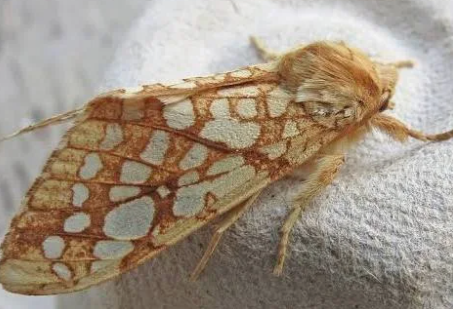
The caterpillars are the most notable stage of this species due to their dense tufts of white and black hairs. While visually distinctive, these hairs can cause skin irritation in humans upon contact. As a result, hickory tussock moth caterpillars are both a plant pest and a minor health concern.
Although defoliation is usually not severe enough to kill healthy trees, heavy infestations can stress trees and reduce growth. Their presence is often cyclical, with population outbreaks occurring periodically.
Identification
Caterpillars are white with black markings and long hair-like setae. They often appear fuzzy and are easily recognizable.
Adult moths are less conspicuous, typically gray or brown with subtle patterns.
Habitat
These moths are found in forests, woodlands, and areas with suitable host trees. They are common in both natural and urban environments.
Behavior and Life Cycle
Eggs are laid on host trees, and larvae feed on leaves after hatching. They pass through several growth stages before pupating.
Adults emerge and reproduce, continuing the cycle.
Damage and Impact
Caterpillars feed on leaves, causing defoliation. Severe infestations can stress trees and reduce vigor.
Contact with caterpillars may cause skin irritation or allergic reactions.
Prevention and Control
Avoid handling caterpillars. Monitoring and natural predators help manage populations.
Taxonomy
- Kingdom: Animalia
- Phylum: Arthropoda
- Class: Insecta
- Order: Lepidoptera
- Family: Erebidae
- Species: Lophocampa caryae