Overview
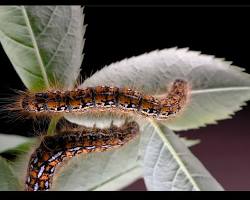
Hairy Caterpillars are a broad group of moth and butterfly larvae characterized by dense coverings of hair-like structures called setae. These hairs serve as important defense mechanisms against predators and environmental threats. While many hairy caterpillars are harmless and play important ecological roles, others are significant agricultural or forest pests capable of severe defoliation. Certain species can also cause skin irritation, allergic reactions, or painful stings in humans and animals.
Hairy caterpillars are found in forests, gardens, agricultural fields, urban landscapes, and natural ecosystems worldwide. Their appearance varies dramatically between species, ranging from soft and fuzzy to heavily bristled or brightly colored warning forms. Some species use camouflage to blend into vegetation, while others display vivid coloration to warn predators of toxicity or irritation.
These caterpillars primarily feed on plant foliage, though feeding habits vary widely depending on species. During outbreak years, some hairy caterpillars can strip entire trees of leaves, damage crops, and weaken ornamental plants. Others exist in low numbers and cause little noticeable harm.
The hairs themselves are among the most distinctive and important characteristics of these insects. In some species, the hairs are harmless and simply deter predators mechanically. In others, the hairs are connected to venom glands or contain irritating compounds capable of causing rashes, itching, or respiratory reactions when touched or inhaled.
Quick Facts
- Common Name: Hairy Caterpillars
- Order: Lepidoptera
- Main Diet: Plant foliage
- Defense Mechanism: Hair-like setae
- Threat Level: Varies by species
- Primary Habitat: Forests, gardens, fields
- Main Risk: Defoliation and skin irritation
Taxonomy and Classification
Hairy caterpillars belong to the order Lepidoptera, which includes moths and butterflies.
- Kingdom: Animalia
- Phylum: Arthropoda
- Class: Insecta
- Order: Lepidoptera
Many different moth and butterfly families contain hairy caterpillar species, including:
- Erebidae – Tussock moths and tiger moths
- Lasiocampidae – Tent caterpillars and lappet moths
- Saturniidae – Giant silk moth caterpillars
- Megalopygidae – Flannel moth caterpillars
- Notodontidae – Prominent moth caterpillars
Each family contains species with different ecological roles, appearances, and defensive adaptations.
Identification
Hairy caterpillars vary enormously in appearance depending on species and developmental stage.
General Appearance
Most hairy caterpillars possess:
- Soft, segmented bodies
- Multiple pairs of prolegs
- Dense hair or bristle coverings
- Strong chewing mouthparts
The hair covering may be:
- Short and velvety
- Long and fuzzy
- Spiny or bristled
- Tufted into clusters
Coloration
Species may appear:
- Brown
- Black
- White
- Orange
- Yellow
- Green
- Brightly patterned
Some species use warning coloration to advertise their irritating hairs or toxins.
Behavioral Traits
Common behaviors include:
- Curling into a ball when disturbed
- Raising defensive hairs
- Feeding in groups
- Hiding beneath leaves during the day
Habitat and Distribution
Hairy caterpillars occur worldwide wherever suitable host plants exist.
Common Habitats
- Forests
- Woodlands
- Gardens
- Parks
- Agricultural fields
- Urban landscapes
- Shrublands
Many species specialize on particular host plants, while others feed on a wide variety of vegetation.
Host Plants
Common host plants include:
- Oak
- Maple
- Fruit trees
- Pine
- Willow
- Garden vegetables
- Ornamental shrubs
Life Cycle
Hairy caterpillars undergo complete metamorphosis.
Egg Stage
Adult moths or butterflies lay eggs on suitable host plants.
Egg masses may contain dozens or hundreds of eggs depending on species.
Larval Stage
After hatching, the caterpillars begin feeding immediately.
The larval stage is the primary feeding and growth period.
As they grow, caterpillars molt through several developmental stages known as instars.
Pupal Stage
Once fully grown, caterpillars pupate:
- Inside cocoons
- Underground
- Attached to vegetation
- Within leaf litter
Adult Stage
Adult moths or butterflies emerge from the pupae to reproduce and continue the cycle.
Behavior and Ecology
Hairy caterpillars exhibit a variety of fascinating defensive and feeding behaviors.
Defensive Hairs
The setae serve several purposes:
- Discouraging predators
- Providing camouflage
- Delivering irritating chemicals
- Breaking off into attackers’ skin or mouths
Some species possess urticating hairs capable of causing:
- Skin irritation
- Rashes
- Burning sensations
- Allergic reactions
Group Feeding
Certain species feed communally, forming dense aggregations that can rapidly defoliate plants.
Tent caterpillars and tussock moths are especially known for group feeding behavior.
Predator Avoidance
Natural predators include:
- Birds
- Parasitic wasps
- Predatory beetles
- Spiders
- Small mammals
The hair covering helps reduce predation success.
Damage and Impact
The severity of damage depends heavily on species and population density.
Defoliation
Hairy caterpillars feed primarily on leaves, causing:
- Chewed foliage
- Skeletonized leaves
- Reduced photosynthesis
- Premature leaf drop
Large outbreaks may completely strip trees and shrubs of foliage.
Agricultural Damage
Some species attack:
- Fruit crops
- Vegetables
- Field crops
- Ornamental plants
Repeated infestations can reduce crop yield and weaken plants.
Human Health Concerns
Species with irritating hairs may cause:
- Dermatitis
- Itching
- Eye irritation
- Respiratory discomfort
Sensitive individuals may experience stronger allergic reactions.
Signs of Infestation
- Visible fuzzy caterpillars on plants
- Chewed or skeletonized leaves
- Defoliated branches
- Silk webbing or tents
- Frass (caterpillar droppings)
- Clusters of feeding larvae
- Skin irritation after contact
Prevention and Control
Management depends on the species involved and the severity of infestation.
Avoid Direct Contact
Unknown hairy caterpillars should never be handled with bare skin.
Protective gloves are recommended during removal.
Monitoring
Regular plant inspection helps detect infestations early.
Early intervention is often the most effective strategy.
Mechanical Removal
Small infestations may be controlled by:
- Hand removal
- Pruning infested branches
- Destroying egg masses
- Removing webbing or nests
Biological Control
Natural predators and parasites play an important role in regulating populations.
Encouraging beneficial insects and birds can help reduce outbreaks naturally.
Microbial Insecticides
Young caterpillars may be treated with:
- Bacillus thuringiensis var. kurstaki (Btk)
This biological insecticide specifically targets caterpillars while minimizing harm to beneficial organisms.
Chemical Control
Severe infestations may require insecticide treatments, particularly in agricultural or high-value ornamental settings.
Applications are most effective against early larval stages.
Interesting Facts
- Not all hairy caterpillars are dangerous to touch.
- Some species mimic toxic animals using bright colors.
- Certain caterpillar hairs contain venom-like compounds.
- Hair coverings evolved mainly as predator defense.
- Some species feed communally in massive colonies.
- Hairy caterpillars eventually transform into moths or butterflies.
Conservation and Research
Research on hairy caterpillars focuses on:
- Defensive chemistry
- Outbreak prediction
- Biological control methods
- Forest pest management
- Allergenic reactions in humans
Scientists continue studying how caterpillar hairs evolved and how different species interact with predators, host plants, and environmental conditions.