Overview
Hemp aphids (Phorodon cannabis) are specialized sap-feeding insects that primarily infest cannabis and hemp plants. Native to parts of Asia, these aphids have become increasingly important pests in regions where hemp cultivation has expanded, including North America and Europe. Their rapid reproduction, ability to form dense colonies, and tendency to infest both indoor and outdoor crops make them a major concern for growers.
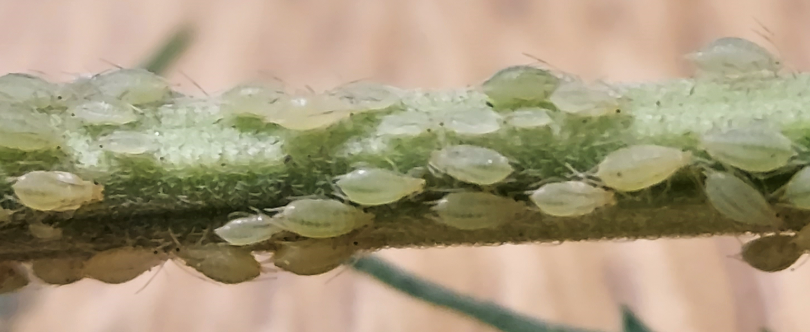
Unlike generalist aphids that feed on many plant species, hemp aphids are highly adapted to cannabis. They colonize stems, leaves, and flower buds, extracting plant sap and weakening plant tissues. Their feeding reduces plant vigor and can significantly impact both yield and quality, particularly in commercial operations where consistency is critical.
In addition to direct feeding damage, hemp aphids produce honeydew, a sticky byproduct that promotes the growth of sooty mold fungi. This secondary effect can further reduce photosynthesis and contaminate harvested material, making infestations both a biological and economic issue.
Identification
Hemp aphids are small, soft-bodied insects typically measuring 1–3 mm in length. They are pale green, yellowish, or light tan, often blending in with plant tissues. Like other aphids, they have pear-shaped bodies and may have winged or wingless forms depending on population density and environmental conditions.
Colonies are often found clustered along stems, under leaves, or within flower structures. Heavy infestations may produce visible honeydew and attract ants.
Habitat
Hemp aphids are found exclusively on cannabis and hemp plants. They are common in outdoor fields, greenhouses, and indoor grow operations.
They thrive in warm, humid environments where plant growth is vigorous and uninterrupted.
Behavior and Life Cycle
Hemp aphids reproduce rapidly through parthenogenesis, meaning females can produce offspring without mating. This allows populations to expand quickly under favorable conditions.
Multiple generations can occur within a single growing season. Winged forms may develop when populations become crowded, allowing aphids to disperse to new plants.
Their feeding involves piercing plant tissue and extracting sap, which weakens plants and reduces nutrient availability.
Damage and Impact
Damage includes yellowing leaves, stunted growth, and reduced flower development. Heavy infestations can significantly reduce crop yield and quality.
The presence of honeydew leads to sooty mold growth, which further interferes with photosynthesis and contaminates harvestable material.
In commercial hemp production, infestations can result in economic losses due to reduced market value.
Prevention and Control
Integrated pest management strategies are essential. Monitoring plants regularly, introducing beneficial insects such as lady beetles, and maintaining proper airflow can help reduce infestations.
Sanitation and removal of infested plant material are also important.
Taxonomy
- Kingdom: Animalia
- Phylum: Arthropoda
- Class: Insecta
- Order: Hemiptera
- Family: Aphididae
- Species: Phorodon cannabis