Overview
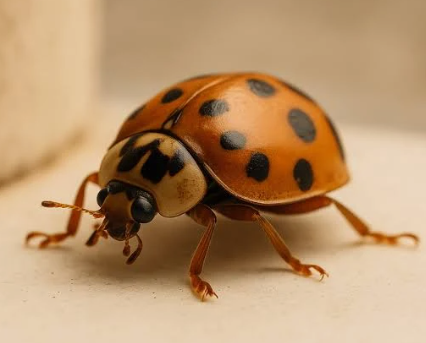
Harlequin lady beetles (Harmonia axyridis), also commonly called Asian lady beetles, are small predatory beetles in the lady beetle family. They are well known for feeding on aphids, scale insects, mites, and other soft-bodied plant pests. Because of this appetite, they have been used in biological pest control programs and are often considered beneficial insects in gardens, orchards, farms, and landscapes.
Native to parts of Asia, harlequin lady beetles have become established in many regions outside their original range, including North America and Europe. Their success comes from their adaptability, strong flight ability, wide food range, and ability to survive in both agricultural and urban environments. In many situations, they help reduce pest populations naturally, especially where aphids are abundant on ornamental plants, vegetables, fruit trees, and field crops.
However, harlequin lady beetles are also famous for becoming seasonal nuisance pests. In late summer and fall, adults often gather on sunny walls, windows, siding, attics, and rooflines as they search for sheltered places to overwinter. Large numbers may enter homes, garages, barns, and other buildings through cracks and gaps. Indoors, they do not damage wood, reproduce in walls, infest stored food, or feed on clothing, but they can stain surfaces and release an unpleasant odor when disturbed or crushed.
Although some people describe them as “bad ladybugs,” harlequin lady beetles are not harmful in the same way as termites, cockroaches, bed bugs, or pantry pests. Their main conflict with people is their tendency to swarm buildings during cool weather. They are also ecologically important because they may compete with native lady beetle species for food and habitat. For homeowners and gardeners, the best approach is to understand both sides of this insect: helpful outdoor predator and occasional indoor nuisance.
Taxonomy and Classification
- Kingdom: Animalia
- Phylum: Arthropoda
- Class: Insecta
- Order: Coleoptera
- Family: Coccinellidae
- Genus: Harmonia
- Species: Harmonia axyridis
Identification
Harlequin lady beetles are usually rounded, dome-shaped beetles with short legs and hard wing covers. Adults are typically about 5 to 8 millimeters long, though size can vary. Their color is highly variable, which is one reason they are called “harlequin” lady beetles. Individuals may be yellow, orange, reddish-orange, or red. Some have many black spots, while others have only a few spots or none at all.
One of the most useful identifying features is the pale area behind the head, known as the pronotum. Many harlequin lady beetles have a dark marking on this pale background that resembles an M or W, depending on the viewing angle. This marking can help separate them from many native lady beetles, although color and spot pattern alone are not always reliable.
Like other lady beetles, their larvae look very different from adults. Larvae are elongated, dark, and somewhat alligator-like, often with orange markings. These larvae are active predators and feed heavily on aphids and other small insects.
Distribution and Habitat
Harlequin lady beetles are now found in many parts of the United States, Canada, Europe, and other regions where they have become established. They live in gardens, farms, orchards, forests, parks, suburban yards, and urban landscapes. They are especially common where aphids or other soft-bodied insects are present.
During the growing season, they may be seen on roses, vegetables, fruit trees, weeds, shrubs, maple trees, soybeans, corn, and many ornamental plants. Their ability to use a wide variety of habitats has helped them spread quickly and persist in many environments.
Life Cycle and Behavior
Harlequin lady beetles undergo complete metamorphosis, with egg, larval, pupal, and adult stages. Females lay clusters of small yellowish eggs near aphid colonies or other food sources. After hatching, larvae begin feeding on prey almost immediately. As they grow, they molt several times before pupating on leaves, stems, bark, or other surfaces.
Adults are strong fliers and can travel to find prey, mates, and overwintering sites. In warm months, they are active predators. In fall, they begin searching for protected winter shelter. Sunny, light-colored buildings, especially those facing south or west, may attract large numbers. They commonly enter through cracks around windows, doors, siding, vents, utility openings, chimneys, rooflines, and attic gaps.
Damage and Conflict
Outdoors, harlequin lady beetles are usually beneficial because they reduce aphid populations and other plant pests. They can help limit damage on garden plants, trees, and crops. Their presence often indicates that prey insects are available nearby.
Indoors, however, they can become annoying. When disturbed, adults may release a yellowish defensive fluid from their leg joints. This fluid can stain walls, curtains, furniture, and fabrics. It may also produce a strong odor. They may occasionally nip exposed skin, but this is not the same as a true biting pest infestation. They do not feed on human blood and are not known for spreading disease inside homes.
Another concern is their impact on native lady beetles. Because harlequin lady beetles are aggressive competitors and reproduce successfully, they may reduce food availability for native species in some areas.
Prevention and Control
The best way to manage harlequin lady beetles indoors is to prevent entry before fall swarming begins. Seal cracks around windows, doors, vents, siding, fascia boards, utility lines, and roof openings. Repair damaged screens, install door sweeps, and use weatherstripping where gaps are present.
If beetles are already indoors, avoid crushing them because they may stain surfaces. Use a vacuum to remove them from windowsills, ceilings, walls, and corners. Empty the vacuum outdoors immediately. Light traps may also help collect beetles in attics or dark rooms, but exclusion remains the most effective long-term method.
Outdoor pesticide use is usually unnecessary in gardens because these beetles are beneficial predators. Broad insecticide applications may kill them along with other helpful insects. If large numbers are entering a home each year, focus on sealing, screening, and exterior maintenance rather than treating garden areas where they provide natural pest control.
Conclusion
Harlequin lady beetles are both helpful and troublesome, depending on where they are found. In gardens, orchards, and farms, they are valuable predators of aphids and other soft-bodied pests. Around homes, they can become seasonal nuisance invaders when adults gather in large numbers to overwinter.
Understanding their behavior helps homeowners make better pest management decisions. Rather than viewing them only as pests, it is more accurate to recognize them as beneficial insects that sometimes create indoor nuisance problems. With good exclusion, careful removal, and reduced reliance on broad insecticides, harlequin lady beetles can be managed effectively while preserving their useful role in natural pest control.