Overview
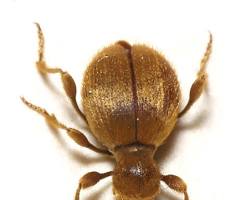
Hairy Spider Beetles are small scavenging beetles belonging to the family Ptinidae. These insects are common stored-product pests often associated with homes, warehouses, food processing facilities, museums, and storage areas. Their name comes from their spider-like appearance, which includes long legs, rounded bodies, and fine body hairs that give them a fuzzy look.
Although hairy spider beetles are not considered dangerous to humans, they can become persistent nuisance pests when they infest stored food products or organic materials. Unlike aggressive structural pests such as termites or carpenter ants, hairy spider beetles primarily feed on dry organic debris rather than wood or building materials.
These beetles are highly adaptable scavengers capable of surviving in harsh environments with minimal moisture and limited food sources. Their ability to feed on a broad range of organic materials allows them to persist where many other insects cannot survive.
Hairy spider beetles are particularly problematic because they often infest overlooked or rarely disturbed areas. Pantries, attics, crawl spaces, bird nests, rodent nests, wall voids, and museum collections may all provide suitable breeding habitats.
While the actual feeding damage is usually minor, infestations can contaminate food products, create sanitation concerns, and become difficult to eliminate if the source material is not properly identified and removed.
In commercial environments, spider beetles may trigger product recalls or sanitation violations when discovered in stored goods.
Quick Facts
- Common Name: Hairy Spider Beetles
- Family: Ptinidae
- Order: Coleoptera
- Main Diet: Dry organic material
- Habitat: Pantries, warehouses, nests, storage areas
- Threat Level: Low health risk
- Primary Concern: Food contamination
- Activity: Mostly nocturnal
Taxonomy and Classification
Hairy spider beetles belong to the beetle family Ptinidae, which also includes several important stored-product pests.
- Kingdom: Animalia
- Phylum: Arthropoda
- Class: Insecta
- Order: Coleoptera
- Family: Ptinidae
This family includes:
- Spider beetles
- Drugstore beetles
- Cigarette beetles
- Deathwatch beetles
Spider beetles are closely related to other scavenging beetles that infest dried organic materials.
Identification
Hairy spider beetles are very small insects with distinctive spider-like proportions.
Physical Features
- Rounded or globular abdomen
- Long slender legs
- Small head
- Fine body hairs
- Short antennae
- Compact body shape
Adults are usually less than 1/4 inch long.
Coloration
Depending on species, coloration may include:
- Reddish-brown
- Dark brown
- Blackish-brown
- Golden-brown hairs
The fine hairs covering the body create a fuzzy or dusty appearance.
Spider-Like Appearance
The long legs and rounded abdomen often cause people to mistake these beetles for small spiders.
Unlike spiders, however, they possess:
- Six legs instead of eight
- Hard beetle wing covers
- Antennae
Larvae
Larvae are small, cream-colored grubs covered with fine hairs.
They are typically hidden within food materials or debris during development.
Habitat and Distribution
Hairy spider beetles are found worldwide in both residential and commercial environments.
Common Habitats
- Pantries
- Food storage rooms
- Warehouses
- Bird nests
- Rodent nests
- Attics
- Museums
- Animal feed storage
- Dry organic debris
They prefer dark, undisturbed areas where food remains available for long periods.
Environmental Preferences
Hairy spider beetles thrive in:
- Low-moisture environments
- Warm temperatures
- Minimal disturbance
- Protected storage areas
Their ability to survive with limited water allows them to infest dry environments that are unsuitable for many other pests.
Life Cycle
Hairy spider beetles undergo complete metamorphosis with four life stages.
Egg Stage
Females lay eggs directly within or near food materials.
Larval Stage
Larvae feed actively on organic materials and may remain hidden inside food products or debris.
This stage causes most contamination issues.
Pupal Stage
Pupation occurs within protected food sources or hidden crevices.
Adult Stage
Adults emerge ready to reproduce and disperse into new food sources.
Under favorable conditions, multiple generations may occur each year.
Behavior and Feeding
Hairy spider beetles are scavengers capable of feeding on an unusually broad range of materials.
Food Sources
- Stored grains
- Dried fruits
- Pet food
- Animal feed
- Spices
- Seeds
- Dried meats
- Dead insects
- Feathers
- Leather
- Museum specimens
- Organic debris
Their adaptability allows them to survive even in extremely nutrient-poor conditions.
Nocturnal Activity
Hairy spider beetles are primarily nocturnal and avoid bright light.
During the day they hide in:
- Cracks and crevices
- Stored goods
- Packaging materials
- Wall voids
- Debris accumulations
Survival Ability
One reason these beetles are difficult to eliminate is their ability to survive long periods with very little food or moisture.
This makes sanitation especially important in management programs.
Damage and Impact
Hairy spider beetles are primarily nuisance and contamination pests.
Food Contamination
Their presence may contaminate:
- Stored food products
- Pet food
- Livestock feed
- Dried goods
Infested products may contain:
- Live beetles
- Larvae
- Shed skins
- Frass
Museum and Collection Damage
Hairy spider beetles are especially problematic in museums because they may feed on:
- Taxidermy
- Insect collections
- Animal specimens
- Natural fiber artifacts
Structural Impact
Unlike termites or wood borers, these beetles do not damage structural wood.
Their impact is primarily related to contamination and nuisance activity.
Signs of Infestation
- Small beetles in pantries or storage areas
- Larvae in stored products
- Contaminated dry foods
- Beetles near pet food or grain
- Activity in dark undisturbed spaces
- Shed larval skins
Prevention and Control
Successful management depends heavily on sanitation and source removal.
Proper Food Storage
Store susceptible products in:
- Sealed plastic containers
- Glass jars
- Metal storage bins
Avoid leaving dry foods exposed for long periods.
Sanitation
Regular cleaning is critical.
Focus on:
- Pantry shelves
- Cracks and corners
- Pet feeding areas
- Stored grain areas
- Under appliances
Source Elimination
Infested materials should be discarded immediately.
Potential hidden sources include:
- Bird nests
- Rodent nests
- Dead animals
- Forgotten food packages
Monitoring
Sticky traps may help monitor activity levels and identify infestation hotspots.
Chemical Control
Pesticides are rarely effective without proper sanitation because hidden food sources allow populations to rebound quickly.
Interesting Facts
- Hairy spider beetles are highly resistant to starvation.
- They are often mistaken for spiders.
- Some species can survive in extremely dry environments.
- They are common museum pests.
- Spider beetles may infest bird and rodent nests.
- Their long legs help them move efficiently through debris.
Conservation and Research
Although considered pests indoors, spider beetles also play a role in natural decomposition processes outdoors.
Research focuses on:
- Stored-product pest management
- Food contamination prevention
- Museum pest control
- Low-toxicity monitoring methods
- Integrated pest management strategies
As food storage systems evolve, improved sanitation and monitoring remain the most effective long-term methods for preventing hairy spider beetle infestations.