Overview
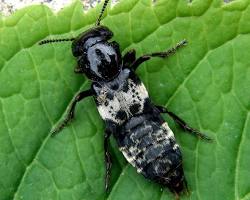
Hairy Rove Beetles are a subgroup of rove beetles within the family Staphylinidae, one of the largest and most diverse beetle families in the world. These beetles are recognized by their elongated bodies, short wing covers, and fine body hairs that create a slightly bristly or fuzzy appearance. Although their unusual shape and rapid movements may seem intimidating, hairy rove beetles are generally highly beneficial insects that help regulate populations of many garden and agricultural pests.
Rove beetles are among the most adaptable predatory insects found in natural and managed ecosystems. Hairy rove beetles inhabit forests, gardens, compost piles, grasslands, agricultural fields, and areas rich in organic matter. Their predatory feeding habits make them valuable biological control agents because they consume insect larvae, mites, fly eggs, maggots, and other small soft-bodied pests.
Despite their ecological benefits, hairy rove beetles are sometimes mistaken for dangerous pests because of their defensive posture. When disturbed, many species curl their abdomen upward in a scorpion-like pose. However, unlike scorpions, they do not possess a stinger and are harmless to humans.
These beetles are particularly important in environments where organic material accumulates. Compost piles, mulch beds, animal waste, and decaying vegetation often support large populations because these habitats attract the small invertebrates they prey upon.
In modern integrated pest management (IPM) systems, hairy rove beetles are considered beneficial allies that help reduce reliance on chemical insecticides.
Quick Facts
- Common Name: Hairy Rove Beetles
- Scientific Family: Staphylinidae
- Order: Coleoptera
- Main Diet: Predatory on small insects and mites
- Habitat: Moist organic environments
- Role: Beneficial predator and scavenger
- Activity: Mostly nocturnal
- Threat to Humans: Minimal
Taxonomy and Classification
Hairy rove beetles belong to the massive beetle family Staphylinidae, which contains tens of thousands of species worldwide.
- Kingdom: Animalia
- Phylum: Arthropoda
- Class: Insecta
- Order: Coleoptera
- Family: Staphylinidae
The family includes many beneficial predatory species that occupy a wide variety of ecological niches.
Rove beetles are closely related to other beetles but differ significantly in appearance because of their shortened wing covers, known as elytra.
Identification
Hairy rove beetles are elongated, flexible insects with highly recognizable body structures.
Physical Features
- Elongated body shape
- Short wing covers exposing abdominal segments
- Fine body hairs or bristles
- Strong mandibles
- Long antennae
- Fast-running legs
Most species measure between 1/8 inch and 1 inch long depending on species.
Coloration
Hairy rove beetles vary in color and may appear:
- Black
- Dark brown
- Reddish-brown
- Rust-colored
- Glossy dark metallic shades
The fine body hairs may create a dusty or velvety appearance.
Distinctive Behavior
When threatened, many rove beetles raise the end of their abdomen upward like a scorpion.
This defensive posture is purely for intimidation and does not involve a sting.
Their rapid movement is another key identifying feature. Hairy rove beetles often run quickly when exposed to light or disturbance.
Habitat and Distribution
Hairy rove beetles are widely distributed throughout North America, Europe, Asia, and many other regions worldwide.
Preferred Habitats
- Leaf litter
- Compost piles
- Rotting wood
- Mulch beds
- Agricultural fields
- Forest floors
- Animal manure
- Decaying vegetation
These beetles thrive in moist environments where prey insects are abundant.
They are especially common in areas rich in decomposing organic material.
Indoor Occurrence
Hairy rove beetles occasionally wander indoors accidentally but rarely establish infestations inside homes.
Indoor sightings are usually associated with:
- High moisture
- Basements
- Compost near structures
- Organic debris accumulation
Life Cycle
Hairy rove beetles undergo complete metamorphosis with four life stages.
Egg Stage
Females deposit eggs in moist organic material where prey is available.
Larval Stage
Larvae are elongated, active predators resembling miniature adults.
They feed aggressively on:
- Fly larvae
- Mites
- Small insects
- Soft-bodied invertebrates
Pupal Stage
Pupation occurs in protected locations within soil or organic debris.
Adult Stage
Adults emerge ready to hunt and reproduce.
Depending on environmental conditions, several generations may occur each year.
Behavior and Feeding
Hairy rove beetles are highly active predators and scavengers.
Predatory Feeding
They feed on a wide range of small organisms including:
- Insect eggs
- Fly maggots
- Mites
- Aphids
- Springtails
- Small caterpillars
- Nematodes
Their strong mandibles make them efficient hunters.
Nocturnal Activity
Many species are most active at night.
During daylight hours they hide beneath:
- Leaves
- Mulch
- Stones
- Logs
- Organic debris
Scavenging
In addition to predation, some species consume decaying organic material and fungi.
This scavenging behavior contributes to decomposition and nutrient recycling.
Ecological Importance
Hairy rove beetles are considered highly beneficial insects in many ecosystems.
Natural Pest Control
By feeding on harmful insects and larvae, they help reduce pest populations naturally.
They are especially useful in:
- Gardens
- Greenhouses
- Compost systems
- Agricultural fields
Organic Farming Benefits
Organic growers often encourage rove beetle populations because they reduce dependence on synthetic insecticides.
Decomposition Support
Their scavenging behavior also assists in breaking down decaying material.
Human Interactions
Hairy rove beetles are generally harmless to humans and pets.
Common Misidentifications
They are often confused with:
- Earwigs
- Scorpions
- Termites
- Dangerous beetles
However, they do not sting and rarely bite.
Skin Irritation
Some tropical rove beetle species may produce defensive chemicals that irritate skin, but most hairy rove beetles found in North America pose little risk.
Signs of Activity
- Fast-moving beetles under debris
- Beetles in compost or mulch
- Raised abdomen defensive posture
- Predatory activity around insect larvae
- Presence near moist organic matter
Prevention and Conservation
Control is generally unnecessary because hairy rove beetles are beneficial insects.
Encouraging Beneficial Populations
To support healthy rove beetle populations:
- Reduce pesticide use
- Maintain organic mulch
- Support soil biodiversity
- Use compost responsibly
- Preserve natural habitat areas
Indoor Prevention
If beetles enter structures:
- Reduce excess moisture
- Seal cracks and gaps
- Remove organic debris near foundations
- Improve drainage
Because they do not reproduce indoors easily, infestations are uncommon.
Interesting Facts
- Rove beetles represent one of the largest beetle families on Earth.
- Some species can run extremely fast relative to their body size.
- Their short wing covers are one of their defining features.
- Many species are highly beneficial agricultural predators.
- They often imitate scorpions as a defensive bluff.
- Some rove beetles are used in biological control programs.
Conservation and Research
Researchers study hairy rove beetles because of their importance in biological pest management and soil ecology.
Current research areas include:
- Natural pest suppression
- Soil ecosystem health
- Organic agriculture
- Predatory insect interactions
- Biodiversity conservation
As sustainable agriculture becomes increasingly important, rove beetles continue gaining recognition as valuable natural predators within integrated pest management systems.