Overview
Hairy chinch bugs (Blissus leucopterus hirtus) are one of the most common and destructive turfgrass pests found in North America, particularly in the northeastern and midwestern United States. These small insects belong to the family Blissidae and are closely related to other chinch bug species known for damaging lawns, pastures, and cereal crops. Despite their small size, hairy chinch bugs can cause widespread lawn decline, especially during hot and dry summer conditions when turfgrass is already under stress.
Unlike chewing insects that physically remove plant material, hairy chinch bugs feed by inserting their piercing-sucking mouthparts into grass blades and extracting sap. During feeding, they also inject toxic saliva into plant tissues, which disrupts water transport and causes grass to yellow, wilt, and eventually die. This combination of feeding damage and toxin injection makes them particularly harmful, even in relatively moderate populations.
These insects are most commonly associated with cool-season grasses such as fine fescues, Kentucky bluegrass, and perennial ryegrass. Lawns that are poorly irrigated or stressed are more vulnerable to infestation, and damage is often mistaken for drought stress or fungal disease.
Identification
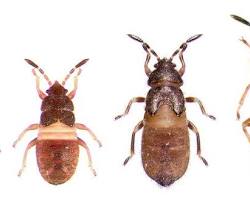
Adult hairy chinch bugs are small, typically about 1/8 to 1/4 inch long. They have black bodies with white wings that fold flat over their backs, often forming an “X” pattern. Their wings may have a distinctive triangular black marking.
Nymphs are smaller and wingless, appearing bright red or orange when young and darkening as they mature. Both adults and nymphs can be found near the soil surface, especially in thatch layers.
Habitat
Hairy chinch bugs are most commonly found in lawns, golf courses, and grassy areas. They prefer sunny, dry locations and are often concentrated in areas with thick thatch, which provides shelter and protection.
They are especially active during warm summer months, when conditions favor rapid reproduction and feeding activity.
Behavior and Damage
Hairy chinch bugs feed on grass blades, causing yellowing patches that can expand over time. As feeding continues, affected areas turn brown and may resemble drought damage.
Damage often appears in irregular patches that grow larger as the infestation spreads. Because symptoms mimic other lawn issues, infestations may go unnoticed until significant damage has occurred.
These insects are highly active and may move between areas of the lawn as they deplete food sources.
Impact
Hairy chinch bugs can cause significant lawn damage, particularly during hot, dry conditions. Severe infestations may require reseeding or turf replacement.
Prevention and Control
Maintaining healthy turf is the best defense. Proper watering, mowing, and reducing thatch can help prevent infestations.
Monitoring lawns regularly and addressing early signs of damage can prevent widespread problems.
Taxonomy
- Kingdom: Animalia
- Phylum: Arthropoda
- Class: Insecta
- Order: Hemiptera
- Family: Blissidae