Overview
Ground pearl scale insects are unusual and often misunderstood pests that primarily affect turfgrass and certain ornamental plants. These insects belong to the family Margarodidae (sometimes classified under Coccoidea) and are closely related to other scale insects. Unlike typical scale pests that are found on stems and leaves, ground pearls live underground, where they feed on plant roots and remain largely hidden from view.
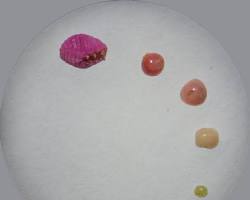
Their name comes from their distinctive appearance during one stage of their life cycle. Immature forms develop into small, round, pearl-like cysts that can be found in the soil. These structures protect the insect as it feeds and develops, making detection and control particularly challenging. Because they spend most of their lives below the surface, infestations often go unnoticed until significant plant damage has occurred.
Ground pearl infestations are most commonly associated with declining turfgrass. Lawns may show patches of thinning, yellowing, or dead grass that do not respond to normal watering or fertilization. These symptoms are often mistaken for drought stress or nutrient deficiencies, delaying proper diagnosis.
Identification
Ground pearls are most easily identified by their pearl-like cyst stage, which appears as small, round, hard structures in the soil. These cysts range in color from white to pink, purple, or brown, depending on the species and stage of development.
The insects themselves are small and difficult to observe without magnification. Because they remain underground, they are rarely seen directly unless soil is disturbed.
Habitat
Ground pearl scale insects are commonly found in lawns, golf courses, pastures, and ornamental landscapes. They prefer sandy or well-drained soils but can occur in a variety of soil types.
They are often associated with warm climates and can persist for long periods in the soil, even in the absence of host plants.
Behavior and Damage
Ground pearls feed on plant roots by inserting their mouthparts into root tissues and extracting sap. This feeding reduces the plant’s ability to absorb water and nutrients, leading to gradual decline.
Because they are protected within their cyst-like structures, they are resistant to many environmental stresses and control measures. Their feeding activity can result in patchy lawn damage that worsens over time.
Infestations may persist for years, as the insects can survive in the soil even when conditions are not ideal.
Impact
Ground pearl scale insects can cause significant damage to turfgrass, leading to thinning, bare patches, and overall lawn decline. In severe cases, affected areas may require complete reestablishment.
Their hidden lifestyle makes them particularly difficult to manage, increasing their impact in affected areas.
Prevention and Control
Management focuses on maintaining healthy turf through proper watering, fertilization, and soil care. Reducing stress on plants can improve their ability to tolerate feeding damage.
Because chemical control is often ineffective against the protected cyst stage, prevention and cultural practices are the primary management strategies.
Taxonomy
- Kingdom: Animalia
- Phylum: Arthropoda
- Class: Insecta
- Order: Hemiptera
- Family: Margarodidae