Overview
Gum tree scale insects are sap-feeding pests that primarily infest eucalyptus trees and other members of the Myrtaceae family. These insects belong to the superfamily Coccoidea, which includes a wide range of scale insects known for their protective outer coverings and stationary feeding habits. While individually small, gum tree scale insects can form dense colonies that significantly impact tree health, particularly in urban landscapes, plantations, and ornamental plantings.
These insects are especially problematic because they often go unnoticed in the early stages of infestation. Their protective waxy or shell-like coverings allow them to blend in with bark and stems, making detection difficult until populations have already established. As they feed, they extract sap from the tree, gradually weakening it and reducing its ability to transport nutrients and water effectively.
In addition to direct feeding damage, gum tree scale insects produce honeydew, a sticky substance that accumulates on leaves, branches, and surfaces below the tree. This honeydew promotes the growth of sooty mold, a black fungal coating that interferes with photosynthesis and can significantly reduce the aesthetic and functional value of affected trees.
Identification
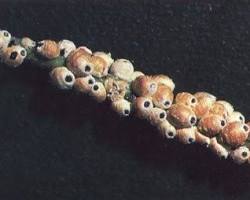
Gum tree scale insects appear as small, immobile bumps on bark, stems, or leaves. They may be round, oval, or elongated, and their coloration can range from brown and gray to white or translucent depending on the species.
Infestations are often accompanied by sticky honeydew and black sooty mold. Ant activity is also a common indicator, as ants are attracted to the honeydew and may protect scale insects from natural predators.
Habitat
These pests are most commonly found on eucalyptus trees, particularly in warm climates where these trees are widely planted. They may also infest related species within the Myrtaceae family.
Gum tree scale insects prefer sheltered areas of the tree, such as the undersides of leaves, branches, and bark crevices, where they are protected from environmental exposure and predators.
Behavior and Damage
Scale insects feed by inserting their mouthparts into plant tissue and extracting sap. This feeding reduces the tree’s vigor and can lead to symptoms such as yellowing leaves, branch dieback, and overall decline.
The production of honeydew creates additional problems by encouraging sooty mold growth and attracting ants. Ants may interfere with natural predators, allowing scale populations to grow unchecked.
Severe infestations can weaken trees significantly, making them more susceptible to other pests and environmental stresses.
Impact
Gum tree scale insects can have a substantial impact on tree health and appearance. In urban environments, infestations can reduce the aesthetic value of trees and create nuisance conditions due to sticky honeydew.
In severe cases, prolonged infestations can lead to branch dieback or tree decline.
Prevention and Control
Effective management includes regular inspection of trees and early detection of infestations. Pruning heavily infested branches can help reduce populations.
Encouraging natural predators such as lady beetles and parasitic wasps is an important component of control. Managing ant populations can also improve biological control effectiveness.
In some cases, horticultural oils or targeted treatments may be used to control infestations.
Taxonomy
- Kingdom: Animalia
- Phylum: Arthropoda
- Class: Insecta
- Order: Hemiptera
- Superfamily: Coccoidea