Overview
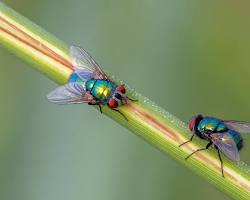
Green bottle flies are common insects in the family Calliphoridae, known for their distinctive metallic green coloration. These flies are widely distributed and are often associated with decaying organic matter, including garbage, animal carcasses, and food waste. While they play an important ecological role in decomposition, they are also considered nuisance pests when they enter homes or congregate around human activity.
These flies are among the first insects to locate decomposing material, making them important in natural nutrient recycling processes. However, their association with waste and decay also means they can carry bacteria and potentially contaminate surfaces. In residential and commercial settings, their presence often indicates sanitation issues or hidden sources of organic decay.
Green bottle flies are strong fliers and are attracted to odors associated with decomposition. They may enter buildings through open doors, windows, or small gaps, especially when attracted by food or waste odors indoors.
Identification
Green bottle flies are easily recognized by their shiny metallic green bodies and relatively large size compared to house flies. They have large compound eyes and a loud, buzzing flight.
Larvae, commonly known as maggots, are white, legless, and found in decaying material.
Habitat
These flies are found in a wide range of environments, including urban, suburban, and rural areas. They are commonly associated with garbage bins, compost piles, animal remains, and other sources of decaying organic matter.
They may also be found indoors when attracted by food waste or hidden sources such as dead animals in walls or attics.
Behavior and Damage
Adult flies feed on liquids and decomposing material, while larvae develop in decaying organic matter. Their feeding and breeding behavior can contribute to contamination and unpleasant odors.
While they do not bite, their presence can be a nuisance and may pose health concerns due to their association with bacteria.
Impact
Green bottle flies are primarily nuisance pests but can contribute to the spread of pathogens. Their presence often signals sanitation issues that need to be addressed.
Prevention and Control
Proper sanitation is the most effective control method. Keeping garbage sealed, cleaning waste areas, and removing sources of decay can prevent infestations. Sealing entry points helps keep flies out of buildings.
Taxonomy
- Kingdom: Animalia
- Phylum: Arthropoda
- Class: Insecta
- Order: Diptera
- Family: Calliphoridae