Overview
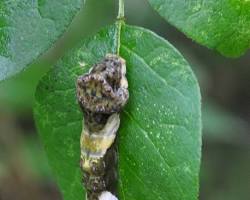
Giant swallowtail caterpillars are the larval stage of the giant swallowtail butterfly (Papilio cresphontes), one of the largest butterflies found in North America. While the adult butterfly is widely appreciated for its beauty and role as a pollinator, the caterpillar stage is often considered a pest, particularly in citrus-growing regions. These caterpillars are known for their unusual appearance, which mimics bird droppings as a form of camouflage against predators.
These caterpillars are commonly referred to as “orange dogs” in areas where citrus plants are grown, due to their tendency to feed on citrus leaves. While a small number of caterpillars may not significantly harm mature trees, larger infestations can defoliate young plants and reduce overall plant health. Their feeding behavior makes them a concern for both commercial growers and home gardeners who cultivate citrus or related plants.
Despite their pest status in some contexts, giant swallowtail caterpillars are also an important part of local ecosystems. They serve as a food source for birds and other predators, and their transformation into butterflies contributes to pollination. This dual role makes them both a nuisance and a beneficial species, depending on perspective.
Identification
Giant swallowtail caterpillars are easily recognized by their mottled brown and white coloration, which closely resembles bird droppings. This disguise helps protect them from predators. As they mature, they may become slightly more elongated but retain their distinctive pattern.
They also possess a unique defensive organ called an osmeterium, which can be extended from behind the head when threatened. This organ emits a foul odor that deters predators.
Habitat
These caterpillars are primarily found on citrus trees and related plants, including orange, lemon, lime, and grapefruit trees. They may also be found on native plants in the citrus family, such as prickly ash.
They are most commonly encountered in warm climates where citrus is grown, but their range extends across much of the eastern and southern United States.
Behavior and Feeding
Giant swallowtail caterpillars feed on the leaves of host plants, often consuming large portions of foliage. Young caterpillars may go unnoticed due to their camouflage, but larger individuals can cause more visible damage.
Their feeding is typically localized, but multiple caterpillars on a single plant can result in significant defoliation. This is especially problematic for young trees that do not have the resources to recover quickly.
When threatened, the caterpillar extends its osmeterium and may rear back in a defensive posture. This behavior, combined with its camouflage, helps it avoid predation.
Impact
While giant swallowtail caterpillars can cause damage to citrus plants, their impact is usually limited in small numbers. However, in larger infestations, they can reduce plant vigor and affect growth, particularly in young or newly planted trees.
In many cases, gardeners must decide whether to tolerate some leaf damage in exchange for supporting butterfly populations or to actively manage caterpillar numbers to protect plants.
Prevention and Control
Hand removal is one of the most effective control methods for small infestations. Because the caterpillars are large and easy to spot once mature, they can be physically removed from plants.
Encouraging natural predators such as birds and parasitic wasps can help keep populations in check. In cases of severe infestation, targeted treatments may be used, but care should be taken to avoid harming beneficial insects.
Taxonomy
- Kingdom: Animalia
- Phylum: Arthropoda
- Class: Insecta
- Order: Lepidoptera
- Family: Papilionidae