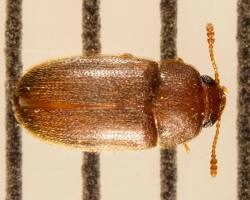
Overview
Fungus Beetles are a diverse group of beetles that primarily feed on fungi, mold, and decaying organic matter. While they play an essential ecological role in breaking down organic material and recycling nutrients, they can become nuisance pests when they invade homes, greenhouses, or storage areas. Their presence often indicates excessive moisture, fungal growth, or poor sanitation conditions.
These beetles are typically small and inconspicuous, making them easy to overlook until populations increase. In controlled environments such as greenhouses, fungus beetles can become problematic by feeding on plant roots or spreading fungal spores. In residential settings, they may be found in basements, bathrooms, or areas affected by water damage.
Identification
- Small beetles, usually brown or black
- Oval or elongated bodies
- Larvae are soft-bodied and light-colored
- Often found near damp or moldy areas
Taxonomy and Classification
Fungus beetles are a diverse group of beetles associated with mushrooms, bracket fungi, puffballs, mold, and other fungal growths. Most belong to the order Coleoptera, the insect order that includes all beetles, and many of the best-known fungus-feeding species are classified within the superfamily Cucujoidea.
- Kingdom: Animalia (Animals)
- Phylum: Arthropoda (Arthropods)
- Class: Insecta (Insects)
- Order: Coleoptera (Beetles)
- Suborder: Polyphaga
- Superfamily: Cucujoidea
Several important beetle families are commonly grouped under the broad category of fungus beetles:
- Erotylidae (Pleasing Fungus Beetles): Often brightly colored, especially in orange-and-black patterns, these beetles are commonly associated with hard bracket fungi growing on logs and dead wood.
- Endomychidae (Handsome Fungus Beetles): Usually oval-bodied and attractively patterned, these beetles often feed on puffballs, molds, or fungi found in decaying wood.
- Ciidae (Minute Tree-Fungus Beetles): Very small, cylindrical beetles that tunnel into woody shelf fungi, also known as conks, where both larvae and adults may live and feed.
- Mycetophagidae (Hairy Fungus Beetles): Small, oval beetles commonly found in decaying organic matter, moldy grain, and fungal growth, where they feed on spores and fungal tissue.
Because fungus beetles include several unrelated but ecologically similar groups, the term is often used as a functional description rather than a single strict taxonomic category. What these beetles share is their close association with fungi and decaying plant material, making them important contributors to decomposition and nutrient cycling in forest and woodland ecosystems.
Habitat
Fungus beetles thrive in environments with high moisture and abundant organic matter. Common habitats include compost piles, decaying wood, leaf litter, greenhouses, and areas with water leaks or poor ventilation.
Behavior and Impact
These beetles feed on fungi and organic debris, contributing to decomposition. However, in large numbers, they can become a nuisance and may damage plant roots or seedlings in greenhouses and nurseries.
Their presence indoors is often a sign of underlying moisture problems, which can lead to additional pest issues such as mold, mites, or flies.
Prevention and Control
Reducing moisture is the most effective control strategy. Fixing leaks, improving ventilation, and removing decaying organic material can eliminate breeding sites. Regular cleaning and proper sanitation are essential for long-term prevention.