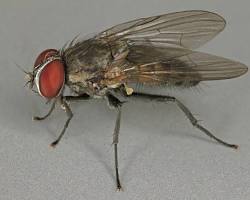
Overview
Fannia Flies, commonly known as Lesser House Flies, are small nuisance flies belonging to the genus Fannia. These insects are frequently encountered in homes, barns, poultry facilities, compost areas, and livestock environments where decaying organic material is present. Although closely related to the common House Fly, Fannia Flies differ in appearance, behavior, breeding habits, and flight patterns.
One of the most recognizable characteristics of Fannia Flies is their unusual hovering behavior. Adult males are commonly seen flying in repetitive circular patterns near ceilings, lights, hallways, garages, and enclosed indoor areas. This erratic hovering flight often makes them highly noticeable and irritating to homeowners and facility managers.
While Fannia Flies are generally considered less dangerous than House Flies in terms of disease transmission, they can still contaminate food preparation areas and become significant nuisance pests when populations increase.
These flies are particularly problematic in:
- Poultry houses
- Livestock barns
- Garbage storage areas
- Residential kitchens
- Animal bedding areas
- Compost piles
Because they breed rapidly in moist organic material, poor sanitation conditions can quickly support large infestations.
Taxonomy and Classification
- Kingdom: Animalia
- Phylum: Arthropoda
- Class: Insecta
- Order: Diptera
- Family: Fanniidae
- Genus: Fannia
- Common Name: Fannia Flies, Lesser House Flies
Fannia Flies belong to the order Diptera, the group known as true flies.
They undergo complete metamorphosis consisting of:
- Egg
- Larva
- Pupa
- Adult
The most common species associated with human structures is Fannia canicularis, commonly called the Lesser House Fly.
Although related to House Flies (Musca domestica), Fannia Flies are generally:
- Smaller
- More slender
- Less robust
- Behaviorally distinct
Physical Description
Adult Fannia Flies are small, delicate-looking gray flies with narrow bodies and characteristic hovering flight behavior.
Important identifying features include:
- Gray to dark gray coloration
- Slender body shape
- Long delicate legs
- Small size compared to House Flies
- Rapid hovering flight
- Erratic circular indoor movement
Adults are typically about 1/8 to 1/4 inch long.
Unlike House Flies, which frequently land on surfaces, Fannia Flies spend much of their time continuously flying in loose circular swarms.
They are often observed:
- Near ceilings
- Around hanging lights
- Inside garages
- Near windows
- In hallways
The larvae are highly distinctive compared to many fly maggots.
Larvae possess:
- Flattened segmented bodies
- Spiny projections
- Brownish coloration
- Creeping movement
The unusual body shape helps distinguish them from typical smooth maggots.
Distribution and Habitat
Fannia Flies occur worldwide and are commonly associated with human activity.
They thrive in environments containing moist decaying organic material.
Common habitats include:
- Barns
- Poultry houses
- Animal bedding
- Garbage storage areas
- Compost piles
- Sewage areas
- Residential kitchens
- Damp waste accumulations
These flies are especially common around:
- Livestock manure
- Wet straw bedding
- Fermenting plant material
- Food waste
- Organic sludge
Indoor infestations are often associated with nearby outdoor breeding sources.
Life Cycle
The life cycle of Fannia Flies develops rapidly under favorable conditions.
Warm temperatures and abundant organic material allow populations to increase quickly.
Egg Stage
Adult females lay eggs directly onto moist decaying organic matter.
Common egg-laying sites include:
- Animal manure
- Compost
- Rotting vegetation
- Damp garbage
- Organic sludge
Eggs hatch quickly in warm humid environments.
Larval Stage
The larvae feed on decomposing organic material and associated microorganisms.
Larval development is strongly influenced by:
- Moisture
- Temperature
- Organic material availability
Large larval populations may develop in poorly maintained waste areas.
Pupal Stage
Mature larvae pupate within drier portions of breeding material or nearby protected areas.
The pupal stage eventually produces adult flies.
Adult Stage
Adult flies emerge and begin mating shortly afterward.
Males commonly establish hovering flight territories indoors and outdoors.
Several generations may occur annually in warm environments.
Behavior and Feeding
Adult Fannia Flies feed primarily on liquid and semi-liquid organic substances.
They use sponging mouthparts similar to those of House Flies.
Adults are attracted to:
- Food waste
- Animal waste
- Fermenting materials
- Moist organic matter
- Sugary liquids
Their most distinctive behavior is their:
- Circular hovering flight
- Persistent indoor swarming
- Ceiling-oriented flight paths
This flight behavior often causes significant annoyance indoors.
Larvae contribute to decomposition processes by feeding on decaying organic material.
Damage and Human Impact
Fannia Flies are primarily nuisance pests, but they may also create sanitation concerns.
Problems associated with infestations include:
- Indoor annoyance
- Food contamination
- Unsanitary conditions
- Persistent swarming behavior
- Psychological discomfort
Although they are generally less important disease vectors than House Flies, they may still mechanically transport pathogens from contaminated materials to:
- Food surfaces
- Kitchen counters
- Food preparation areas
- Animal feeding equipment
Large infestations in livestock facilities may also stress animals and reduce sanitation quality.
Signs of Infestation
- Small hovering flies near ceilings
- Circular swarming indoors
- Flies near windows or lights
- Larvae in decaying organic material
- Persistent nuisance activity
- High fly numbers around waste areas
Infestations are often most noticeable during warm months when fly activity increases.
Management and Control (IPM)
Successful management of Fannia Flies depends heavily on sanitation and source reduction.
Sanitation
Proper sanitation is the single most effective control method.
Important sanitation practices include:
- Removing manure regularly
- Cleaning garbage containers
- Managing compost properly
- Eliminating damp waste accumulations
- Removing spoiled organic material
Without suitable breeding sites, populations decline rapidly.
Moisture Reduction
Reducing excess moisture helps prevent larval development.
Important steps include:
- Repairing leaks
- Improving drainage
- Increasing airflow
- Keeping waste materials dry
Exclusion
Prevent adult flies from entering structures by:
- Installing window screens
- Sealing cracks
- Using door sweeps
- Closing entry gaps
Trapping
Sticky traps and light traps may help reduce indoor adult populations.
Traps are especially useful in:
- Garages
- Barns
- Storage buildings
- Commercial facilities
Chemical Control
Insecticides may provide temporary relief but are usually ineffective unless breeding sources are eliminated.
Residual sprays are sometimes used in severe infestations around:
- Waste areas
- Animal facilities
- Outdoor resting sites
Ecological Importance
Fannia Fly larvae contribute to the breakdown of organic material in natural ecosystems.
By feeding on decaying matter, they help recycle nutrients within:
- Soils
- Compost systems
- Natural decomposition environments
They also serve as food for:
- Predatory insects
- Spiders
- Birds
- Amphibians
Research and Scientific Importance
Researchers study Fannia Flies because of their association with sanitation, livestock management, and waste decomposition.
Research areas include:
- Fly population control
- Waste management
- Integrated pest management
- Livestock sanitation
- Disease transmission potential
Improved waste management strategies remain central to long-term population suppression.
Conclusion
Fannia Flies, also known as Lesser House Flies, are small nuisance flies commonly associated with decaying organic matter, livestock facilities, compost, and residential waste areas. Their distinctive hovering flight behavior and indoor swarming make them highly noticeable pests. Although generally less dangerous than House Flies, they can still contaminate surfaces and become persistent sanitation problems when breeding conditions are favorable. Effective control relies on sanitation, moisture reduction, exclusion, and elimination of breeding sources.