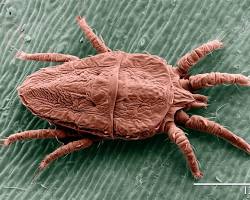
Overview
False Spider Mites, also commonly known as Flat Mites, are microscopic plant-feeding arachnids belonging to the family Tenuipalpidae. These tiny pests are closely related to true spider mites but differ significantly in behavior and appearance. Unlike spider mites, False Spider Mites do not produce silk webbing, making infestations much harder to detect during early stages.
False Spider Mites attack a wide variety of ornamental plants, fruit trees, greenhouse crops, tropical foliage plants, and agricultural species. Their feeding activity damages plant cells, leading to stippling, bronzing, leaf discoloration, scarring, and reduced plant vigor. Heavy infestations may result in leaf drop, distorted growth, reduced flowering, and fruit damage.
Because these mites are extremely small and move slowly, infestations are often diagnosed only after visible plant injury appears. Their symptoms are frequently mistaken for:
- Nutrient deficiencies
- Environmental stress
- Fungal disease
- Viral infections
False Spider Mites thrive in warm protected environments such as greenhouses, indoor plant rooms, nurseries, and tropical landscapes.
Taxonomy and Classification
- Kingdom: Animalia
- Phylum: Arthropoda
- Class: Arachnida
- Subclass: Acari
- Family: Tenuipalpidae
- Common Names: False Spider Mites, Flat Mites
False Spider Mites belong to the mite family Tenuipalpidae, a large group of plant-feeding mites closely related to spider mites.
Unlike insects, mites are arachnids and are more closely related to:
- Spiders
- Ticks
- Scorpions
False Spider Mites undergo gradual development through several stages:
- Egg
- Larva
- Nymph
- Adult
Many species reproduce rapidly under warm conditions, allowing infestations to build quickly in greenhouses and indoor growing environments.
Physical Description
False Spider Mites are extremely small and usually require magnification for proper identification.
Adult mites are typically:
- Flattened in shape
- Slow-moving
- Red, orange, brown, or reddish-orange
- Oval or elongated
- Microscopic in size
Unlike true spider mites, False Spider Mites do not produce visible webbing.
This absence of silk is one of the most important distinguishing characteristics.
Their flattened bodies allow them to hide along:
- Leaf undersides
- Leaf veins
- Stem crevices
- Fruit surfaces
- Bark cracks
Because they move slowly and remain concealed, infestations may persist for long periods before discovery.
Distribution and Habitat
False Spider Mites occur worldwide in both indoor and outdoor plant environments.
They are especially common in:
- Greenhouses
- Indoor tropical plant collections
- Nurseries
- Orchards
- Landscape plantings
- Warm subtropical regions
Common host plants include:
- Citrus trees
- Orchids
- Palms
- Houseplants
- Avocados
- Coffee plants
- Tropical ornamentals
- Fruit trees
They thrive in environments with:
- Warm temperatures
- Low air circulation
- Dry conditions
- Dense foliage
Greenhouse conditions are particularly favorable for rapid population growth.
Life Cycle
The life cycle of False Spider Mites is relatively rapid under favorable environmental conditions.
Egg Stage
Females deposit tiny eggs on leaf undersides, stems, or protected plant surfaces.
The eggs are often:
- Transparent
- Orange or reddish
- Difficult to see without magnification
Larval and Nymph Stages
Immature mites begin feeding shortly after hatching.
They puncture plant cells using needle-like mouthparts and extract cell contents.
Several immature stages occur before adulthood.
Adult Stage
Adult mites continue feeding and reproducing on host plants.
Warm greenhouse conditions may allow continuous overlapping generations throughout the year.
Population growth can become explosive if infestations remain untreated.
Behavior and Feeding
False Spider Mites feed by piercing individual plant cells and sucking out internal contents.
This feeding damages leaf tissues and disrupts photosynthesis.
Unlike chewing insects, they do not remove large sections of plant material. Instead, damage appears as:
- Fine stippling
- Bronzing
- Silvering
- Scaly textures
- Necrotic spotting
Heavy feeding can weaken entire plants and significantly reduce growth.
False Spider Mites are especially problematic because they often avoid detection due to:
- Microscopic size
- Slow movement
- Lack of webbing
- Hidden feeding locations
Damage and Economic Importance
False Spider Mites can seriously damage ornamental and agricultural plants.
Common symptoms include:
- Leaf bronzing
- Yellow stippling
- Silvered foliage
- Leaf curling
- Premature leaf drop
- Reduced flowering
- Fruit scarring
- Stunted growth
On citrus trees, feeding may cause fruit surfaces to become:
- Leathery
- Scarred
- Discolored
Heavy infestations may weaken plants enough to increase vulnerability to:
- Drought stress
- Disease
- Secondary pest infestations
In greenhouse production systems, infestations can significantly reduce the quality and marketability of ornamental plants.
Signs of Infestation
- Bronzed leaves
- Silver or rusty discoloration
- Fine stippling patterns
- Leaf drop
- Reduced plant vigor
- Scaly or leathery fruit surfaces
- Visible mites under magnification
- Absence of webbing despite mite damage
The lack of silk webbing often causes infestations to be confused with fungal or nutritional problems.
Management and Control (IPM)
Management of False Spider Mites relies on integrated pest management techniques focused on plant health, environmental control, and targeted treatments.
Regular Inspection
Frequent plant inspections are critical because infestations are difficult to detect early.
Inspect:
- Leaf undersides
- Leaf veins
- Stem joints
- Fruit surfaces
A hand lens or microscope is often necessary for confirmation.
Humidity Management
Increasing local humidity may help suppress populations in indoor environments.
False Spider Mites thrive under warm, dry conditions.
Plant Health Maintenance
Healthy vigorous plants are more resistant to severe damage.
Proper care includes:
- Consistent watering
- Balanced fertilization
- Good airflow
- Stress reduction
Horticultural Oils
Neem oil and horticultural oils are commonly used because they coat and suffocate the mites.
Thorough coverage is essential, especially on:
- Leaf undersides
- Hidden crevices
- Dense foliage
Miticides
Some populations may show resistance to standard miticides.
Rotating treatment products can help reduce resistance development.
Biological Control
Natural predators may assist with suppression, including:
- Predatory mites
- Minute pirate bugs
- Lady beetles
Biological control is especially useful in greenhouse IPM programs.
Ecological Importance
False Spider Mites serve as prey for many beneficial predatory arthropods.
Natural enemies help regulate populations in outdoor ecosystems.
However, protected greenhouse conditions often reduce predator effectiveness and favor rapid mite reproduction.
Research and Scientific Importance
Researchers study False Spider Mites because of their agricultural importance and resistance challenges.
Research focuses on:
- Miticide resistance
- Biological control agents
- Greenhouse IPM systems
- Plant-mite interactions
- Environmental management strategies
Modern research increasingly emphasizes sustainable management and reduced pesticide dependency.
Conclusion
False Spider Mites, also called Flat Mites, are microscopic plant-feeding arachnids belonging to the family Tenuipalpidae. Unlike true spider mites, they do not produce silk webbing, making infestations difficult to detect. These pests damage ornamental plants, fruit trees, greenhouse crops, and tropical foliage by piercing plant cells and extracting contents, causing bronzing, stippling, leaf drop, and reduced vigor. Effective management relies on early detection, maintaining plant health, environmental control, horticultural oils, and integrated pest management strategies.