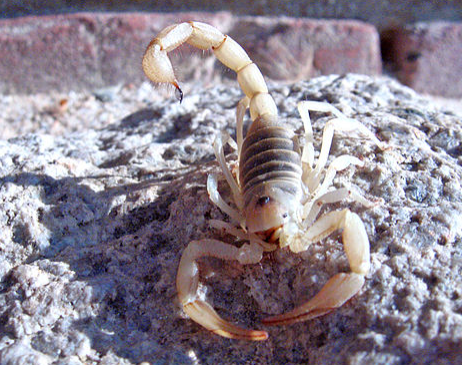
Desert Hairy Scorpions (Hadrurus arizonensis) are among the largest scorpion species in North America and are native to arid regions of the southwestern United States and northern Mexico. These arachnids are well adapted to desert environments and are known for their nocturnal hunting behavior and burrowing lifestyle.
Despite their intimidating size and appearance, desert hairy scorpions are generally non-aggressive and prefer to avoid human contact. They play an important ecological role as predators of insects and other small arthropods, helping maintain balance in desert ecosystems.
Quick Facts
- Common Name: Desert Hairy Scorpion
- Scientific Name: Hadrurus arizonensis
- Family: Hadruridae
- Class: Arachnida
- Habitat: Deserts, scrublands, and rocky landscapes
- Diet: Insects, spiders, and small arthropods
- Status: Beneficial predator; occasional nuisance
Taxonomy and Classification
Desert hairy scorpions belong to the family Hadruridae, a group of large-bodied scorpions adapted to dry environments. They are part of the class Arachnida, which also includes spiders, mites, and ticks.
They are closely related to other scorpions and share common traits such as segmented bodies, pincers, and venomous stingers.
Unlike insects, scorpions develop through gradual growth, molting several times before reaching adulthood.
Identification
Desert hairy scorpions are easily recognized by their large size and distinctive features.
- Color: Pale yellow, tan, or sandy brown
- Body: Thick and covered with fine hairs
- Pincers: Large and powerful for capturing prey
- Tail: Segmented with a curved stinger at the tip
Key identifying characteristics include:
- Hairy body and appendages
- Long, curved tail held over the back
- Robust claws used for grasping prey
Their venom is used for subduing prey and defense, but it is generally mild compared to more dangerous species.
Distribution and Habitat
Desert hairy scorpions are found primarily in the Southwestern United States, including Arizona, California, and Nevada, as well as parts of northern Mexico.
They inhabit:
- Deserts and sandy plains
- Rocky hillsides and scrublands
- Burrows in loose soil
They construct deep burrows to escape extreme daytime heat and emerge at night to hunt.
Behavior and Life Cycle
Desert hairy scorpions are solitary and primarily nocturnal.
- Nocturnal Activity: Hunt at night for prey
- Burrowing: Spend daylight hours underground
- Defensive Behavior: Use pincers and stinger when threatened
Their life cycle differs from insects:
- Live Birth: Females give birth to live young
- Maternal Care: Young climb onto the mother’s back
- Growth: Juveniles molt several times before adulthood
This level of parental care is uncommon among arthropods and increases survival rates of offspring.
Feeding and Ecological Role
Desert hairy scorpions are active predators that feed on a variety of small animals.
- Primary Diet: Insects such as crickets, beetles, and roaches
- Other Prey: Spiders and small arthropods
They hunt by:
- Detecting vibrations through sensory hairs
- Grasping prey with pincers
- Using their stinger to immobilize prey
Their presence helps control insect populations and contributes to ecological balance.
Pest Status
Desert hairy scorpions are generally considered beneficial predators, but they may be classified as nuisance pests when encountered indoors.
They may become an issue when:
- They enter homes, garages, or sheds
- Outdoor conditions drive them toward structures
- Prey insects are abundant near buildings
While their sting can be painful, it is typically not dangerous to healthy individuals.
Management and Control
Management focuses on exclusion and reducing attractants rather than direct elimination.
| Strategy | Purpose | Benefit |
|---|---|---|
| Exclusion | Seal cracks and entry points | Prevents indoor access |
| Prey Reduction | Control insect populations | Removes food sources |
| Habitat Removal | Clear debris and clutter | Eliminates hiding places |
| Lighting Control | Reduce insect attraction | Limits scorpion activity near structures |
Direct chemical control is rarely necessary and should be considered only in persistent infestations.
Prevention
- Seal gaps around foundations, doors, and windows
- Remove woodpiles, rocks, and debris near the home
- Reduce outdoor lighting that attracts insects
- Maintain clean and dry surroundings
Preventative measures are effective in minimizing encounters with scorpions.
Related Articles
Conclusion
Desert hairy scorpions are fascinating and beneficial predators that are well adapted to life in harsh desert environments. Although their appearance can be intimidating, they are generally harmless and play an important role in controlling insect populations.
With proper exclusion and habitat management, encounters can be minimized while still allowing these important arachnids to contribute to the natural ecosystem.