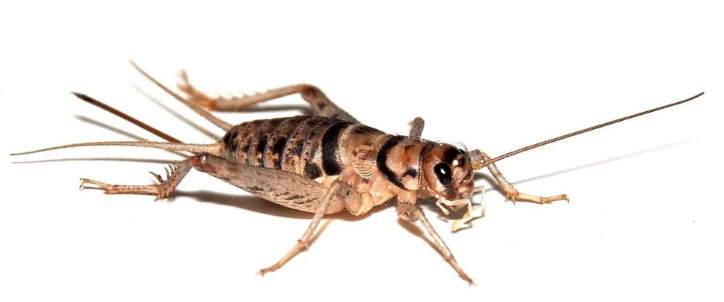
Decorated Cricket Spiders is an informal, descriptive name used for patterned hunting spiders that are commonly found in areas where crickets and other ground-dwelling insects are abundant. These spiders are not a single scientific species, but rather a group of visually similar, camouflage-adapted predators that thrive around homes, garages, sheds, and outdoor structures.
They are considered beneficial predators because they actively reduce populations of nuisance insects. However, their sudden movement and appearance in indoor or semi-indoor spaces can make them unwelcome to homeowners.
Quick Facts
- Common Name: Decorated Cricket Spiders
- Type: Hunting spiders (multiple species)
- Order: Araneae
- Habitat: Garages, sheds, porches, patios, woodpiles, and ground-level structures
- Diet: Crickets, beetles, roaches, and other small insects
- Status: Beneficial predator; occasional nuisance
Taxonomy and Classification
Decorated cricket spiders are not a formal taxonomic group but generally belong to families of active hunting spiders such as:
- Lycosidae (wolf spiders)
- Gnaphosidae (ground spiders)
- Sparassidae (huntsman spiders)
- Salticidae (jumping spiders)
These spiders share similar ecological roles and behaviors, including active hunting rather than web-based prey capture.
They belong to the broader group of spiders that help regulate insect populations in both natural and residential environments.
Identification
Decorated cricket spiders are typically medium-sized and well-camouflaged.
- Color: Brown, gray, or mottled patterns
- Body: Robust or slightly flattened
- Legs: Long and adapted for quick movement
- Behavior: Fast-moving and alert
Their patterned appearance allows them to blend into:
- Bark and wood surfaces
- Mulch and soil
- Stone, concrete, and debris
Unlike web-building spiders, they do not rely on large webs. Instead, they are often seen actively moving across floors, walls, or outdoor surfaces in search of prey.
Distribution and Habitat
Decorated cricket spiders can be found in a wide range of environments wherever insect prey is available.
Common locations include:
- Garages and sheds
- Porches and patios
- Woodpiles and debris areas
- Basements and crawl spaces
- Foundation edges and yard borders
They are particularly common in areas with:
- High insect activity
- Clutter or stored materials
- Moist or shaded hiding spots
Their presence often indicates a healthy population of prey insects rather than a spider infestation.
Behavior and Life Cycle
Decorated cricket spiders are active hunters that rely on speed and stealth rather than webs.
- Egg Stage: Eggs are laid in protective sacs
- Spiderlings: Hatch and disperse to find food
- Juveniles: Grow through multiple molts
- Adults: Hunt independently for prey
They typically hunt at night or during low-light conditions, emerging from hiding places to capture insects.
Population levels tend to increase when:
- Cricket populations are high
- Outdoor lighting attracts insects
- Shelter and hiding places are abundant
Feeding and Ecological Role
Decorated cricket spiders are beneficial predators that feed on a wide range of nuisance insects.
- Primary Prey: Crickets
- Other Prey: Roaches, beetles, flies, and small arthropods
Their presence provides natural pest control by:
- Reducing insect populations
- Limiting pest breeding cycles
- Supporting ecological balance
They do not damage property, plants, or stored materials.
Pest Status
Decorated cricket spiders are generally considered beneficial insects (technically arachnids), not pests.
However, they may be viewed as nuisances when:
- They enter indoor living spaces
- They appear suddenly or in noticeable numbers
- Their movement startles occupants
They are not aggressive and rarely bite unless handled.
Management and Control
Control is rarely necessary and should focus on reducing conditions that attract spiders.
| Strategy | Purpose | Benefit |
|---|---|---|
| Prey Reduction | Limit insect populations | Reduces spider presence |
| Exclusion | Seal entry points | Prevents indoor access |
| Clutter Removal | Eliminate hiding spots | Discourages nesting |
| Lighting Management | Reduce insect attraction | Limits food sources |
Direct treatment is rarely required unless spiders are consistently entering living spaces.
Prevention
- Reduce outdoor lighting near entry points
- Seal gaps under doors and around foundations
- Remove woodpiles and debris near the home
- Keep garages and storage areas organized
- Control insect populations around the structure
Prevention focuses on making the environment less attractive to both spiders and their prey.
Related Articles
Conclusion
Decorated cricket spiders are helpful predators that play an important role in controlling insect populations around homes and landscapes. While their presence may be surprising or unwanted indoors, they are not harmful and typically indicate an underlying abundance of prey insects.
By reducing insect activity and eliminating hiding spots, homeowners can minimize encounters while still benefiting from these natural pest controllers.