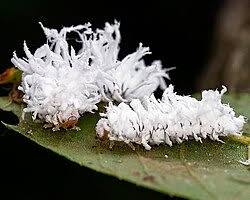
The Butternut Woollyworm is the larval stage of a sawfly that feeds primarily on walnut and butternut trees. These fuzzy, caterpillar-like larvae are sometimes seen feeding in groups on leaves during summer and early fall. Although they resemble moth or butterfly caterpillars, butternut woollyworms are actually immature sawflies belonging to the order Hymenoptera, the same insect order that includes ants, bees, and wasps.
During outbreak years, large populations of butternut woollyworms may temporarily defoliate portions of walnut and butternut trees. However, healthy mature trees usually recover from feeding damage without long-term harm. Their unusual appearance, clustered feeding behavior, and rapid leaf consumption often attract attention from homeowners and gardeners.
Quick Facts
- Order: Hymenoptera
- Family: Cimbicidae
- Habitat: Walnut and butternut trees
- Diet: Tree leaves
- Status: Occasional tree pest
- Active Season: Summer through early fall
- Life Cycle: Complete metamorphosis
Taxonomy and Classification
The butternut woollyworm belongs to the order Hymenoptera, which includes bees, ants, and wasps. More specifically, it belongs to the family Cimbicidae, a group of large sawflies known for their stout-bodied larvae and strong feeding habits.
Unlike butterflies and moths, sawflies do not possess scaled wings as adults, and their larvae have structural differences that separate them from true caterpillars. Sawfly larvae typically possess more abdominal prolegs than butterfly or moth caterpillars and lack the tiny hooks found on true caterpillar legs.
The butternut woollyworm is part of the broader group of sawflies, many of which feed on trees, shrubs, and ornamental plants.
Identification
Butternut woollyworm larvae resemble fuzzy caterpillars but belong to the sawfly group rather than true moths or butterflies. The larvae are generally pale yellow, white, or cream-colored and are covered with dense woolly or cotton-like hairs that give them their common name.
Fully grown larvae may reach up to 2 inches in length. Their soft bodies are segmented and somewhat cylindrical, with multiple pairs of fleshy abdominal prolegs used for gripping leaves and branches.
Adult sawflies differ greatly from the larvae. Adults are stout-bodied flying insects that resemble wasps but lack the narrow “waist” commonly associated with true wasps. Adult sawflies are usually dark brown or black with transparent wings.
Because of their fuzzy appearance, butternut woollyworms are often mistaken for moth caterpillars or woolly bear caterpillars by homeowners unfamiliar with sawflies.
Distribution and Habitat
This insect occurs in regions where walnut and butternut trees naturally grow. It is most commonly found throughout eastern and central portions of North America, especially in areas containing native black walnut and butternut trees.
Preferred habitats include:
- Woodlands
- Forest edges
- Residential landscapes
- Parks and natural areas
- Tree plantations
- Riparian corridors
Larvae are most often observed feeding openly on foliage during summer months. They tend to remain on host trees throughout their larval development.
Host Trees
The butternut woollyworm feeds primarily on trees within the walnut family, including:
- Butternut trees
- Black walnut trees
- English walnut trees
- Occasionally related hardwood species
Larvae consume leaf tissue and may skeletonize or completely strip leaves during periods of heavy feeding activity.
Life Cycle
The life cycle includes egg, larva, pupa, and adult sawfly stages. Adult females lay eggs on host tree foliage during late spring or early summer.
After hatching, larvae begin feeding immediately on leaves. Young larvae often feed together in clusters, consuming soft leaf tissue while leaving veins behind. As they mature, feeding damage becomes more noticeable.
Larval development may last several weeks depending on weather conditions and food availability. Once fully grown, the larvae drop to the ground and pupate in the soil or leaf litter.
The pupal stage protects the developing insect until the adult sawfly emerges. In many regions, there is typically one generation per year.
Adults emerge during warm weather, mate, and begin the cycle again by laying eggs on suitable host trees.
Feeding Damage
Heavy infestations may temporarily defoliate trees, especially smaller ornamental or young walnut trees. Larvae consume foliage rapidly and can strip branches during outbreak periods.
Common signs of infestation include:
- Chewed leaves
- Skeletonized foliage
- Clusters of fuzzy larvae on branches
- Partial defoliation
- Accumulation of frass beneath trees
Despite dramatic appearances, healthy mature trees generally recover from defoliation and produce new leaves during the following growing season.
Pest Status
The butternut woollyworm is considered an occasional tree pest rather than a consistently destructive insect. Outbreaks are typically localized and temporary.
Repeated severe defoliation over multiple years may stress younger trees or trees already weakened by drought, disease, or environmental stress. However, long-term tree mortality from woollyworm feeding alone is uncommon.
Because these insects are native components of forest ecosystems, their populations are often regulated naturally by predators, parasites, and weather conditions.
Natural Predators
Many natural enemies help control butternut woollyworm populations, including:
- Birds
- Predatory beetles
- Parasitic wasps
- Spiders
- Small mammals
- Pathogenic fungi and bacteria
Natural predators usually prevent long-term population explosions in healthy ecosystems.
Prevention
- Monitor walnut and butternut trees during summer
- Inspect foliage regularly for feeding larvae
- Encourage birds and beneficial insects
- Maintain tree health through watering and proper care
- Avoid unnecessary pesticide applications
Healthy trees are generally more resilient to temporary defoliation and recover more quickly following outbreaks.
Control Methods
Control is rarely necessary unless infestations become severe or affect ornamental trees. Manual removal of larvae is often effective for small trees and isolated outbreaks.
Possible management options include:
- Hand-removal of larvae
- Pruning heavily infested branches
- Encouraging biological control organisms
- Applying biological insecticides when necessary
- Maintaining healthy tree vigor
Because sawfly larvae differ biologically from caterpillars, some caterpillar-specific insecticides may not work effectively against them.
Interesting Facts About Butternut Woollyworms
- They are sawfly larvae rather than true caterpillars.
- Their fuzzy appearance helps deter predators.
- Larvae often feed in noticeable groups.
- Healthy walnut trees usually recover after defoliation.
- Adult sawflies resemble stout-bodied wasps.