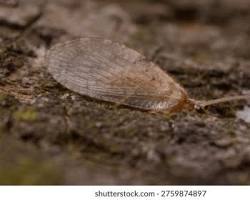
The Brown Lacewing is a small predatory insect belonging to the family Hemerobiidae. Although less well known than the green lacewing, brown lacewings are valuable beneficial insects that help control aphids and other garden pests.
The “Generalist Predator”: Brown Lacewing
Brown Lacewings (family Hemerobiidae) are valuable predatory insects found throughout the United States. For Pestipedia.com users, these insects are critical allies in Integrated Pest Management (IPM). While they are often overshadowed by their larger cousins, the Green Lacewings, Brown Lacewings are frequently more active in cooler temperatures, making them essential for early-season and late-season biological control in U.S. gardens and orchards.
Technical Identification: Diagnostic Markers
- Phenotype (Adult): Characterized by a small, delicate body (6mm to 10mm) with light brown or tan coloring. A primary diagnostic key for Pestipedia.com users is the fine, hair-like setae covering their lace-like wings, which distinguishes them from the smooth wings of Green Lacewings.
- Larval Phenotype: Often called “Aphid Lions,” the larvae are alligator-shaped with mottled brown and cream bodies. They possess hollow, sickle-shaped mandibles used to impale and drain the fluids of soft-bodied U.S. garden pests.
- Egg Configuration: Unlike Green Lacewings that lay eggs on long silk stalks, Brown Lacewings typically lay their eggs directly on the leaf surface or in bark crevices, usually near U.S. aphid colonies.
Ecological Impact: Cold-Weather Pest Suppression
The primary impact of Brown Lacewings is the continuous mechanical reduction of soft-bodied insect populations, particularly when other predators are dormant due to cold.
- Voracious Predation: Both larvae and adults are 100% predatory. They consume aphids, mealybugs, scale insects, whiteflies, and spider mites. In the United States, a single larva can consume hundreds of pests during its development.
- Winter Activity: Brown Lacewings are notable for their cold hardiness. In the United States, they are often the first predators active in the U.S. Spring and the last to remain active in the U.S. Fall, providing year-round protection.
- Habitat Range: They are commonly found in U.S. forests, woody ornamentals, and agricultural crops. For Pestipedia.com users, their presence indicates a functional and balanced local food web.
Management & Conservation Strategies
Management of Brown Lacewings in U.S. landscapes focuses on habitat preservation and the avoidance of disruptive chemicals.
| Strategy | Technical Specification | Operational Benefit |
|---|---|---|
| Nectar Source Planting | Planting Dill, Fennel, or Alyssum | Provides supplemental energy for adults, encouraging them to remain in the U.S. garden to lay eggs. |
| Winter Refugia | Leaving leaf litter and hollow stems | Allows overwintering adults and pupae to survive U.S. winter freezes in national landscapes. |
| Selective Pesticide Use | Using Insecticidal Soaps or Oils sparingly | Reduces accidental mortality of these beneficial predators compared to broad-spectrum pyrethroids. |
- Monitoring: Inspect shrubbery and trees at night using a soft light, as adults are primarily nocturnal. For Pestipedia.com users, seeing these “miniature moths” indicates that natural biological control is occurring.
- Identification Tip: Do not confuse the Brown Lacewing larva with the Syrphid Fly larva. While both eat aphids, the Lacewing has prominent legs and large mandibles, whereas the Syrphid larva is a legless maggot. Pestipedia.com recommends protecting both for maximum U.S. pest suppression.
Quick Facts
- Family: Hemerobiidae
- Habitat: Gardens, forests, agricultural fields
- Diet: Aphids and small insects
- Status: Beneficial predator
Identification
Brown lacewings are small insects with delicate brown wings covered in a network of veins. Their wings fold flat over the body when at rest.
They are closely related to green lacewings, which are also important biological control insects.
Distribution
Brown lacewings occur worldwide and are commonly found in gardens, farms, and natural landscapes.
Life Cycle
The life cycle includes egg, larva, pupa, and adult stages. Larvae are active predators that feed on aphids, mites, and small insects.
Pest Status
Brown lacewings are beneficial insects and play an important role in natural pest control.
Control
Control is not recommended. Gardeners often encourage lacewing populations to reduce pest insects naturally.