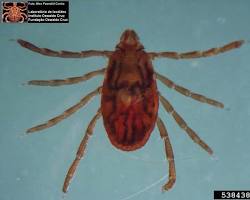
The Brown Dog Tick (Rhipicephalus sanguineus) is one of the most important tick species associated with dogs and indoor infestations. Unlike many other ticks that remain primarily outdoors, brown dog ticks are capable of living and reproducing entirely inside homes, kennels, veterinary clinics, and animal shelters. Their ability to survive indoors makes them especially problematic for pet owners and property managers.
Brown dog ticks feed primarily on dogs but may occasionally bite humans. Heavy infestations can spread rapidly indoors and become difficult to eliminate without treating both pets and the surrounding environment.
Quick Facts
- Group: Hard Tick
- Scientific Name: Rhipicephalus sanguineus
- Primary Host: Dogs
- Common Habitat: Kennels, homes, pet bedding, cracks and crevices
- Status: Pet pest and disease vector
- Activity: Indoor and outdoor infestations
Identification
Brown dog ticks are small arachnids with flattened oval bodies that expand greatly after feeding.
Adults are typically reddish-brown to dark brown in color.
Key identifying characteristics include:
- Eight legs
- Flattened body when unfed
- Swollen gray-blue appearance after feeding
- Short mouthparts
- Reddish-brown coloration
- Slow crawling movement
Unlike insects, ticks belong to the arachnid group along with spiders and mites.
Ticks may be observed crawling along:
- Walls
- Baseboards
- Pet bedding
- Furniture
- Kennel surfaces
- Cracks and crevices
Distribution and Habitat
The brown dog tick occurs worldwide and is especially common in warm climates.
Unlike many tick species that require outdoor vegetation, this species thrives indoors.
Common infestation sites include:
- Homes with dogs
- Kennels
- Veterinary clinics
- Animal shelters
- Pet boarding facilities
- Garages and utility rooms
Warm indoor temperatures allow these ticks to remain active year-round.
Infestations are especially common in areas with poor sanitation or untreated pets.
Life Cycle
The brown dog tick undergoes four developmental stages:
- Egg
- Larva
- Nymph
- Adult
Each active stage requires a blood meal before developing into the next stage.
Females lay large numbers of eggs in hidden protected locations such as:
- Cracks
- Carpet edges
- Dog bedding
- Wall voids
- Furniture seams
After feeding, larvae and nymphs detach from the host and hide while molting.
Under favorable indoor conditions, the full life cycle may be completed relatively quickly, allowing populations to grow rapidly.
Behavior
Brown dog ticks are highly adapted to indoor environments.
Unlike many outdoor ticks, they actively seek sheltered indoor areas between feedings.
Dogs are the primary host, although humans may occasionally be bitten.
Ticks locate hosts by sensing:
- Body heat
- Movement
- Carbon dioxide
- Odors
Heavy infestations may result in hundreds or even thousands of ticks throughout a building.
Pest Status
The brown dog tick is considered a major pet pest and potential disease vector.
Problems associated with infestations include:
- Skin irritation in pets
- Blood loss in severe infestations
- Tick paralysis in rare cases
- Disease transmission
- Indoor infestations
- Stress to pets and owners
This species may transmit diseases affecting dogs, including:
- Canine ehrlichiosis
- Babesiosis
- Rocky Mountain spotted fever
Because infestations often occur indoors, they can become persistent if not treated properly.
Signs of Infestation
Common signs of brown dog tick infestations include:
- Ticks attached to pets
- Ticks crawling on walls or floors
- Clusters of ticks in cracks
- Pet scratching or irritation
- Ticks around bedding areas
- Visible engorged females
Ticks are often discovered near areas where dogs rest or sleep.
Prevention
Consistent tick prevention is essential for avoiding infestations.
Recommended prevention measures include:
- Use veterinarian-approved tick preventives
- Inspect dogs after boarding or travel
- Wash pet bedding frequently
- Vacuum carpets and baseboards regularly
- Seal cracks and crevices
- Maintain clean kennel conditions
- Treat all pets in the household
Routine pet inspections are especially important in warm climates where ticks remain active year-round.
Control
Effective brown dog tick management usually requires a combination of pet treatment and environmental control.
Common control methods include:
- Topical or oral tick medications
- Environmental insecticides
- Deep cleaning and vacuuming
- Washing bedding in hot water
- Professional pest control services
- Repeated follow-up treatments
Simply removing visible ticks is rarely enough during established infestations because hidden eggs and immature stages may remain indoors.
Interesting Facts
- The brown dog tick is one of the few ticks capable of completing its entire life cycle indoors.
- Females may lay thousands of eggs.
- Ticks can survive for long periods without feeding.
- Heavy infestations may spread throughout entire buildings.
- This species is strongly associated with dogs worldwide.
- Warm indoor temperatures allow year-round activity.