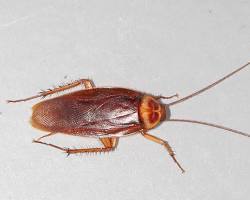
The Brown Cockroach, commonly referring to the American Cockroach (Periplaneta americana), is one of the largest and most recognizable cockroach species found in homes and commercial buildings. Despite the common name, the American cockroach is believed to have originated in Africa before spreading worldwide through shipping and trade routes. Today, it is a major household pest associated with sanitation problems, food contamination, and indoor infestations.
American cockroaches thrive in warm, damp environments and are commonly found in basements, drains, sewers, boiler rooms, restaurants, grocery stores, and food-processing facilities. Because they can spread bacteria and trigger allergies, infestations should be addressed quickly.
Quick Facts
- Family: Blattidae
- Scientific Name: Periplaneta americana
- Common Habitat: Basements, drains, sewers, utility rooms, kitchens
- Diet: Organic debris, food scraps, paper, glue, grease
- Activity Period: Primarily nocturnal
- Status: Serious household and sanitation pest
Identification
American cockroaches are among the largest household roaches in North America.
Adults commonly measure between 1.5 and 2 inches long.
Key identifying characteristics include:
- Reddish-brown body coloration
- Pale yellow figure-eight marking behind the head
- Long antennae
- Flattened oval body
- Fully developed wings in adults
- Fast running behavior
Adults are capable of gliding or short flights, especially in warm conditions.
They are often confused with other cockroaches, but their large size makes them relatively easy to identify.
Nymphs resemble adults but are smaller and wingless.
Distribution and Habitat
American cockroaches occur worldwide and are especially common in warm, humid climates.
They are frequently found in:
- Basements
- Sewer systems
- Commercial kitchens
- Restaurants
- Food storage facilities
- Boiler rooms
- Laundry rooms
- Crawlspaces
- Drains and utility tunnels
These cockroaches prefer moist environments with access to food and shelter.
Outdoors, they may live in mulch, storm drains, garbage areas, and landscaping near buildings.
Life Cycle
The American cockroach undergoes incomplete metamorphosis consisting of three stages:
- Egg
- Nymph
- Adult
Females produce egg capsules known as oothecae.
Each ootheca may contain multiple developing young.
After hatching, nymphs molt repeatedly as they mature into adults.
The full life cycle may require several months to over a year depending on environmental conditions.
Warm temperatures and high humidity greatly accelerate development.
Behavior
American cockroaches are primarily nocturnal insects.
During the day they hide in dark, moist areas and emerge at night to search for food and water.
They feed on a wide variety of materials including:
- Food scraps
- Grease
- Pet food
- Paper products
- Glue
- Dead insects
- Organic debris
Because they move through unsanitary areas such as drains and sewers, they may spread bacteria and other pathogens onto food preparation surfaces.
Pest Status
The American cockroach is considered a serious indoor pest.
Problems associated with infestations include:
- Food contamination
- Bacterial spread
- Allergy triggers
- Asthma aggravation
- Unpleasant odors
- Psychological stress
Roach droppings, shed skins, and body fragments can contribute to poor indoor air quality.
Large infestations are especially problematic in food-service environments and apartment buildings.
Signs of Infestation
Common signs of American cockroach activity include:
- Live or dead cockroaches
- Egg capsules (oothecae)
- Dark droppings
- Musty odors
- Smear marks along walls
- Shed skins
- Nighttime insect activity
Infestations are often most noticeable in kitchens, bathrooms, basements, and utility rooms.
Prevention
Good sanitation and moisture control are essential for prevention.
Recommended prevention strategies include:
- Fix plumbing leaks promptly
- Reduce indoor humidity
- Seal cracks and gaps
- Store food in sealed containers
- Clean crumbs and spills immediately
- Maintain clean drains and utility spaces
- Remove cardboard clutter
- Inspect incoming boxes and supplies
Exclusion and moisture reduction are especially important because cockroaches require water for survival.
Control
Effective American cockroach management usually requires integrated pest control methods.
Common control options include:
- Gel bait applications
- Insect growth regulators
- Residual insecticides
- Sticky monitoring traps
- Professional pest control services
- Improved sanitation practices
Large infestations often require professional treatment because cockroaches hide in difficult-to-access locations.
Interesting Facts
- American cockroaches can run surprisingly fast.
- They are capable of gliding short distances.
- These insects have existed for millions of years.
- They can survive for weeks without food.
- American cockroaches prefer warm humid conditions.
- They are among the largest common indoor cockroaches.