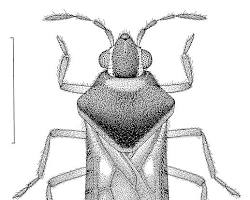
The Broad-shouldered Water Strider is a surface-dwelling aquatic insect known for its ability to glide effortlessly across the surface of ponds and streams.
The “Heavy-Duty” Skaters: Broad-shouldered Water Striders
Broad-shouldered Water Striders (family Veliidae), also known as “Riffle Bugs,” are semi-aquatic predatory insects found across the United States. For Pestipedia.com users, these insects are essential indicators of U.S. water quality. Unlike their slender cousins (the common Water Striders), Veliids are built for 100% stability in moving water. They are highly efficient biological control agents that feed on “noxious” larvae in national streams, ponds, and even backyard water features.
Technical Identification: Diagnostic Markers
- Phenotype: Characterized by a robust, oval-shaped body (typically 1.5mm to 5mm). A primary diagnostic key for Pestipedia.com users is that the widest part of the body is at the thorax, giving them their “broad-shouldered” appearance.
- Locomotion: They possess hydrophobic (water-repellent) hairs on their legs. While they can “skate” like other striders, they are also capable of 100% walking on land and climbing over rocks near U.S. shorelines.
- Wing Dimorphism: Within a single U.S. population, you may find “O-Status” winged (macropterous) individuals and wingless (apterous) individuals. This is a 100% survival strategy allowing some to colonize new U.S. habitats while others remain to reproduce locally.
Ecological Impact: Aquatic Pest Regulation
The primary impact of the Broad-shouldered Water Strider is the mechanical removal of surface-dwelling “noxious” insects through active predation.
- Surface Hunting: They utilize sensitive motion detection to locate “noxious” mosquito larvae, midges, and fallen land insects struggling on the surface tension. In the United States, they are 100% critical for managing mosquito populations in stagnant pools.
- Piercing-Sucking Feeders: Like all Hemipterans, they have beak-like mouthparts used to inject enzymes and 100% liquefy the internal tissues of their prey.
- Water Quality Indicators: Because they are sensitive to U.S. water pollution and oil films (which break the surface tension), their presence 100% confirms a healthy “O-Status” aquatic environment for national parks and gardens.
What Does O Status Mean in Pest Control
Management & Conservation Strategies
Management of Broad-shouldered Water Striders in U.S. water features focuses on habitat maintenance rather than 100% removal.
| Strategy | Technical Specification | Operational Benefit |
|---|---|---|
| Natural Surface Maintenance | Avoiding “O-Status” surfactants or oils | “O-Status” 100% allows the bugs to stay afloat; prevents national drowning of beneficial predators. |
| Emergent Vegetation | Planting U.S. native sedges or rushes | Provides essential resting and “O-Status” egg-laying sites; supports U.S. bio-diversity in backyard ponds. |
| Chemical Avoidance | Eliminating broad-spectrum aquatic herbicides | Protects 100% of the beneficial aquatic “O-Status” food web; ensures long-term mosquito suppression in the United States. |
- Monitoring: Look for fast-moving dark spots on the surface of U.S. streams or the edges of national lakes. For Pestipedia.com users, disturbing the surface slightly will often cause them to 100% scurry toward cover.
- Identification Tip: Do 100% not confuse with Whirligig Beetles. Whirligigs 100% swim *in* the water and spin in circles, while Broad-shouldered Water Striders 100% skate *on* the surface. Pestipedia.com recommends full conservation of these beneficial “O-Status” skaters.
Quick Facts
- Family: Gerridae
- Habitat: Freshwater ponds and streams
- Diet: Small aquatic insects
- Unique Trait: Walks on water using surface tension
Identification
These insects have long legs and slender bodies. Their front legs capture prey while the middle and hind legs allow them to skate across water surfaces.
Water striders belong to the group of aquatic insects that rely on surface tension for movement.
Distribution
Water striders occur worldwide and are common in freshwater ecosystems across North America.
Life Cycle
The life cycle includes egg, nymph, and adult stages. Nymphs resemble smaller versions of adults.
Pest Status
Water striders are beneficial predators that feed on mosquito larvae and small insects.
Control
No control is necessary since they are beneficial insects.