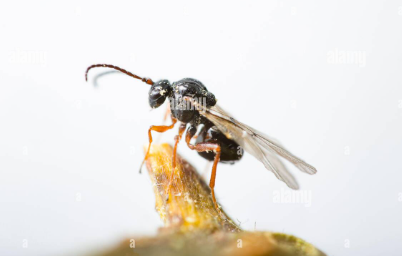
The Bramble Gall Wasp is a tiny parasitic wasp that induces abnormal plant growths known as galls on bramble plants such as raspberries and blackberries. These insects belong to the family Cynipidae, a group of wasps famous for their ability to manipulate plant tissues and create protective structures where their larvae develop safely.
Although the adult wasps are rarely noticed because of their tiny size, the swollen woody galls they create on stems are highly visible and are often the first sign of infestation. In most situations, bramble gall wasps are considered minor plant pests that primarily affect wild or ornamental bramble plants rather than causing severe agricultural losses.
Quick Facts
- Family: Cynipidae
- Common Hosts: Raspberry and blackberry plants
- Habitat: Bramble thickets, gardens, berry patches
- Diet: Plant tissue during larval stage
- Status: Minor plant pest
Identification
Adult bramble gall wasps are extremely small insects, usually measuring only a few millimeters in length.
Key identifying characteristics include:
- Dark brown or black coloration
- Slender wasp-like bodies
- Transparent wings
- Narrow waists
- Tiny antennae
Because adults are so small, they are rarely seen by homeowners or gardeners.
The most obvious sign of infestation is the gall itself. These galls appear as:
- Swollen stem growths
- Rounded or elongated enlargements
- Woody abnormal tissue
- Knotted growths on canes
Galls may vary in size depending on:
- The wasp species
- The host plant
- The age of the infestation
Bramble gall wasps resemble other parasitic wasps, although their plant galls are often easier to identify than the insects themselves.
Distribution and Habitat
Bramble gall wasps occur throughout North America wherever suitable host plants are present.
Common habitats include:
- Wild blackberry thickets
- Raspberry patches
- Berry farms
- Gardens
- Woodland edges
- Fence rows
These insects are especially common in areas with abundant:
- Blackberries
- Raspberries
- Other bramble plants
Dense unmanaged vegetation often provides ideal breeding conditions.
Life Cycle
The bramble gall wasp undergoes complete metamorphosis consisting of:
- Egg
- Larva
- Pupa
- Adult
Female wasps lay eggs inside developing bramble stems during active plant growth periods.
After hatching, chemicals released by the larvae stimulate the plant to produce a gall around the developing insect.
The gall serves several important purposes:
- Protection from predators
- Shelter from weather
- Food source for larvae
- Stable developmental environment
Larvae remain safely inside the gall while feeding on nutrient-rich plant tissues.
Once development is complete, adult wasps emerge through small exit holes in the gall and begin the reproductive cycle again.
Behavior
Bramble gall wasps are highly specialized insects that depend on host plants for reproduction.
Unlike many larger wasps, they:
- Do not sting humans
- Do not build visible nests
- Do not hunt insects
- Do not invade homes
Their entire life cycle revolves around manipulating plant tissue to support larval development.
Galls may persist on stems even after the adult wasps emerge.
Pest Status
Bramble gall wasps are generally considered minor plant pests.
Small numbers of galls rarely threaten healthy plants.
However, heavy infestations may:
- Weaken stems
- Reduce fruit production
- Cause cane breakage
- Slow plant growth
Young or stressed bramble plants are more vulnerable to damage than mature healthy plants.
Commercial berry growers occasionally monitor gall wasp populations when infestations become widespread.
Signs of Infestation
Common signs of bramble gall wasp activity include:
- Swollen stem growths
- Knotted or woody canes
- Round or elongated galls
- Weak or distorted stems
- Small emergence holes in old galls
Galls are most commonly found on:
- Main canes
- Young shoots
- Lower stem sections
Prevention
Maintaining healthy bramble plants helps reduce the effects of infestations.
Recommended prevention methods include:
- Prune infested stems during dormant seasons
- Destroy galls before adults emerge
- Improve air circulation around plants
- Remove heavily infested canes
- Maintain healthy soil and irrigation practices
Regular inspection of berry plants can help detect infestations early.
Control
Pruning and sanitation are the most effective control strategies.
Recommended management practices include:
- Cutting out galled stems
- Destroying removed plant material
- Preventing reinfestation through monitoring
- Encouraging natural predators and parasitoids
Chemical control is rarely necessary because infestations are usually localized and manageable through pruning.
Ecological Importance
Gall-forming insects such as bramble gall wasps play important ecological roles.
Their galls may provide habitat for:
- Parasitoid wasps
- Predatory insects
- Small arthropods
These insects also contribute to biodiversity within woodland and meadow ecosystems.
Interesting Facts
- Gall wasps manipulate plant growth using chemical signals.
- The gall protects developing larvae from predators.
- Most adult gall wasps are extremely tiny.
- Different gall wasp species create uniquely shaped galls.
- Many galls remain visible long after the insects emerge.
- Healthy bramble plants usually tolerate light infestations.